



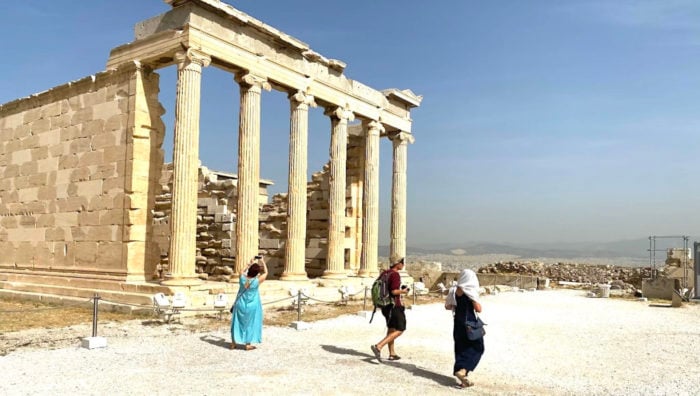
It is estimated that at least 5,000 words—and likely many more—in almost all languages spoken today, as well as numerous country names, originate from the Greek language. Perhaps even more surprising, many of these countries, some thousands of miles from Greece, have names that trace directly back to words in Greek.
How country names around the world trace back to the Greek language
Many of today’s country names have fascinating origins in the Greek language, revealing a historical influence that stretches across continents and cultures. Below are some notable examples.
- Argentina: the land of silver
The name of South America’s second-largest country, Argentina, comes from the Latin argentum, which ultimately derives from the Ancient Greek word argyros (Άργυρος), meaning “silver.”
When the Spaniards first arrived in what is now Argentina, they had hoped to find gold. Instead, they observed that the indigenous people extensively used silver for utensils and jewelry. It soon became clear that the surrounding mountains were rich in silver deposits, and the land came to be known as the land of silver.
- Azerbaijan and the ancient city of Atropatene
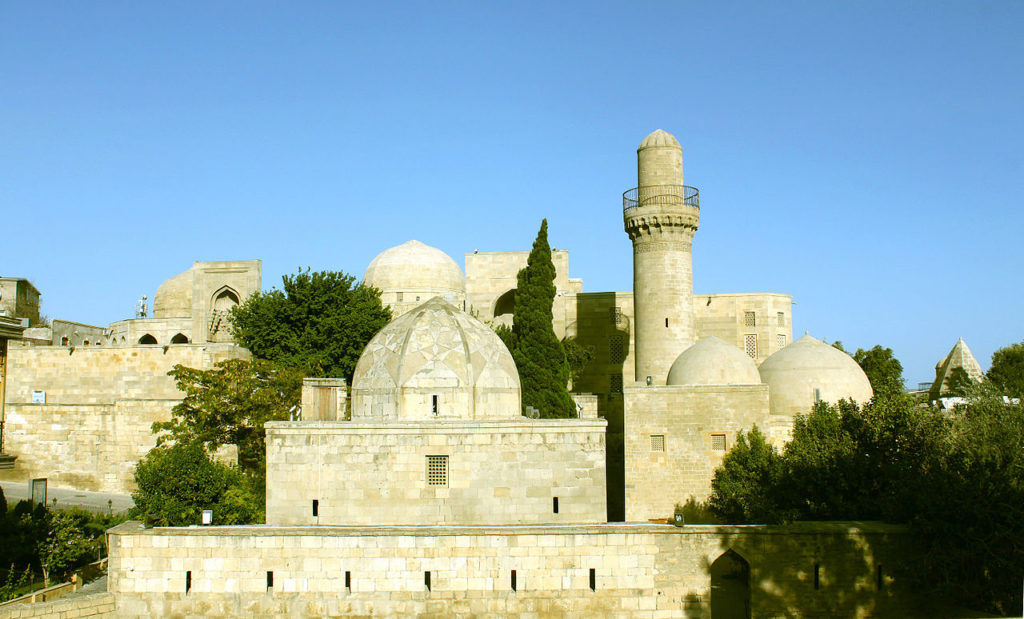
The name of this country, situated between Eastern Europe and West Asia, originates from the Ancient Greek name Atropatis. Atropatis was a Persian nobleman who established the city of Atropatene following the death of Alexander the Great.
While most of the territories he governed are now part of modern Iran, the ancient city itself is recognized as an integral part of Azerbaijan’s cultural heritage.
- The name “Egypt” stems from two words in the Greek language
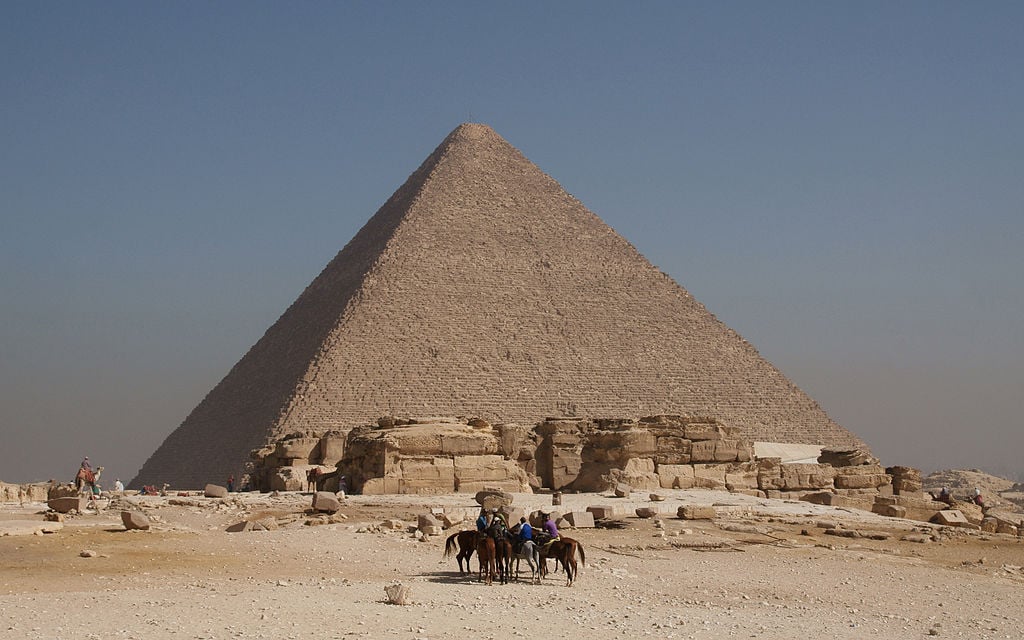
The ancient philosopher Strabo proposed that Egypt (Αίγυπτος / Aigyptos) was a composite word, formed from a combination of two others. It specifically derives from Αγαίον (Aegean) and Υπτίως (yptios), meaning “below,” or “the country below the Aegean Sea.”
Today, many scholars contend that the Greek Aigyptos is actually a Hellenized version of the Egyptian term Hut-ka-Ptah, which described the region surrounding Memphis, illustrating how the Greek language shaped the names of countries known around the world.
- Ethiopia and Eritrea
Ethiopia’s name comes from the Ancient Greek Aithiops (Αιθίωψ), a composite formed from the verb aitho (αίθω, “burn”) and the noun opsis (όψις, “face”), meaning “burnt face.” This referred to what the Greeks believed was the sun-darkened skin of the region’s inhabitants.
Its neighboring country, Eritrea, takes its name from Erythraia (Ερυθραία), derived from the Red Sea (Erythra Thalassa / Ερυθρά Θάλασσα), another example of how the Greek language shaped the names of countries in North Africa.
- Georgia, named after a Greek Saint
Most likely, this country, located in the Caucasus region along the shores of the Black Sea, was named after the Greek martyr St. George.
The name itself originates from the Greek word georgia (γεωργία), meaning “agriculture” or “farming,” highlighting how the Greek language influenced the names of countries even far beyond Greece.
- Indonesia, Micronesia, and Polynesia
Indonesia, along with other countries whose names end in “-nesia,” owes its name to the Greek language.
The island archipelagos with names ending in “-nesia” (Polynesia, Micronesia, and others) borrowed this suffix from the Ancient Greek word nesos (νήσος), which means “island,” illustrating how the Greek language has influenced the names of countries across distant regions.
- Malta, named after its famous honey

Greeks are known to have inhabited this tiny Mediterranean island as early as 700 BC. They named it “Mελίτη” (Μeliti), from the Greek meli, or honey, which is thought to be because of the well-known honey produced on the island far back into antiquity. Up until the Byzantine years, Malta was referred to as “the land of honey” in many texts.
- Monaco linked to Hercules, a hero in Greek mythology
Monaco is among the many countries whose names are influenced by the Greek language. In ancient times, the port of Monaco was closely associated with the worship of the mythical hero Hercules and was often referred to as Hercules Monoikos. A small temple dedicated to Hercules stood there—unusual for a demi-god—earning the site the name Monoikos, meaning “single house.”
Remarkably, this Greek connection endures today, as Monaco’s main port continues to be called “Port Hercules,” offering a direct link between the Greek language and one of Europe’s historic country names.
- The disputed link between Scotland and the Greek language
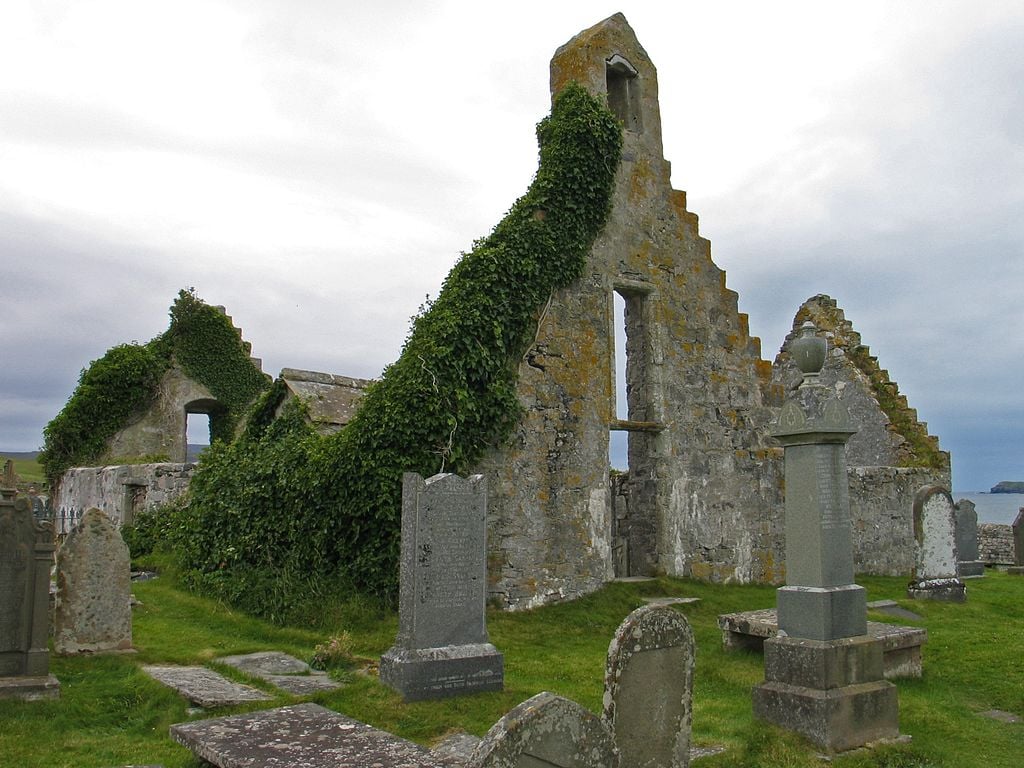
Although not widely accepted, one theory suggests that Scotland’s name derives from the Αncient Greek word skotos (σκότος), meaning “darkness.”
According to this theory, Minoan and Mycenaean merchants who reached the coast of Britain, as far north as present-day Scotland, were struck by the region’s dim light, situated just west of southern Scandinavia, and referred to it as Skotia, or “the land of darkness.” This intriguing example illustrates how the Greek language may have influenced some country names, even in distant lands.
- The Philippines
When Spanish explorer Ruy Lopez de Villalobos arrived at the large Pacific archipelago, he named two of its major islands in honor of his monarch, King Philip II of Spain (1537–1598).
Over time, the name “The Philippines” came to refer to the entire group of islands. The name Philippos (Φίλιππος) itself is of ancient Greek origin, meaning “lover of horses.” Philip II, history’s most famous Philip, was the father of Alexander the Great, showing how the Greek language has left its mark even on far-flung country names.
Europe, the North and South Pole, the Atlantic Ocean, and the Greek language
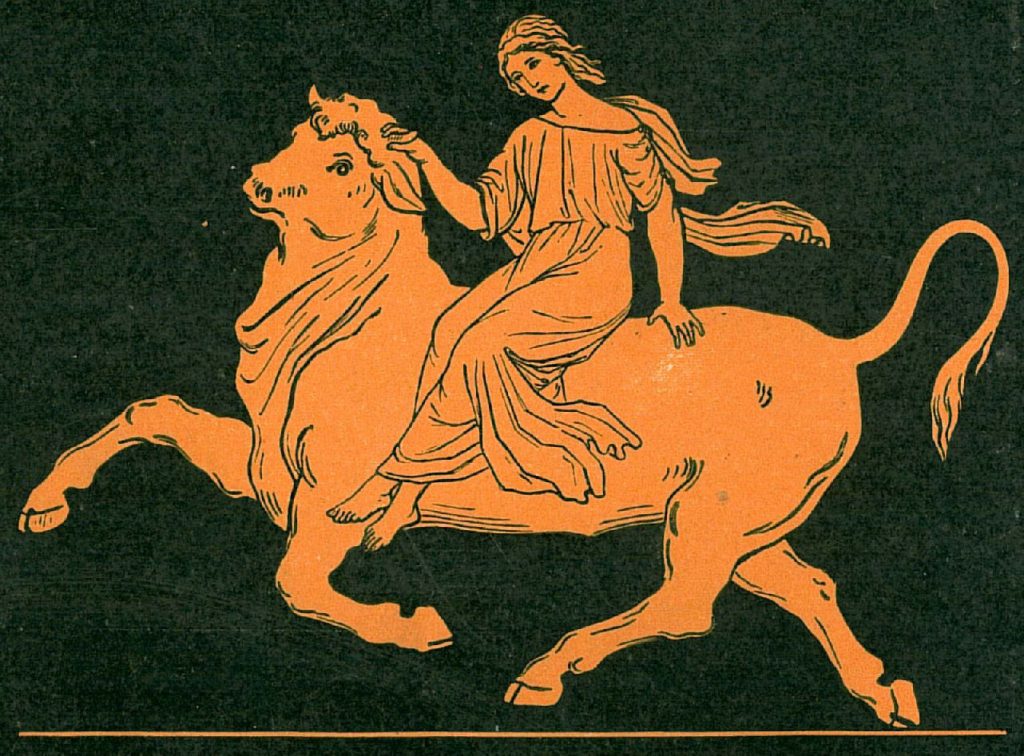
Beyond the many countries whose names are derived from the Greek language, even an entire continent traces its name to Greece. According to Greek mythology, Europa (Ευρώπη) was the daughter of Phoenician King Agenor and Queen Telephassa. Known for her beauty and fair skin, Europa captured the attention of Zeus, who transformed himself into a white bull with golden horns. He lured Europa onto his back and carried her off to the island of Crete, where they withdrew to enjoy their love.
In addition, the North Pole and South Pole are named from the Greek word polos (πόλος), originally referring to the high, cylindrical crowns worn by goddesses such as Rhea, Cybele, and Hera. Over time, the term came to mean “axis” or “pivot,” which is where the modern word “pole” came from.
Finally, the name Atlantic Ocean was first used during the era of Herodotus in approximately 450 BC. In Greek, it means “the sea of Atlas.” Atlas was the god of navigation and astronomy, and the earliest mentions of the Atlantic Ocean appear in the writings of the Greek philosopher Plato. This remarkable influence of the Greek language shows how it shaped not only country names but even the names of continents, oceans, and key geographic points around the globe.
See all the latest news from Greece and the world at Greekreporter.com. Contact our newsroom to report an update or send your story, photos and videos. Follow GR on Google News and subscribe here to our daily email!

