



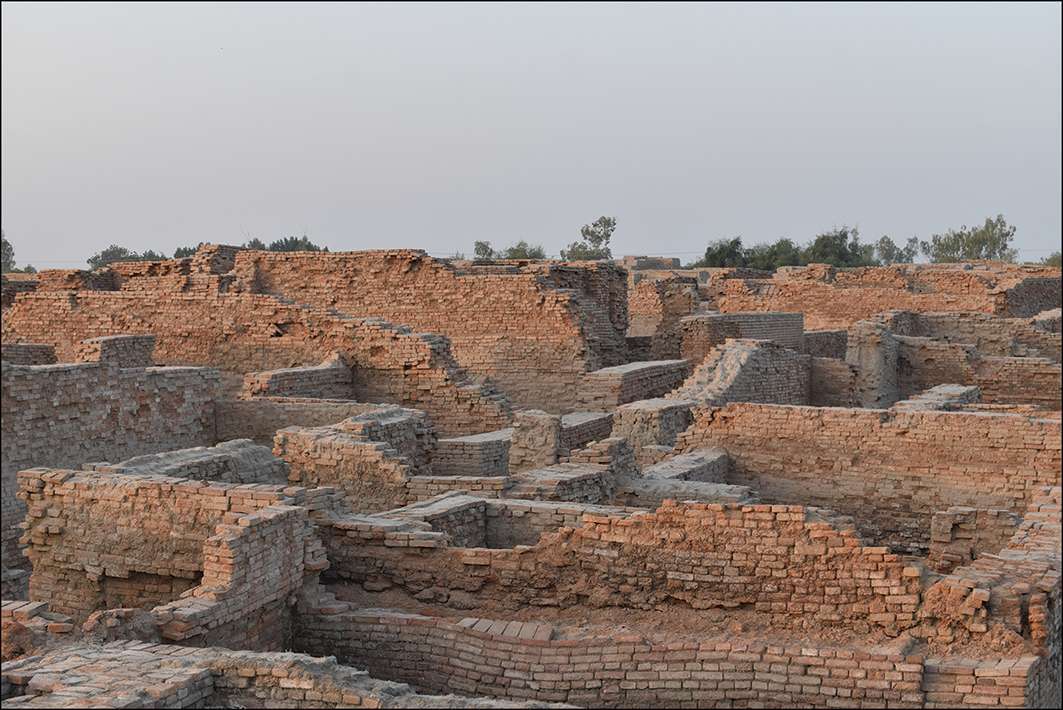
The Bronze Age city of Mohenjo-daro may have become more equal over time, according to a new study that challenges long-held ideas about early urban life. The research suggests that one of the Indus Civilization’s largest cities grew without the clear signs of powerful kings, palaces, or elite temples seen in many other ancient societies.
The study, led by Adam S. Green and published in Antiquity, examined house sizes at Mohenjo-daro to measure economic inequality. Researchers used the residence area as a rough sign of wealth. Larger homes often suggest greater access to labor and resources.
To study this pattern, the team used a measure called the Gini coefficient. The scale runs from 0 to 1. A score closer to 0 means greater equality. A score closer to 1 means greater inequality.
House sizes point to lower inequality
Mohenjo-daro had an overall Gini score of 0.44. That figure was lower than scores from several other ancient cities with stronger evidence of elites. The study notes that Ur and Ugarit in West Asia scored above 0.6. Other places with clear signs of social ranking, such as Knossos and Palenque, had even higher scores.
New research suggests the Bronze Age city Mohenjo-daro may have grown more equal over time.
A study in Antiquity found house-size gaps declined in part of the ancient Indus city, pointing to shared planning, public works and less concentrated power. pic.twitter.com/iybwv7gV90
— Tom Marvolo Riddle (@tom_riddle2025) May 19, 2026
The researchers found a more striking pattern when they looked at change over time. In one well-studied part of the city, known as DK-G South, inequality appears to have declined. Earlier homes showed more differences in size. Later homes became more similar.
By about 2100 B.C., the Gini score in that area had fallen to 0.23. That level is close to what archaeologists often see in more egalitarian communities.
Planning may have shaped daily life
The study argues that this change may not have happened by chance. As homes became more equal in size, buildings also became more closely aligned with the city’s streets. This suggests that planning, public works, and shared decision-making may have helped shape daily life.
Mohenjo-daro already stood apart from many early cities. Archaeologists have not found royal tombs, grand palaces, or art that clearly glorified individual rulers. Instead, the city had planned streets, drainage systems, public buildings, standard weights and seals used in trade.
Researchers say those features point to a society where power may have been more widely shared. The city’s systems may have helped prevent one group from gaining too much control over resources.
Study adds caution to ancient inequality debates
The authors caution that house size cannot show every kind of inequality. Wealth, gender, family status, and social identity can leave different traces in the archaeological record. Still, the study offers new evidence that urban growth did not always require extreme inequality.
At Mohenjo-daro, researchers say, collective governance may have helped build a large city while keeping economic differences in check.
See all the latest news from Greece and the world at Greekreporter.com. Contact our newsroom to report an update or send your story, photos and videos. Follow GR on Google News and subscribe here to our daily email!

