



In his Bibliotheca Historica, the ancient Greek historian Diodorus Siculus recounts a series of strange stories that blur the line between history and wonder. He brings together narratives that move across kingdoms, distant lands, and extraordinary human experiences with ease. These accounts offer a glimpse into an ancient world where history often feels more astonishing than fiction.
The transformation of Callo, the intersex person
In one of the unusual accounts preserved by Diodorus Siculus, an intersex individual appears in a narrative that unfolds gradually, revealing unexpected and quietly unsettling turns. In Epidaurus, Callo’s life begins in misfortune and loss. Orphaned at birth, Callo is raised within the world of women and comes to live accordingly. She marries and shares life with a fellow citizen, shaped by the expectations of her time.
Yet nature soon seems to take a different course. Her body develops in ways that defy understanding, as a tumor appears on her genitals. She is no longer able to fulfill the role expected within marriage, and pain intensifies over time. Physicians gather to examine her condition with care and hesitation although most ultimately withdraw, unwilling to assume responsibility for what they observe.
One physician chooses to act. He examines the swelling and discovers male anatomy concealed beneath what had long been regarded as a female form. He then proceeds with a surgical intervention, creating a passage and restoring bodily function. Through this procedure, Callo’s physical condition is altered, and life takes on a new direction.
From that moment, Callo becomes Callon. She sets aside the clothing and tools associated with women and adopts a male identity. Society recognizes this transformation, and life continues under the new name and role. Some traditions also preserve a connection to earlier sacred service. Before this change, Callo had served as a priestess of Demeter. Because she was said to have witnessed things not meant for men, she was later brought to trial for impiety.
The whales of Alexander the Great, another one of Diodorus Siculus’ strange stories
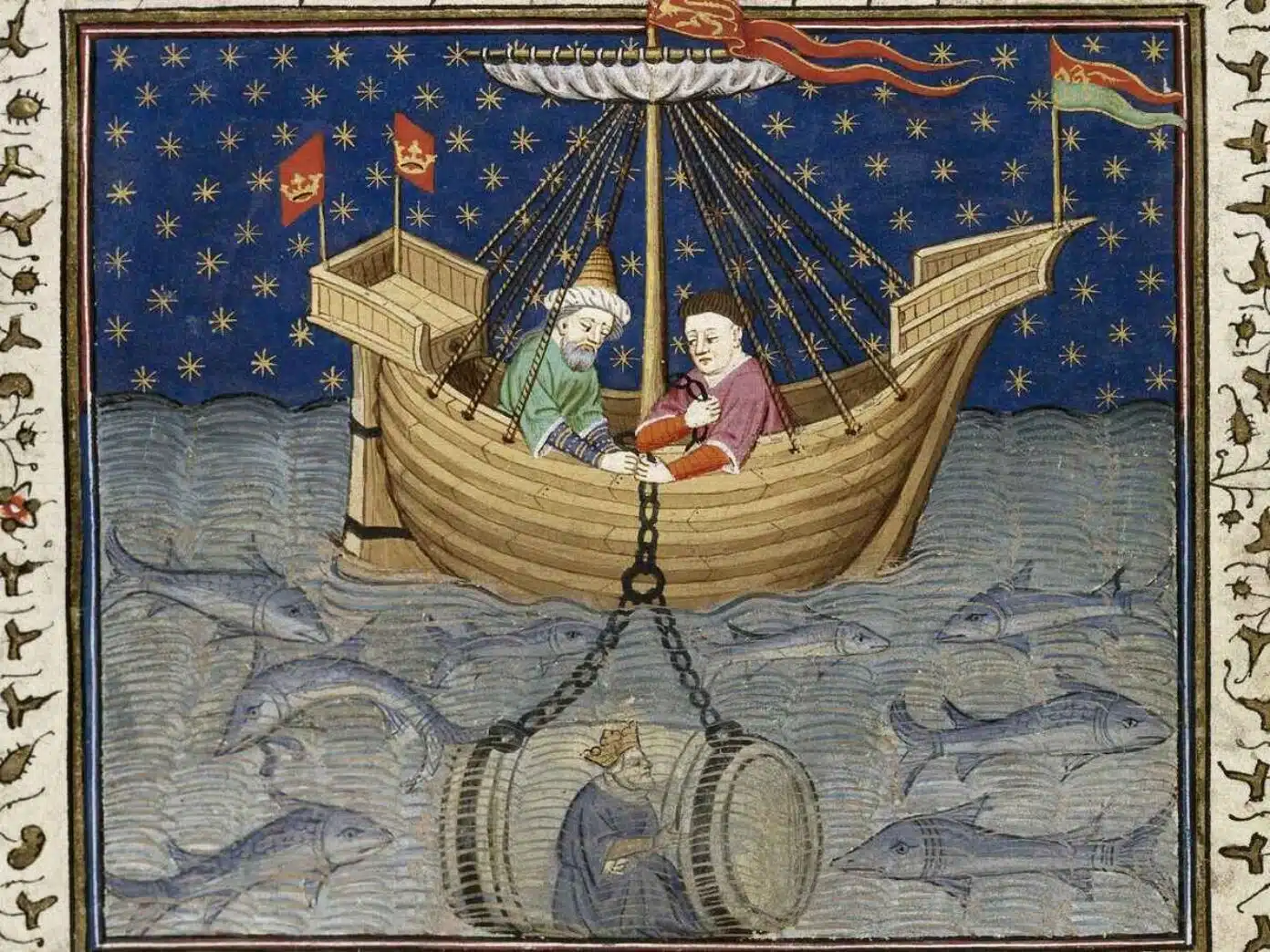
During Alexander the Great’s campaign in Gedrosia (in present-day Balochistan, Pakistan), his fleet sailed into unfamiliar waters. While he was resting in a coastal city called Salmus and presiding over a dramatic contest in the theater, Alexander received word that the fleet had returned to harbor after its expedition of the Ocean (the vast, boundaryless water surrounding the known world) and exploration of the coastal waters. An officer entered the theater, greeted Alexander, and delivered his report.
The Ocean stretched beyond familiar limits, where land and sea seemed to shift without warning. The sailors observed islands appearing and disappearing with the movement of the tides, while the water itself rose and fell with striking intensity.
They then encountered something far more extraordinary. A vast gathering of whales rose from the depths. Their size astonished even the most experienced sailors, and fear spread through the fleet as the creatures approached with steady, powerful motion.
In response, the sailors acted in unison. They struck their shields and sounded their trumpets across the water, sending a resonant noise over the waves that broke the stillness of the Ocean. Startled by this unfamiliar human rhythm, the whales withdrew into the depths.
When the fleet returned, the sailors recounted what they had seen—shifting seas, vanishing islands, and immense creatures moving like living mountains beneath the waves. Their testimony filled the camp, adding a sense of wonder to the memory of the voyage.
In this account, the Ocean emerges as a realm of overwhelming scale and unpredictable force, expanding the boundaries of what the known world could contain and what it might still reveal.
Diodorus Siculus’ strange story of the voluntary death of the Indian Calanus
In the lands of Susiana, a gymnosophist philosopher named Calanus enters the narrative with dignity and renown. He comes from India and is widely respected for his wisdom and serenity, reaching the age of seventy-three in good health for the most part.
However, when illness finally arrives, he regards it as the natural completion of his life’s course and requests a funeral pyre. He asks Alexander to provide the means for his final act, choosing to end his life in accordance with his own understanding of fulfillment. Alexander initially resists the request and attempts to dissuade him. However, Calanus remains steadfast in his decision. In the end, Alexander yields and orders the construction of the pyre.
A large crowd gathers to witness the event. Calanus ascends the structure without hesitation and displays calmness and clarity as the fire is lit. When the flames rise, he meets his end within them.
Those who witness the scene respond in various ways. Some stand in disbelief, while others reflect on his resolve. Many are struck by his composure in the face of death, and the moment leaves a lasting impression on all who are present. The story thus presents philosophy enacted in lived experience, where thought and choice converge at the threshold of life itself.
The strange story of the battle of Semiramis
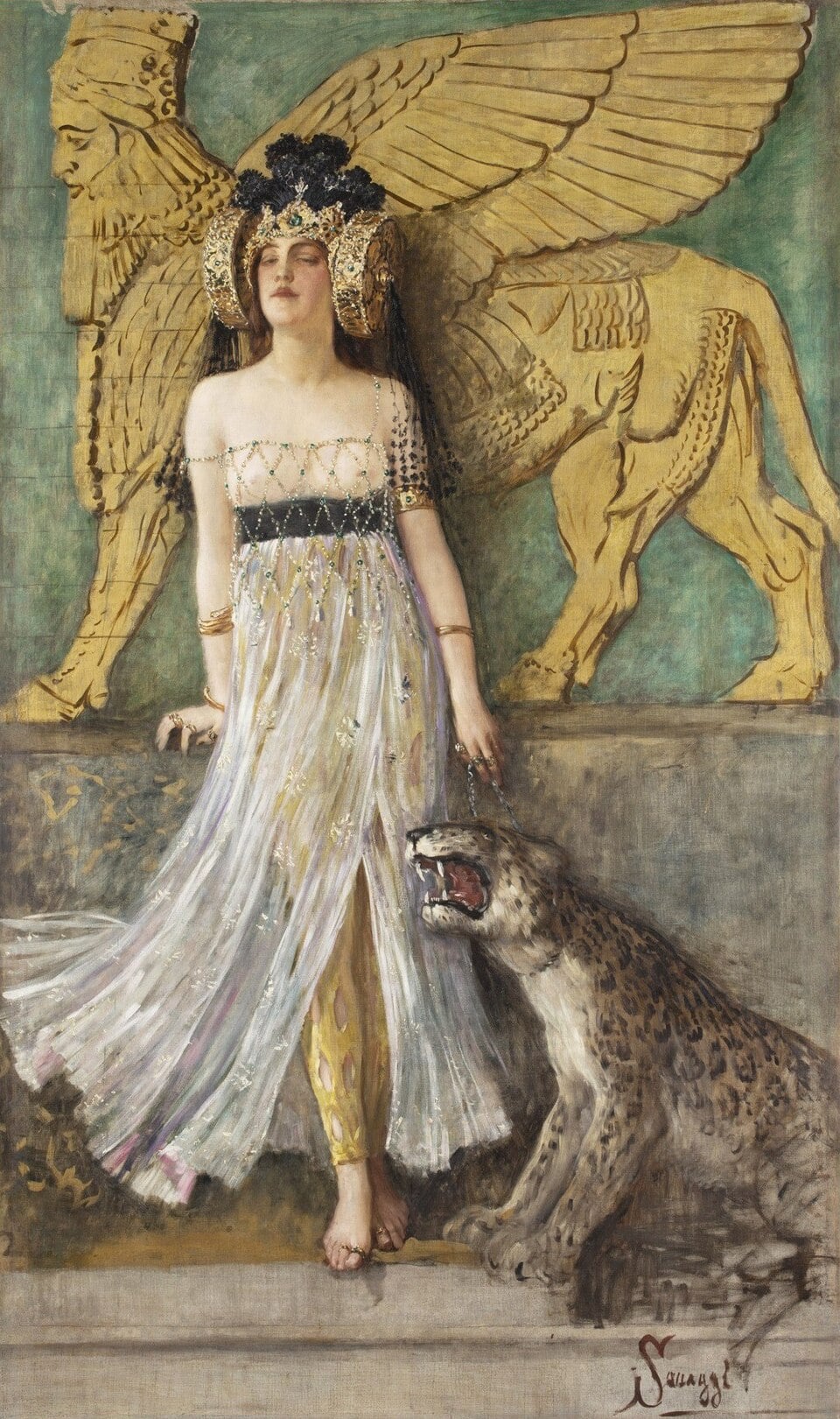
In the age of Semiramis, Queen of Assyria who succeeded King Ninus, ambition turns toward India, a land renowned for its vastness, wealth, and abundance. Semiramis assembles a great Assyrian force and prepares for a campaign unlike any before. She draws armies from many satrapies, secures engineers and shipbuilders from coastal regions, and organizes an extensive logistical system that includes river vessels designed for transport and disassembly. Through careful planning, she advances her forces to Bactra, which serves as the staging ground for the invasion.
One of the central challenges facing her army is the presence of war elephants, a force she cannot match directly. To address this imbalance, she devises a striking solution and constructs lifelike figures of elephants using stitched hides, straw, and carefully engineered frames. Men concealed within these structures control their movement, while camels provide the outward motion that sustains the illusion. The deception is intended to unsettle the enemy before battle even begins.
When Semiramis crosses the Indus, she encounters the forces of India under King Stabrobates, who rules a vast territory and commands an army strengthened by a formidable number of war elephants. At first, her strategy appears effective. Indian scouts report the apparent presence of numerous elephants, and confusion spreads through the opposing ranks.
Semiramis deploys her fabricated elephants across the battlefield and initially gains the advantage, as the illusion disrupts the Indian cavalry and throws portions of the army into disorder. She presses forward and forces segments of the Indian forces to retreat. However, King Stabrobates soon responds with his true war elephants and launches a decisive counterattack. The massive animals break through the Assyrian lines with overwhelming force, causing both cavalry and infantry to collapse.
See all the latest news from Greece and the world at Greekreporter.com. Contact our newsroom to report an update or send your story, photos and videos. Follow GR on Google News and subscribe here to our daily email!

