



New research has pushed back the origins of Neolithic dolomitic lime plaster by nearly 8,000 years. Ancient builders were firing dolomite to make plaster long before the Romans, a finding that rewrites what scientists previously understood about early construction materials.
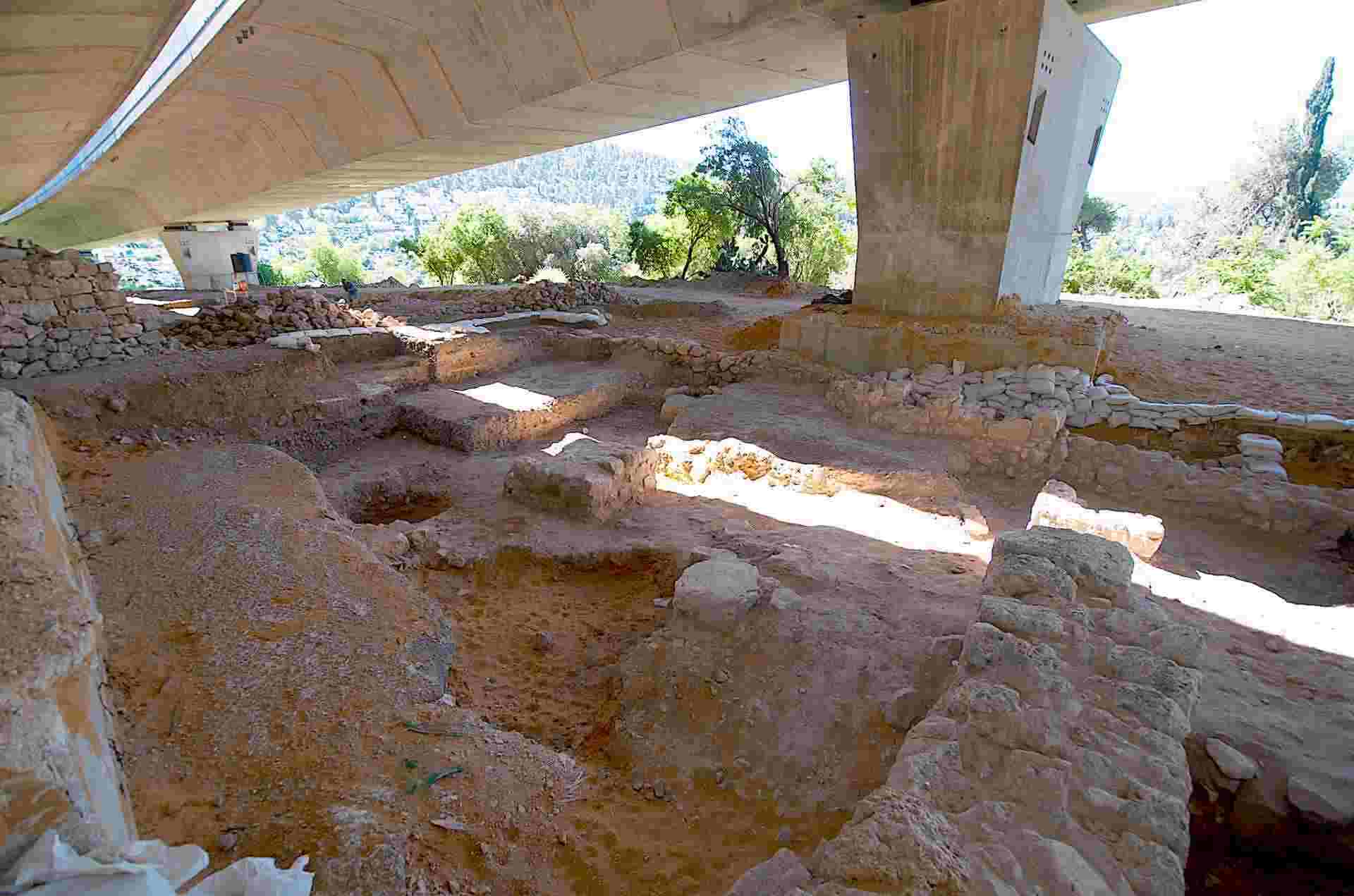
The study, published in the Journal of Archaeological Science, was led by Yonah Maor of the Israel Antiquities Authority. Researchers analyzed plaster floors and kiln remains at Motza, a Pre-Pottery Neolithic B site located about 5 kilometers (3.1 miles) west of Jerusalem in the Judean Hills. The site dates to approximately 7100 to 6700 B.C.
Before this discovery, the earliest recorded use of dolomitic lime plaster was traced to the Roman period. That gap of nearly 8,000 years makes the Motza find a significant leap backward in construction history.
Motza megaproject uncovers more than 100 plastered floors
Excavations at Motza, carried out between 2015 and 2021 ahead of highway construction and known as the Motza Megaproject, covered more than 3 hectares (7.4 acres). Researchers uncovered more than 100 plastered floors across multiple buildings.
They also found two kilns positioned side by side, one for burning limestone and another for burning dolomite. That arrangement showed that ancient craftsmen were deliberately separating and processing the two rock types.
Dolomite offered real practical advantages. It burns at a lower temperature than limestone, reducing fuel costs. When used in plaster, it produces a stronger and more water-resistant surface than standard lime plaster.
Using infrared spectroscopy, X-ray diffraction, thermogravimetry, and scanning electron microscopy, researchers confirmed that the dolomite found in the kilns and floors was pyrogenic, meaning it had been deliberately fired rather than simply used as raw filler.
Neolithic craftsmen achieved a complete dolomitic lime cycle
What surprised researchers most was what the Motza plaster actually contained. Standard dolomitic plaster, both ancient and modern, does not contain reformed dolomite after firing. The process typically produces other magnesium-rich minerals instead.
The Motza plaster, however, contained mainly calcite and dolomite, indicating that dolomite had fully re-formed after firing. Researchers described this as a complete dolomite-lime cycle, something not previously observed in any archaeological or laboratory setting.
Only one earlier lab study from 2004 had detected trace amounts of reformed dolomite, and only 16 days after the plaster was laid.
Producing quality dolomitic plaster demands precision at every stage. Firing temperatures must stay below 900 degrees Celsius (1,652 degrees Fahrenheit). Adding too much water during slaking ruins the final product.
Earlier floors preserved with distinctive red pigment coating
Researchers noted this level of technical difficulty likely explains why dolomitic lime appears so rarely in the archaeological record, and possibly why the technique was eventually lost to history altogether.
The research also noted that some earlier plastered floors from the Middle Pre-Pottery Neolithic period were exceptionally well preserved and coated with red pigment, while later floors were thinner, crumblier, and more porous by comparison.
See all the latest news from Greece and the world at Greekreporter.com. Contact our newsroom to report an update or send your story, photos and videos. Follow GR on Google News and subscribe here to our daily email!

