



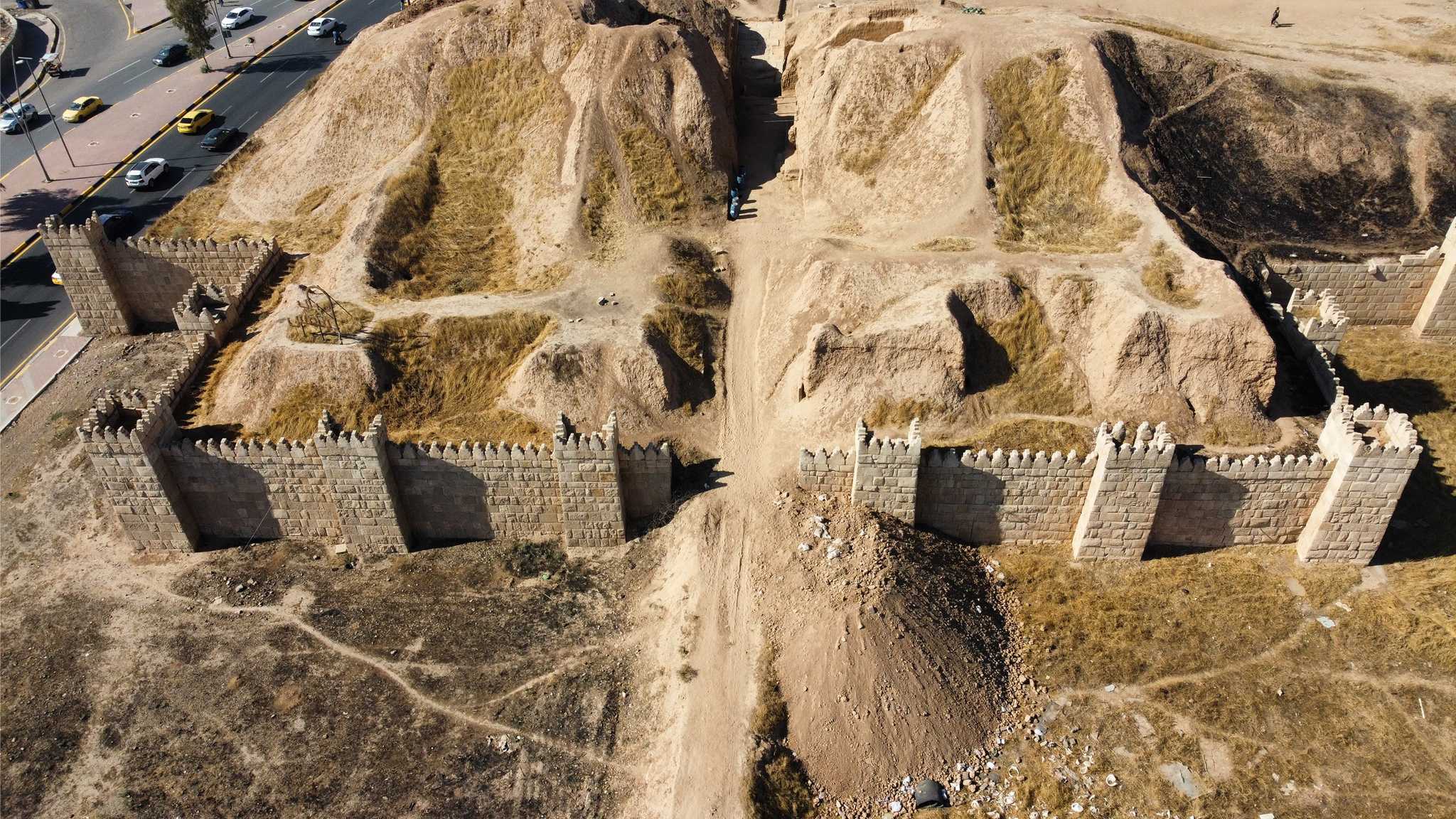
The Shamash Gate in ancient Nineveh has revealed rare evidence of two violent chapters separated by more than 2,500 years: the fall of the Assyrian capital in 612 B.C. and the battle to free Mosul from ISIS in 2017.
The research, led by Timothy Harrison and published in IRAQ, focuses on one of the largest gates of ancient Nineveh. The gate once stood as a major eastern entrance into the Assyrian city. Today, its remains rise near the main eastern approach to Mosul.
Researchers found that the gate still holds important archaeological evidence despite heavy damage. During its control of Mosul from 2014 to 2017, ISIS turned the site into a defensive position. Fighters dug tunnels through and beneath the ancient structure. These tunnels cut into the foundations and damaged parts of the stone-lined gate system.
A preliminary investigation in 2020 showed the scale of the destruction. It also showed that the core of the gate remained intact. This made the site both fragile and highly valuable for future study.
The ancient gate became a modern battlefield
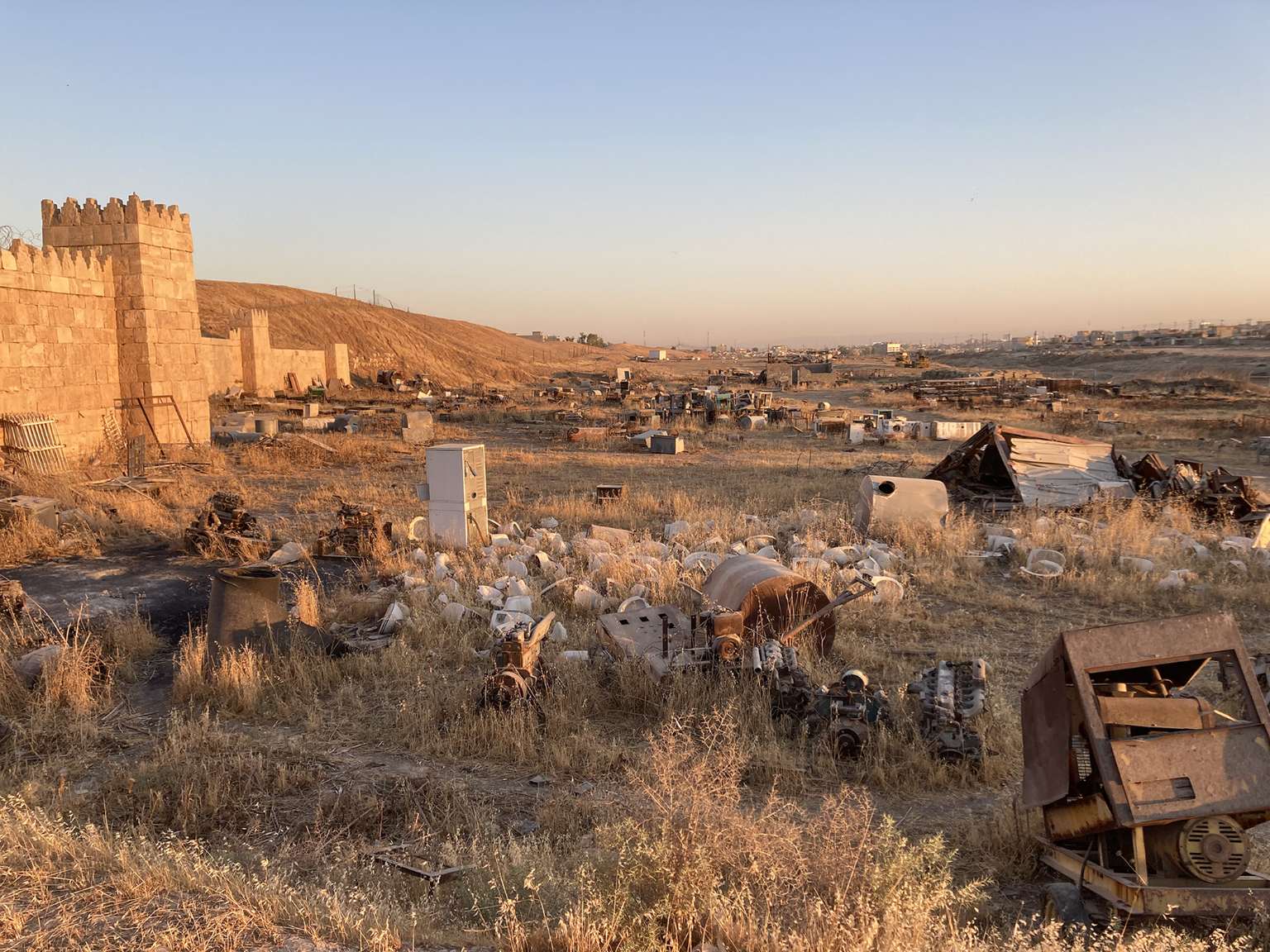
The Shamash Gate was one of 18 entrances into Nineveh. Ancient records link its construction to King Sennacherib, who ruled from 705 to 681 B.C. The gate connected the city to the east, along the road from Erbil to Nineveh.
Inside the city, the route led toward major royal and religious areas, including Nabi Yunis and the palace of Esarhaddon. This made the gate a key point in Nineveh’s movement, trade, and defense.
Researchers say the site now preserves evidence from two battles. The first was the fall of Nineveh in 612 B.C., when the city fell to invading forces. The second was the fight to liberate Mosul from ISIS in 2017.
ISIS tunnels posed an immediate threat. A 2021 survey used 3D laser scanning to map the underground network. The tunnels stretched about 210 meters and passed under the gate’s foundations. In some places, the tunnel diggers smashed through ancient stone pavement and wall slabs.
The survey found that the gate faced a serious risk of collapse. In 2022, the United Nations Development Program helped stabilize the tunnels. Workers filled them with sandbags using soil originally removed by ISIS.
Excavations expose the fall of Nineveh
After stabilization, archaeologists began excavations across several parts of the gate. These included the central passageway, the northern and southern towers, and the area just inside the entrance.
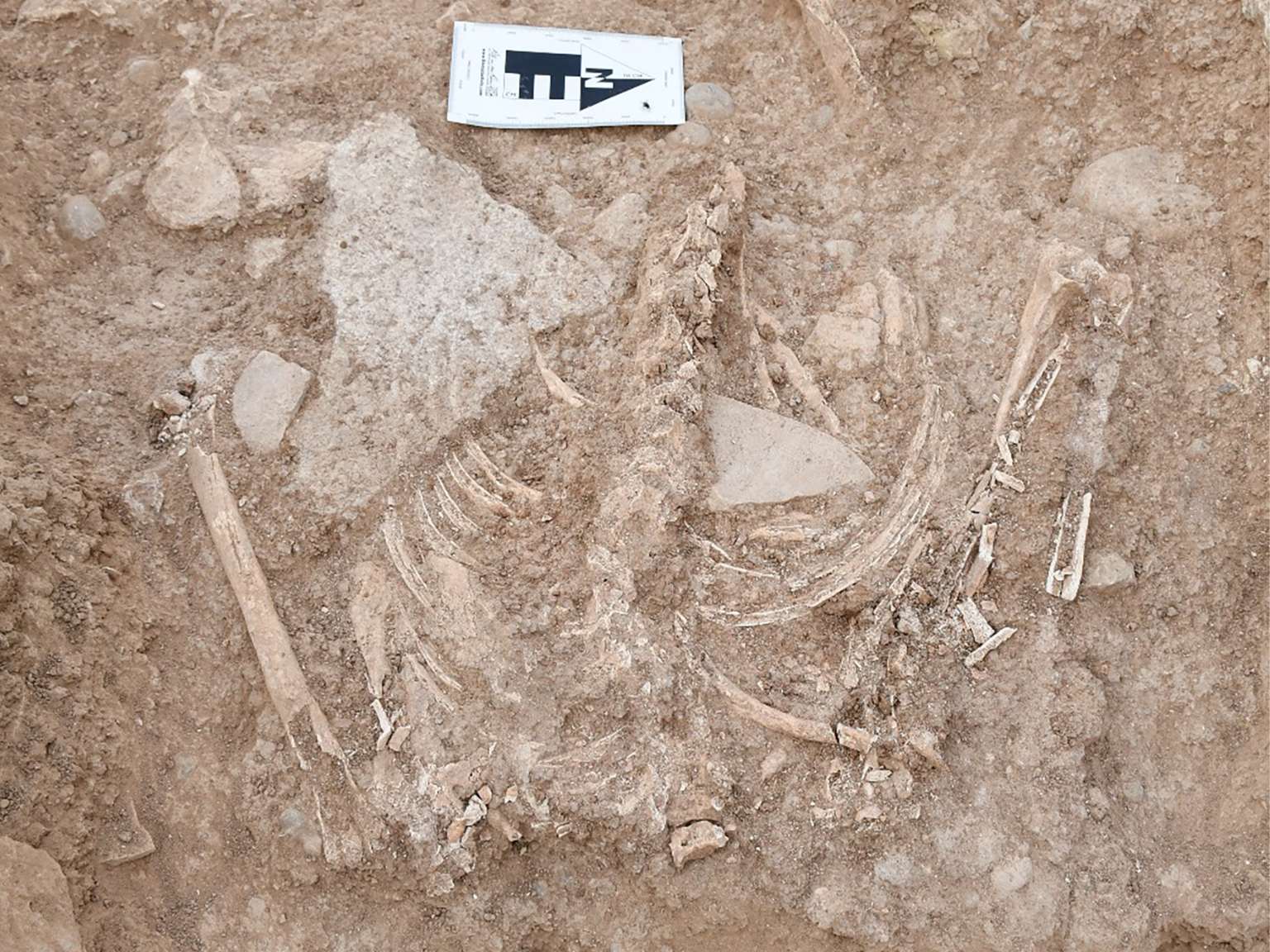
In the central passageway, researchers uncovered evidence linked to the late seventh century B.C. Finds included bronze and iron arrowheads, pottery, fragments of a large royal stela, and human remains.
The remains suggest a violent event. Researchers identified at least four people in one area, including a young child, an adolescent male, an adult female, and another adult whose sex could not be determined. In another area, archaeologists found the partial remains of an adult lying face down near the inner entrance.
The evidence points to the destruction of the gate during Nineveh’s fall in 612 B.C. Pockets of ash and charcoal suggest fire. Broken stone, scattered bones, and weapon finds add to the picture of a catastrophic battle.
Researchers also found two phases of pavement. The earlier stone pavement may belong to Sennacherib’s original construction. It showed signs of heavy use, including cart-wheel grooves. A later surface may have improved drainage and repaired damage from long use.
Broken stela names Ashurbanipal
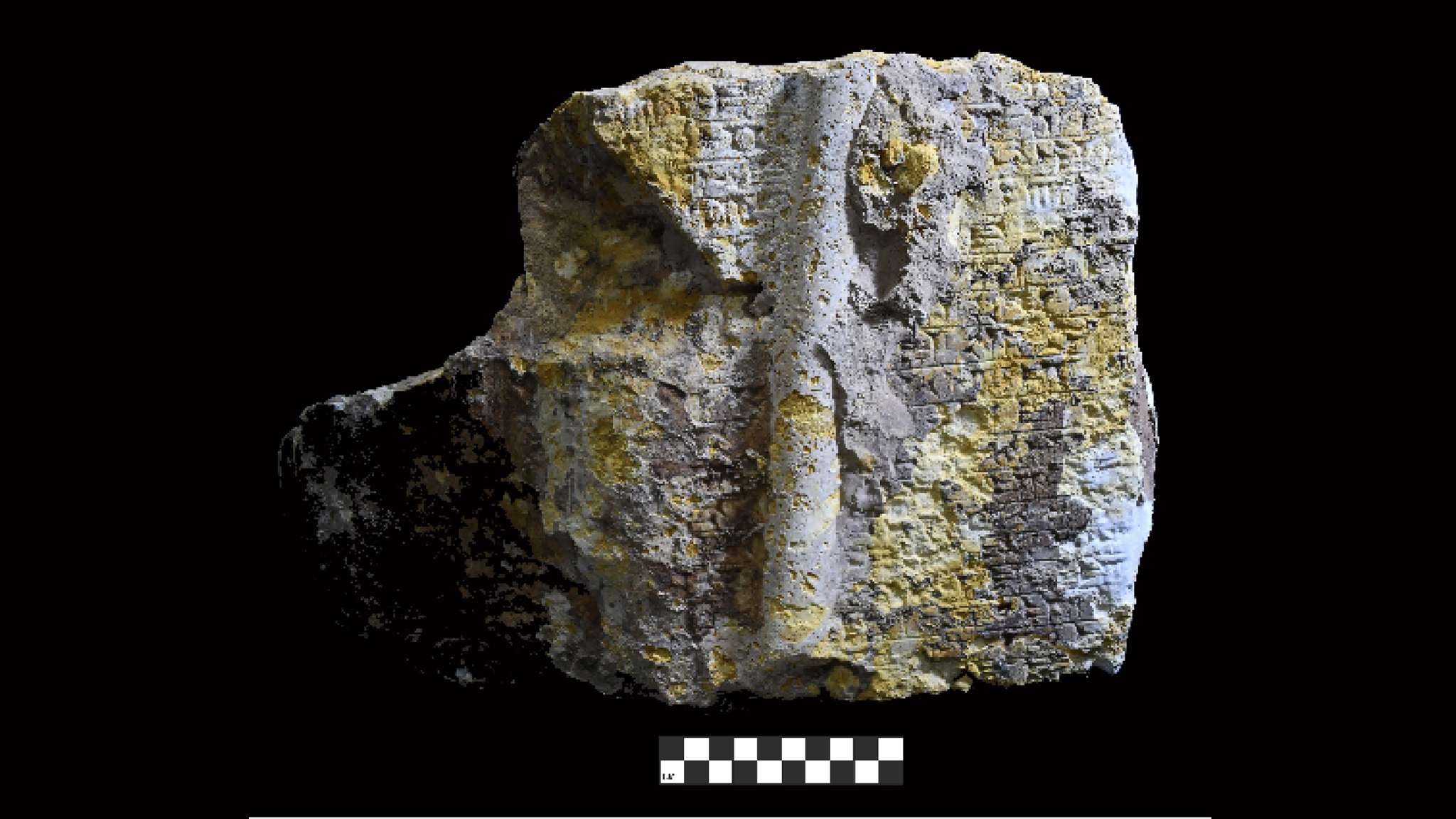
One of the most important discoveries was a large broken stela linked to King Ashurbanipal, who ruled from 669 to 631 B.C. Archaeologists recovered 196 fragments so far.
The stela was carved on both sides and carried cuneiform writing. One face appears to show a standing royal figure, likely Ashurbanipal. The text matches known inscriptions about Assyrian campaigns in Egypt, including references to Taharqa, Thebes, and captured vassal kings.
Researchers believe the stela was violently smashed, probably during the fall of Nineveh. Fire may also have damaged the stone.
The pottery from the site mostly dates to the Neo-Assyrian and post-Assyrian periods. Some pieces also point to later activity, including Sasanian and early Islamic material. Together, the finds show that the gate remained part of Mosul’s long urban story after the Assyrian empire ended.
A symbol of Mosul’s recovery
The Shamash Gate project is not only an archaeological effort. It is also part of a wider attempt to restore Mosul’s cultural heritage after years of war.
Researchers say the gate has deep symbolic value. It reflects Nineveh’s ancient power, Mosul’s modern suffering, and the city’s ongoing recovery.
The study shows that the gate still holds major evidence despite colonial-era damage, earlier restorations, erosion, and ISIS destruction. It also shows why careful conservation matters.
For archaeologists, the Shamash Gate offers a rare view of ancient warfare and modern conflict in one place. For Mosul, it stands as a damaged but surviving landmark of a city rebuilding from the ruins.
See all the latest news from Greece and the world at Greekreporter.com. Contact our newsroom to report an update or send your story, photos and videos. Follow GR on Google News and subscribe here to our daily email!

