



In the annals of ancient Sparta, a society often celebrated for its discipline, martial excellence, and austere order, the conspiracy led by Cinadon in the early 4th century BC stands as a rare example of internal unrest.
Though swiftly suppressed and ultimately unsuccessful, Cinadon’s attempted coup provides valuable insight into the complex social dynamics of a state that prided itself on unity and stability.
The structure of Spartan society
To understand the implications of Cinadon’s conspiracy, it is essential to grasp the nature of Spartan society. At the top of the social hierarchy were the Spartans, or homoioi (peers). These were full citizens and professional soldiers who devoted their lives to the service of the state. A much larger population of helots—state-owned slaves—and the perioikoi, who were free but politically disenfranchised residents, supported them by managing agriculture, commerce, and crafts.
Sparta’s unique system, with its focus on equality among citizens and strict adherence to tradition, fostered internal cohesion. At the same time, it maintained sharp distinctions between classes. These were instrumental in preserving Sparta’s military supremacy but could become sources of tension in times of change or uncertainty.
The conspiracy of Sparta and the discovery thereof
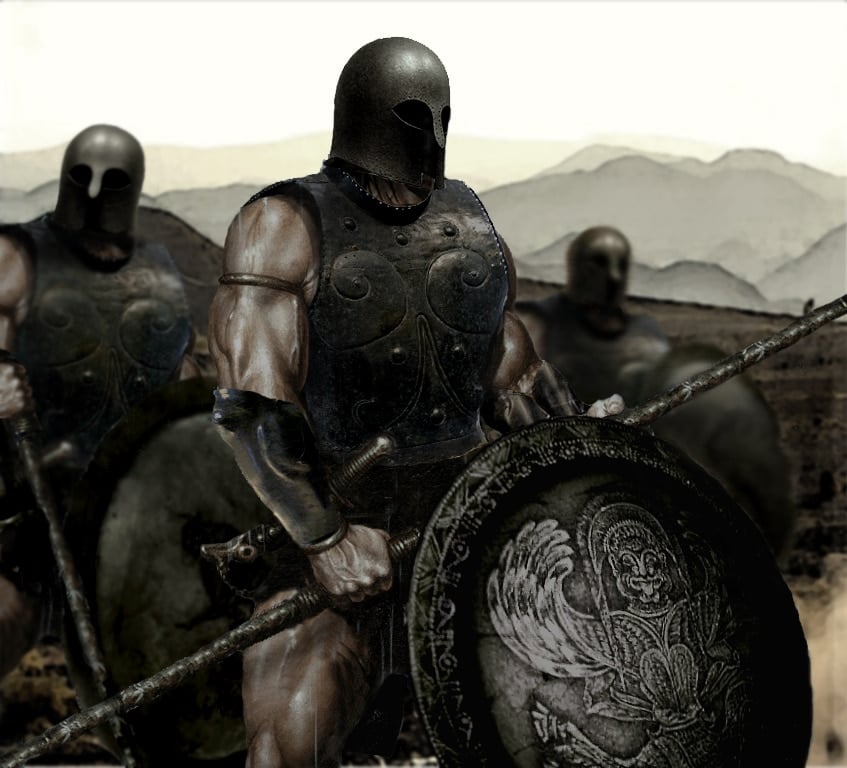
Cinadon lived during the reign of Agesilaus II. He was not a Spartan, but he was entrusted with military responsibilities. Xenophon described him as the primary source of the conspiracy, as a physically imposing and capable man. Spartan authorities trusted Cinadon enough to send him on a diplomatic mission to Delphi—a decision that ultimately led to his downfall. Yet he was also a man with ambitions, and perhaps grievances, rooted in his exclusion from the ruling class.
He was said to have gathered a group of individuals from various social backgrounds around him. These included helots, hypomeiones (those who had lost full citizen rights), and perhaps even disaffected members of the perioikoi. According to Xenophon’s Hellenica, Cinadon presented the idea that the ruling homoioi were few and thus vulnerable. This was especially the case within the city where they did not carry arms.
The conspiracy was uncovered not through mass revolt but by a confidential report made to the ephors, who were the powerful overseers of Sparta’s government. One of those approached by Cinadon became alarmed and informed the authorities, leading to a quiet investigation. The ephors cleverly used Cinadon’s own mission to Delphi to their benefit to arrange his arrest outside the city, thus avoiding immediate public unrest.
Cinadon, likely under duress, named his co-conspirators during interrogation, and authorities swiftly apprehended all involved. The punishment was severe and included public humiliation followed by execution. The entire affair was discreetly and efficiently handled, a reflection of the Spartan state’s commitment to the preservation of order.
Assessing the conspiracy’s significance to Sparta
From a historical standpoint, the conspiracy of Cinadon, an attempted coup, did not pose an existential direct threat to Sparta. Authorities intercepted the plot early, and it involved relatively few participants. Yet its existence was noteworthy, especially in a city renowned for internal stability and civic unity.
What the event does illustrate, however, is that even a society as rigidly ordered as Sparta could not completely eliminate dissent. The motives of the conspirators, particularly those of Cinadon, seem to have stemmed not from personal gain but from frustration with exclusion from political life. Cinadon’s complaint, as recorded by Xenophon, was simple: “He was not one of the equals.”
This does not necessarily prove widespread unrest or oppression. Instead, it highlights how tensions naturally emerge in stratified societies—especially when merit or service go unrewarded with political power.

Sparta’s response and resilience
The state’s response to the conspiracy demonstrates both the efficiency of Spartan governance and its capacity to manage threats without disruption. By acting swiftly and discreetly, the ephors neutralized the plot without allowing it to expand further. This, in turn, reinforced the stability that had long been a cornerstone of Spartan political order.
In the broader context of Greek history, Sparta’s handling of the Cinadon affair highlights its ability to preserve cohesion. This was the case at a time when many other cities faced internal divisions and class struggles. While other city-states experienced revolts, tyranny, or civil war, Sparta maintained a remarkable degree of order well into the 4th century BC.
The conspiracy of Cinadon was a brief but intriguing episode in Spartan history. It provides a window into the complex interplay of loyalty, ambition, and structure within a state often idealized for its unity. Far from being a sign of imminent collapse, the event was proof that Sparta could confront and contain internal threats with characteristic discipline and resolve.
Rather than undermining Sparta’s reputation, the Cinadon conspiracy affirms the challenges all societies face in balancing order with inclusion. Its continued remembrance is a testament not only to the rarity of such events but to the sophistication of the state of Sparta in confronting even brief flickers and instances of internal discord.
See all the latest news from Greece and the world at Greekreporter.com. Contact our newsroom to report an update or send your story, photos and videos. Follow GR on Google News and subscribe here to our daily email!

