



The unveiling of Greece’s draft Special Spatial Planning Framework for Tourism has ignited a fierce debate across the Aegean. Aimed at curbing unchecked overtourism while safeguarding local ecosystems, the legislative blueprint attempts to bring structural order to a sector expanding faster than its supporting public infrastructure. By categorizing the country’s 1,035 municipal units into five developmental tiers, the draft introduces rigid caps on hotel beds and increases minimum building plot requirements.
However, a rift has emerged between state planners seeking a sweeping, uniform mechanism and the local leaders on the front lines of the tourism boom. For the mayors of Greece’s island destinations, the framework relies on arbitrary metrics, obsolete data, and a fundamental misunderstanding of local carrying capacities.
Spatial planning for tourism in Greece distorts reality on Aegean islands
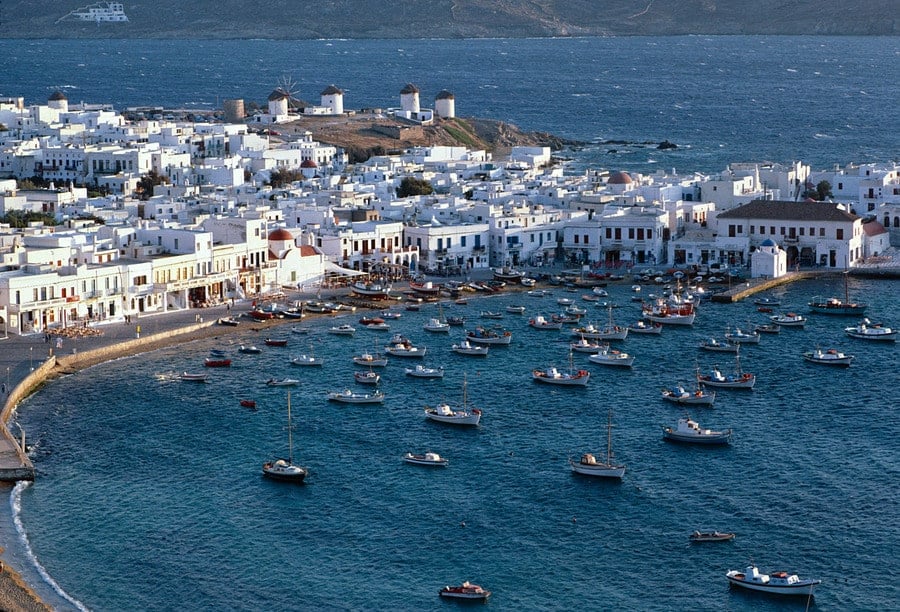
At the core of the municipal backlash is how the state measures tourism pressure. Under the proposed framework, a destination’s classification relies heavily on a static ratio: traditional hotel beds mapped against the permanent resident population. Mayors argue this formula completely miscalculates the physical reality on the ground.
“The framework determines development categories for Mykonos and a few other destinations solely by matching hotel bed numbers against the permanent resident population,” notes Christos Veronis, Mayor of Mykonos, speaking to Greek Reporter. “This choice is fundamentally flawed because it ignores every other socioeconomic metric and parameter. It should be measured against the average daily population rather than just permanent residents. On Mykonos, 40,000 people live and work daily during the season, completely separate from the tourist crowds.”
Furthermore, the state’s metrics largely rely on outdated statistics from 2011 and 2016 while completely excluding short-term rental beds, which have now reached numerical parity with traditional hotels. Local leaders argue that treating carrying capacity as a fixed number is an administrative failure.
As Mayor Veronis emphasizes, “Carrying capacity is a dynamic, variable metric, not a static one, and it expands alongside infrastructure development. The text says absolutely nothing about infrastructure, nor does it restrict building based on it.”
Mega-funds vs. local communities
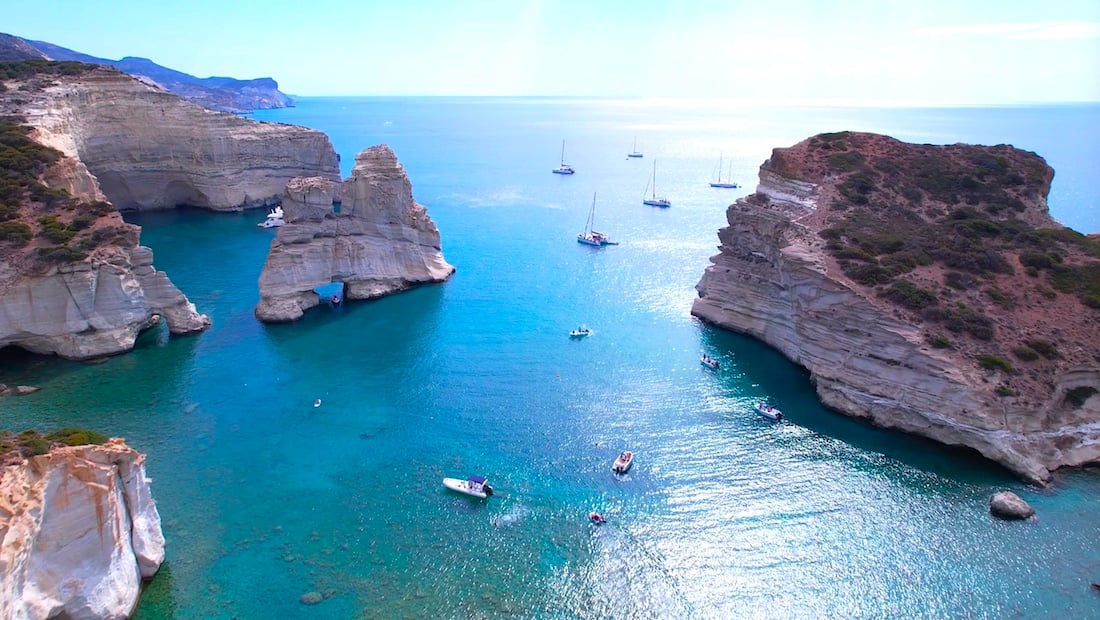
To curb density, the framework drastically raises minimum plot sizes for off-plan construction—building on land outside official municipal town boundaries. In highly developed “Category 1” zones, a new hotel requires a minimum plot of 16 acres (stremmata) and faces a strict 100-bed cap. While intended to protect the landscape, local authorities warn this policy creates an inversion of its stated goals, pricing out locals while paving the way for massive corporate exploitation.
“Because large, contiguous plots of land are scarce on Milos, most locals can only afford to invest in smaller plots of 4, 5, or 6 acres,” explains Manolis Mikelis, Mayor of Milos. “By mandating that any new tourism business or hotel must sit on 8, 12, or 16 acres depending on the zone, the law effectively boxes out locals. It paves the way for wealthy, large-scale funds to buy up local properties, forcing residents to sell off their land to operations that only run for seven months a year.”
On islands where space is the ultimate premium, mayors are pushing back against the idea that adding more beds under the guise of “luxury” solves overcrowding. Nikos Zorzos, Mayor of Santorini, who has sounded the alarm on saturation for over a decade, views the new rules as a continuation of the problem.
“For new, off-plan hotel units on Santorini, the framework increases the minimum required plot size to 16 acres. Yet, it still permits the construction of 3-star, 4-star, and 5-star hotels with up to 100 beds. I believe this will only burden the island further,” Zorzos maintained. “Our island does not need a single additional bed. Allowing a 100-bed hotel on a 16-acre plot does not protect our scenery.”
The perils of horizontal legislation and spatial planning in Greece and the Aegean
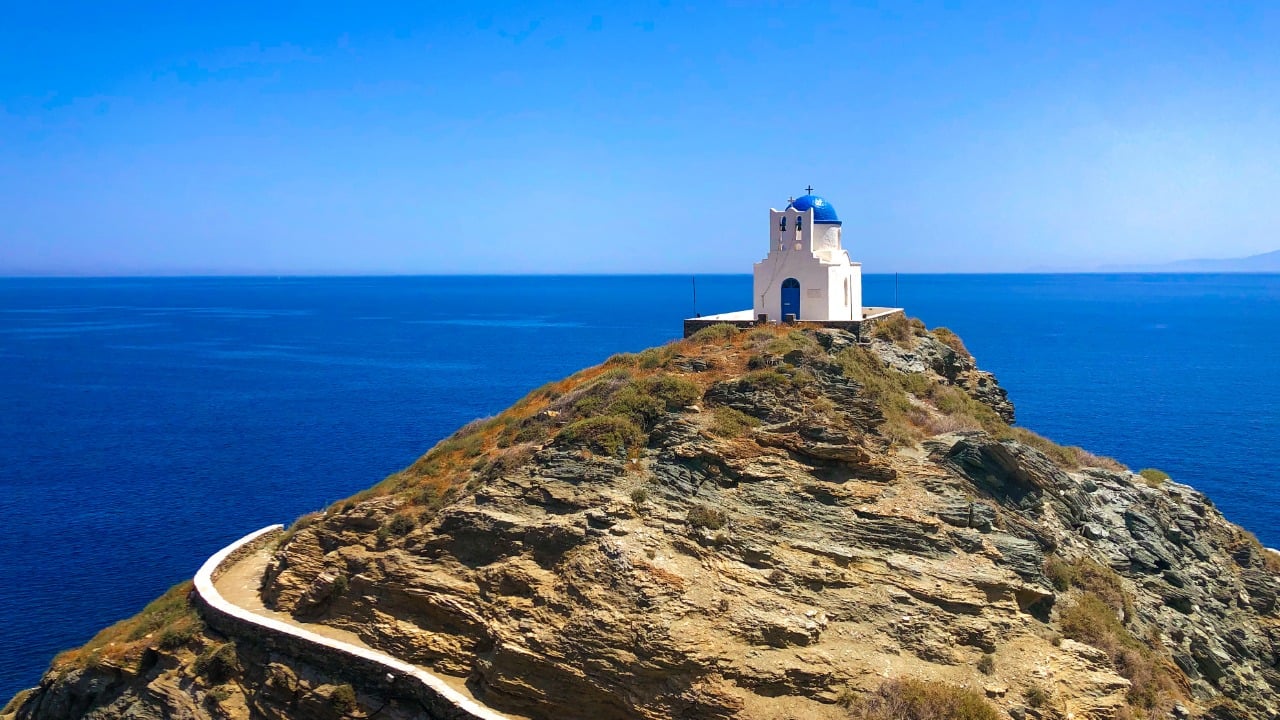
A primary grievance communicated by these destination leaders is the framework’s reliance on broad, horizontal regulations. By attempting to manage the entire Greek coastline under uniform rules, the state overlooks the delicate social and architectural fabric of smaller islands.
“Following a unanimous decision by our Municipal Council, the Municipality of Sifnos finds that the proposed framework fails to address our island’s specific environmental, spatial, and developmental realities,” Maria Nadali, Mayor of Sifnos, tells Greek Reporter. “By adopting broad categorizations and horizontal regulations, the framework completely ignores the carrying capacity, scale, landscape, and cultural identity of Sifnos. Lumping Sifnos into the same category as much larger, saturated islands forces a one-size-fits-all development model upon us.”
On nearby Kimolos, local governance is fighting to ensure that tourism planning does not completely displace the people who keep the island alive. Konstantinos Ventouris, Mayor of Kimolos, emphasized that spatial planning must protect permanent residents from being priced out of their own homes.
The municipality is demanding strict, localized rules, including “prohibiting the construction of new swimming pools and Jacuzzis” to protect fragile water resources, and limiting new off-plan hotels to a maximum of 50 beds.
“Rigid, horizontal rules applied without regional adaptation will severely damage our island’s viability,” Ventouris warns.
Enforcement and the destruction of the landscape
Even where the framework promises environmental preservation, local leaders remain deeply skeptical due to a chronic lack of enforcement and legal loopholes that favor heavy development.
Mayor Zorzos of Santorini points directly to post-crisis “strategic investment” laws that allow major developers to bypass local constraints. “Investors capitalizing on ‘strategic investment’ status should not be allowed to build under an entirely different set of rules than ordinary citizens,” Zorzos argues. “Our greatest capital is our environment and landscape—and once destroyed, they can never be restored.”
This destruction is already a reality on the coastlines of Milos, where Mayor Mikelis described a harrowing uphill battle against illegal corporate construction near iconic sites like Sarakiniko. Despite local protests and court injunctions, central enforcement mechanisms have repeatedly failed to step in.
“We refuse to let our islands be hyper-exploited for ten years only to be discarded once their distinct beauty is gone,” Mikelis says, summarizing the collective frustration of the Aegean. “We are coordinating with other mayors to amplify our voices, ensuring that when a traveler pays to come here from America, Australia, or Europe, they find the rare, untouched beauty they were promised.”
See all the latest news from Greece and the world at Greekreporter.com. Contact our newsroom to report an update or send your story, photos and videos. Follow GR on Google News and subscribe here to our daily email!

