



For centuries the location of Alexander the Great’s tomb and his body has remained one of history’s greatest mysteries.
While scholars have long debated its whereabouts, recent research sheds new light on its potential location. It also explores the fascinating story of Alexander’s body after his death.
In an exclusive interview with Greek Reporter, the Armenian professor Christian de Vartavan, an esteemed Egyptologist and renowned scholar, shares fascinating insights into his decades—long research on the tomb and body of Alexander the Great.
His career culminated in the foundation of Egyptology in the Republic of Armenia in 2006, followed by an eight-year directorship of its first national Egyptology center until 2014. This historic foundation is recognized by the UK Government, and he holds the honor of having his personal archives kept by Oxford University as part of the National Archives. He wrote the seminal book ”Locating the Tomb and Body of Alexander the Great”. Professor de Vartavan’s journey into this captivating topic stems from both personal history and professional expertise.
His findings offer new perspectives on the whereabouts of the tomb. They also reveal its multiple locations and the mysterious fate of Alexander’s mortal remains.
The first tomb: Beneath the Mosque Nabi Daniel
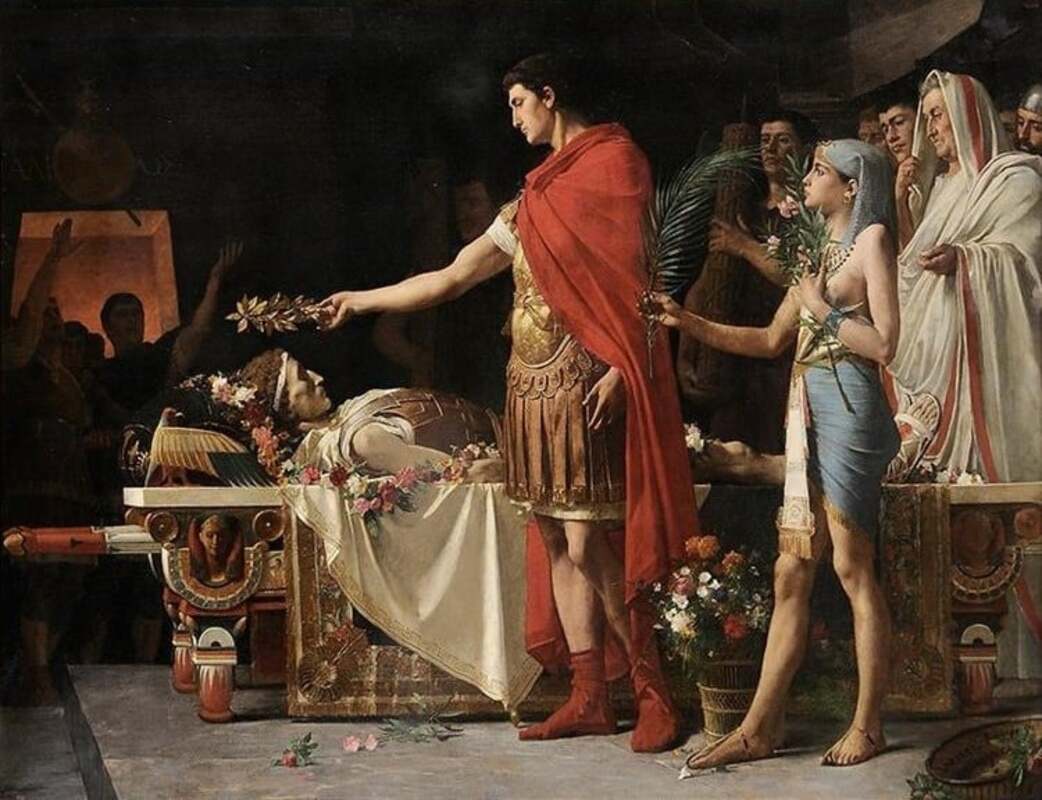
The ancient city of Alexandria, home to the great king, holds the key to uncovering Alexander’s final resting place. According to new research, the tomb was originally located in proximity to the Mosque Nabi Daniel.
This is not a random spot, as it lies in a historically significant area of Alexandria. Many of the city’s most notable figures are buried there. As the city grew, the location of Alexander’s mausoleum was moved a kilometer to the east.
Professor de Vartavan challenges traditional views of Alexander the Great’s tomb. He concludes that it was not located in a single spot but rather at two distinct locations over time.
”What needs to be understood is that as the city grew in size and a new palace was built near the harbor, the mausoleum was moved one kilometer east. The Ptolemaic rulers, including Cleopatra, wanted the founding hero to be buried close to them (for political or other reasons). So they moved his mausoleum in a new tumulus, probably similar to that of Kasta (Amphipolis) at the intersection of the new larger avenue leading to the palace and the ancient road crossing Alexandria from the East gate to the West gate,” according to de Vartavan.
The professor identifies the remnants of an alabaster chamber as a key clue in locating Alexander’s tomb. This chamber was first discovered by Italian archaeologist Achille Adriani in the 1940s. He concurs with the findings of archaeologist Kalliopi Papakosta, who has excavated near the site. He asserts that the chamber is indeed Alexander’s burial site. However, it lies above the ancient archaeological levels, as a result of its relocation.

Differentiating the tomb, sarcophagus and body: A crucial Distinction
A central theme in Professor de Vartavan’s work is the need to distinguish between the tomb, the sarcophagus and the body of Alexander the Great. Many prior researchers conflated these three elements into one, but the professor argues that we should view them separately. The tomb, he explains, likely consisted of two earth tumuli in two different locations.
Professor de Vartavan explains: ”The greatest error made by those who tackled the question of the whereabouts of the ‘tomb’ of Alexander was to treat the tomb, the sarcophagus and the body as one. Whereas we now realize that the inner mausoleum is a fourth element of the ‘tomb’. This because the tomb was most probably made of TWO earth tumuli (as mentioned above), in two locations, and the inner alabaster chamber we see today was at the heart of one, before being moved at the heart of the second many years later. As they moved the body of Alexander, they also moved the sarcophagus.”
The true mystery lies in the fate of the body itself, which the professor delves into in his book. He reveals startling conclusions about its eventual whereabouts.
The body of Alexander the Great: The journey to Saint Anthony’s monastery
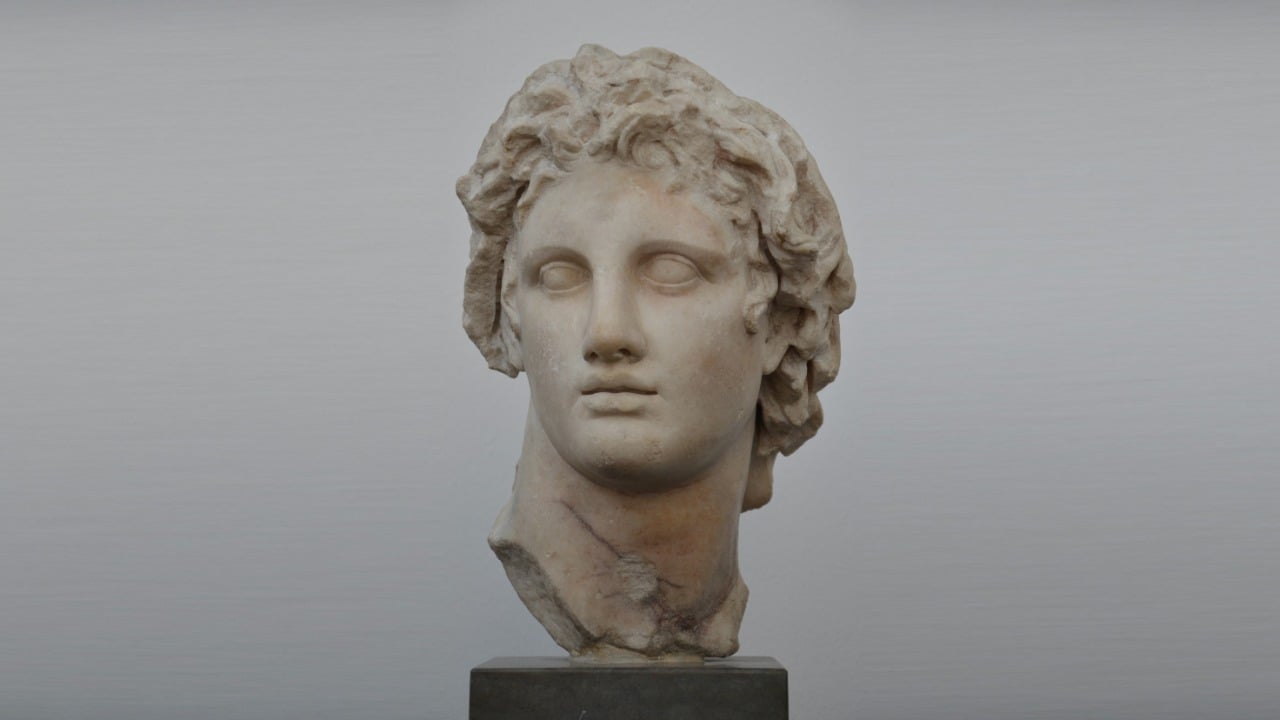
Beyond the tomb itself, there’s another compelling element to Alexander’s burial story: the journey of his body. Historical sources suggest that Alexander’s body was moved several times after his death, particularly during the Roman period.
One of the most intriguing aspects of the professor’s research is his exploration of the connection between Saint Sisoes the Egyptian, a Coptic desert father, and Alexander’s body. Through a careful cross-analysis of Greek and Coptic sources, the professor uncovers a remarkable story. Between 356 and 428 AD, Saint Sisoes is believed to have encountered the body of Alexander the Great.
Professor de Vartavan remarks: ”This unexpected encounter left a deep souvenir in Christianity with Saint Sisoes contemplating with sadness the mortal remains of the great conqueror (probably very decayed) and alluding to the vanity of life and our ultimate fatal destiny.
It also created an artistic tradition, particularly in the Cretan school, of ‘Sisoes in front of the sarcophagus of Alexander the Great’ which propagated itself across Greece and ended either on the walls of monasteries, like in the Meteora, or on numerous icons of the 15th to 17th century.”
Various injuries, including a broken nose and collapsed chest, may still be evident in the remains. Archeologists could identify the body through DNA analysis if they discover it. This might offer further evidence linking it to Alexander the Great. Especially since we already know the DNA of his father, King Philip II of Macedon.

Can we find the body of Alexander the Great today?
Despite the passage of centuries, Professor de Vartavan is confident that Alexander the Great’s body may still be at the place described in ancient texts and depicted in the traditions of Saint Sisoes. He posits that the body could be located either within or near the Monastery of Saint Anthony.
Builders constructed this monastery around 361-363 AD, just a few years after Saint Sisoes arrived in the area. The body may have badly decayed after its transfer from Alexandria. The professor though, believes its distinctive features would still make it recognizable. Its distinctive injuries would make identification possible. These include multiple fractures sustained during Alexander’s lifetime.
As he states: ”I expect the body to be exactly in the same condition shown in Sisoes’ frescoes, i.e. in a skeletal state. The body has already been damaged several times during Roman times in Alexandria (broken nose, collapsed chest, etc.), and a trip from Alexandria to the Monastery St Anthony in the Eastern Desert cannot, seven hundred years or so after its initial burial, have been beneficial for Alexander’s mortal remains (handling, bumpy desert roads, etc.).”
In the interview, Professor de Vartavan emphasizes his gratitude for the support he has received from Greece throughout his career, acknowledging the warm welcome he has always experienced in the country.
He concludes with a hopeful vision, that a Greek researcher might make the final discovery and bring the remains of Alexander the Great to light. Until then, his meticulous research continues to shed new light on the legendary figure’s final resting place.
See all the latest news from Greece and the world at Greekreporter.com. Contact our newsroom to report an update or send your story, photos and videos. Follow GR on Google News and subscribe here to our daily email!

