



Ancient Greece was the cradle of Western civilization, home to scientists and philosophers who have laid the foundations for modern society and the principles and values we strive to uphold. From the many philosophers of ancient Greece, the Greeks of the time distinguished the Seven Sages, who were considered the wisest of all.
The ancient Greeks we admire today regarded these seven men as the wisest of their time. They attributed to them not only the greatest moral maxims but also the scientific foundations and political laws that paved the way for democracy.
Thales of Miletus, the most ancient of ancient Greece’s Seven Sages
Thales is the most ancient (626 BC) pre-Socratic philosopher who was also a mathematician, physicist, astronomer, engineer, meteorologist, and founder of the Ionian School of Physical Philosophy in Miletus.
Thales was the first to attempt an explanation of natural phenomena based on physical processes, as demonstrated by his theory on earthquakes.
He accurately predicted the solar eclipse of May 28, 585 BCE and studied the constellations—an achievement that later proved invaluable for sea navigation. This notable eclipse is a significant astronomical event thought to have shaped the course of history.
His third most important astronomical achievement was the determination of the sun’s course from one solstice to the next. Moreover, he measured the height of the Great Pyramid of Giza. His philosophy, exhibiting knowledge of the Egyptian views on cosmogony, is further proof of his travels.
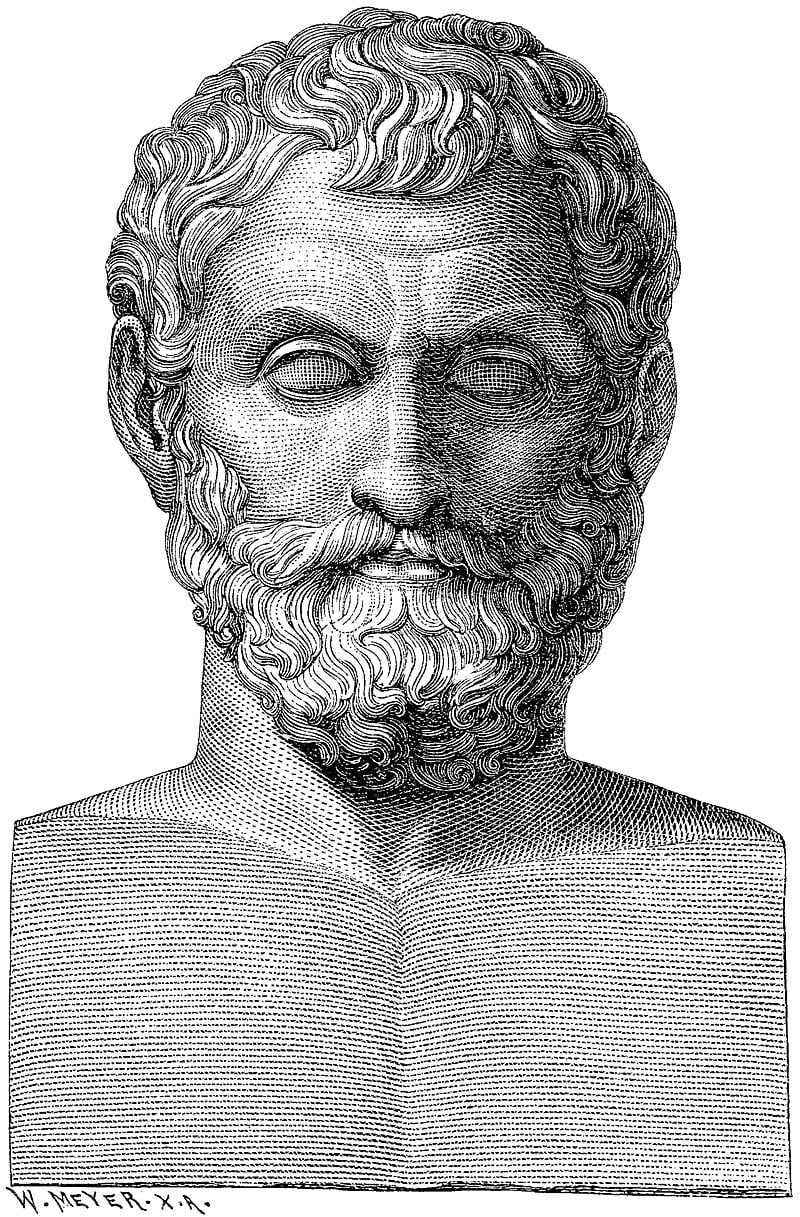
Bias of Priene, another of ancient Greece’s Seven Sages
Bias of Priene, one of the Seven Sages of the ancient Greeks and a poet, was from Priene in Ionia.
He was known for his sense of justice and rhetorical skill, and we know him for his moral quotes and a fragment of his lyrical poetry. The grammarian Satyrus includes him among the Seven Sages. According to Satyrus, when Athenian fishermen once retrieved a bronze tripod inscribed “to the wisest,” they sent it to Bias, believing him to be the wisest man.
Bias liberated the women who were slaves by paying their ransom. After educating and endowing them, he sent them back to their people in Messinia. A marble bust of Bias housed in the Vatican Museum’s Hall of Philosophers bears the inscription “Bias of Priene” and the phrase “Most people are evil.”

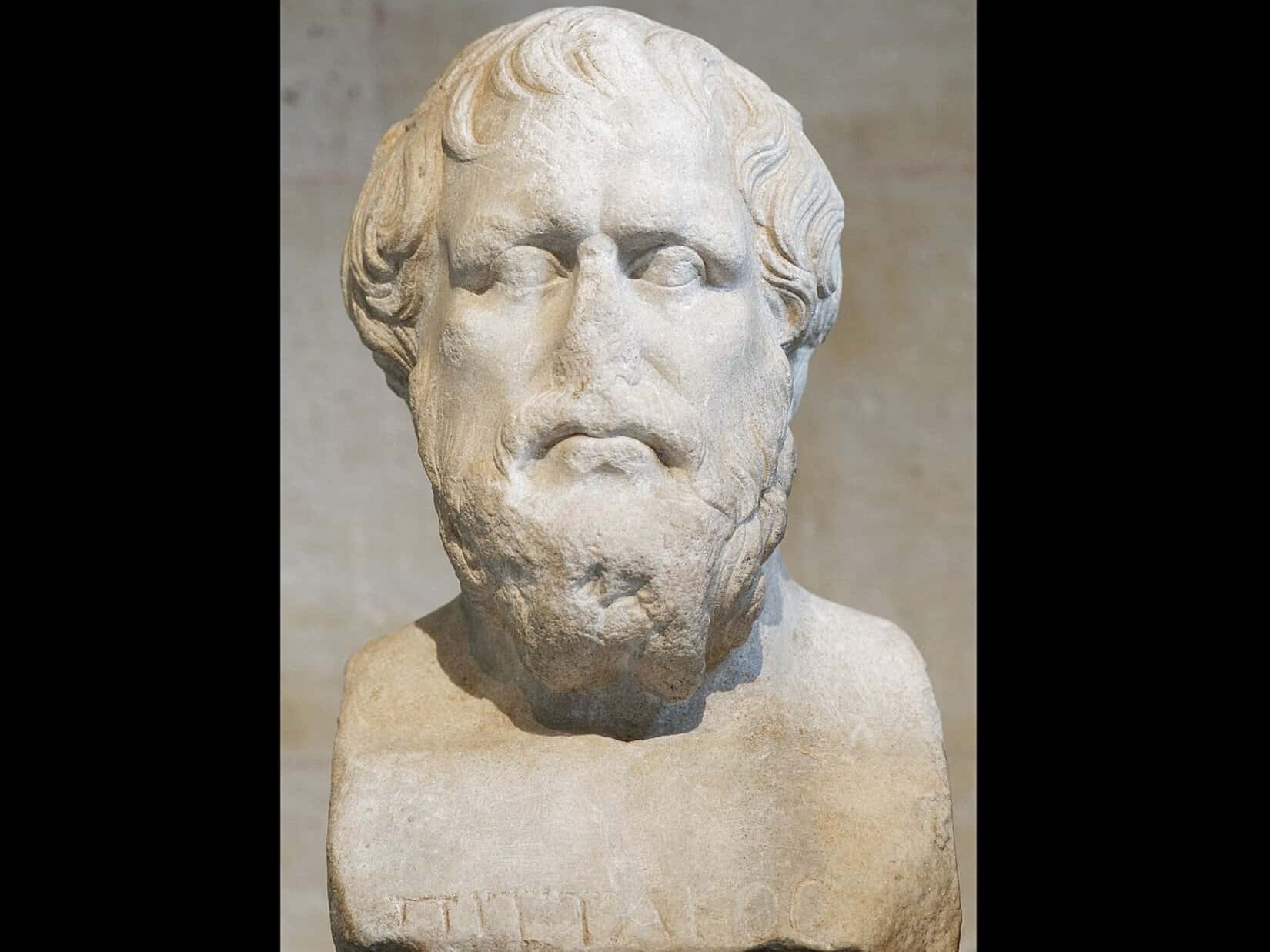
Pittacus of Mytilene
Pittacus was yet another of ancient Greece’s Seven Sages. He was a political and military leader of Mytilene. According to Diogenes Laertius, his father was Hyrradius from Thrace, who came from the middle class, while his mother belonged to the aristocracy.
People knew him for his political and social wisdom, prudence, usefulness, and martial prowess. He entered the political arena of his homeland actively in 612 BC, when, together with Epimenides and Kikkis, the brothers of the poet Alcaeus who led the aristocratic party, he killed the tyrant Melagro.
Pittacus led Mytilene in a war against the Athenians with the aim of reclaiming Sigeus in the Troad, an old Mytilenean colony at the entrance to the Hellespont. He distinguished himself in battle, even killing Phrynon, the Athenian general, in a duel. Phrynon was an Olympic champion famed for his courage and prowess.
After the war, internal disturbances continued in Mytilene, incited by certain aristocrats, notably Alcaeus and his brother Antimenides. When these instigators were exiled, the city experienced a period of peace until the exiles attempted to return by force.
To defend against this threat, the people elected Pittacus as an aesymnetes (ruler and judge), granting him absolute authority. He ruled Mytilene for a decade (589–579 BC), after which he voluntarily abdicated.
During his rule, he devoted himself to the improvement and revision of laws. According to Strabo, although the people of Mytilene loved him, the oligarchs labeled him a tyrant. Pittacus died around 569 BC at the age of seventy.
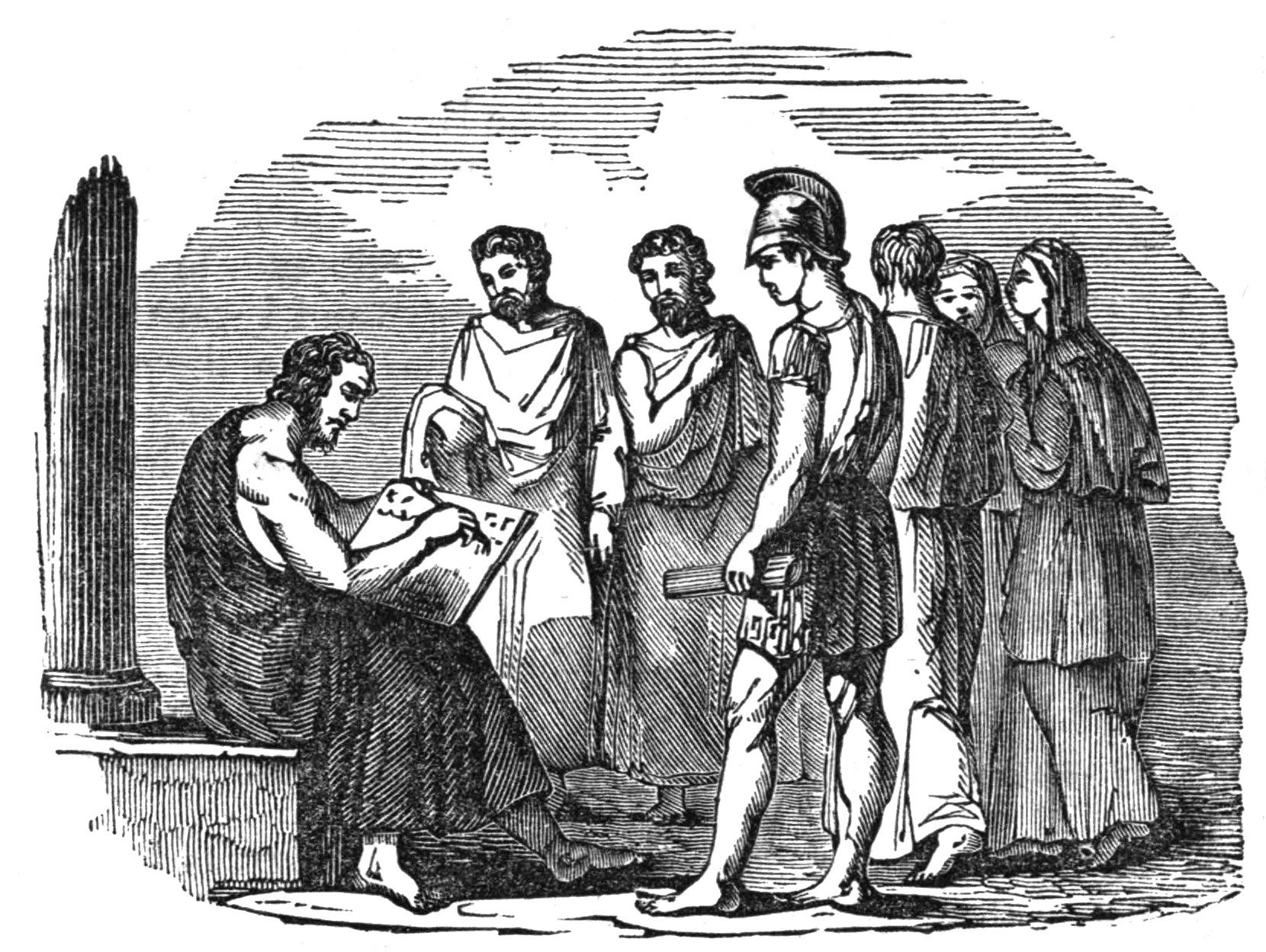
Solon the Athenian
Ancient Greek lawmaker Solon of Athens was an influential legislator, philosopher, and poet. He was the statesman who laid the foundations for today’s democracy in the sixth century BC. Living from 640 BC to 559 BC, Solon gained widespread recognition for his legislative work and social reforms in Athens.
The Athenians appointed Solon as archon, the highest administrative position in Athenian government, around 594 BC. In this role, he was able to introduce fundamental and lasting reforms to his city.
Many of Solon’s laws marked the beginning of democracy, displaying remarkable progressiveness for the sixth century BC.
His laws applied equally to both rich and poor. They were subjected to the same restraints and penalties, and both groups became eligible to serve on juries. In a poem, Solon wrote, “Laws I wrote, alike for noblemen and commoners, awarding straight justice to everybody.”
The gifted lawmaker believed that his laws and system of government were fair to all and that it was up to the citizens to take responsibility and remain politically active for the good of the state. Although some citizens urged him to remain in power as a tyrant and to alter some of his laws, he refused and voluntarily stepped down.
Before departing to travel the world, Solon is said to have asked the Athenians to agree to a contract pledging that they would uphold his reforms for at least ten years prior to making any changes to the political system.
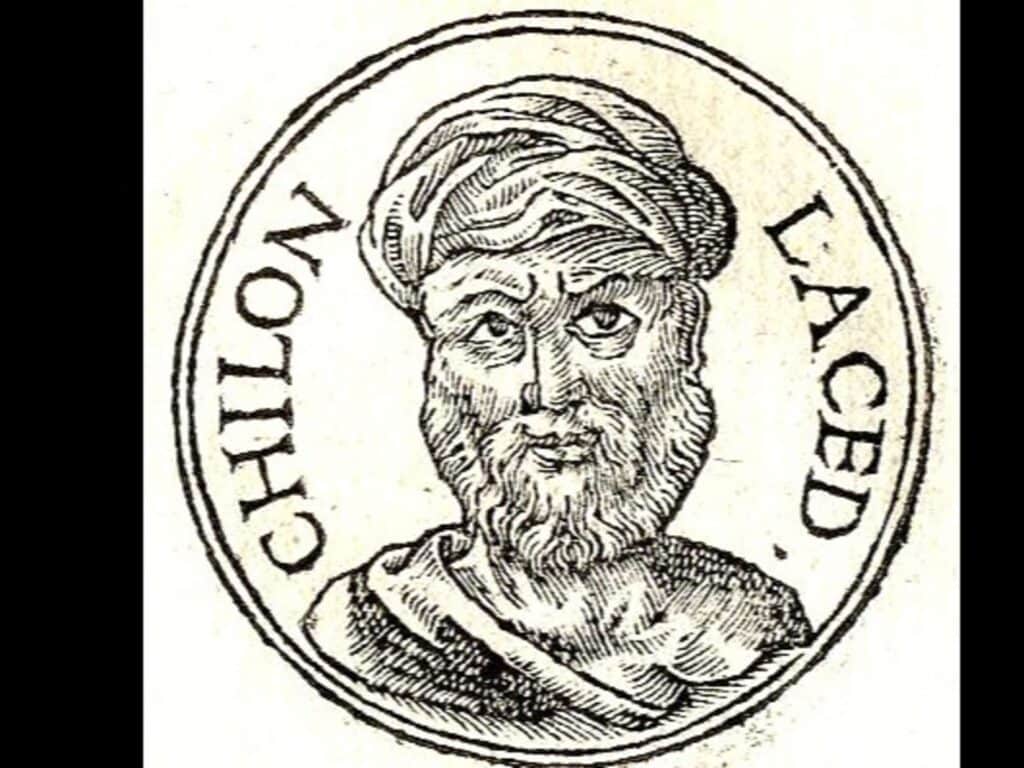
Chilon the Lacedaemonian
Chilon was a Spartan politician, legislator, philosopher, and elegiac poet. He was born in 600 BC in Sparta as the son of Damagetos.
His tenure in office was highly successful and of great significance in the historical development of Spartan politics. He proposed and achieved reforms to Lycurgus’s system. Notably, he elevated the institution of the Ephors and significantly limited royal power in favor of popular sovereignty.
Among the Greeks, Chilon was well-known and highly respected, partly for his saying that “it would be better if Kythera did not exist.” According to Herodotus, this proved to be wise during the Persian Wars, when Demaratus advised Xerxes to gather his fleet there.
An example of his wisdom is the dialogue he allegedly had in his old age with Aesop. Aesop reportedly asked him, “What is Zeus doing?” Chilon replied, “He humbles the proud and raises the lowly,” a phrase that would much later be echoed by Jesus Christ in a nearly identical form: “For everyone who exalts himself will be humbled, and he who humbles himself will be exalted” (Luke 18:14).
When Chilon was asked, “How do the educated differ from the uneducated?” he answered, “As do the dead from the living.” Finally, to the question, “What is difficult?” he is said to have replied, “To keep secrets, be silent, and, when possible, to bring wrongdoers to justice.” The phrase “know thyself” is also attributed to him.
Chilon died in 520 BC in Pissa, Sicily.
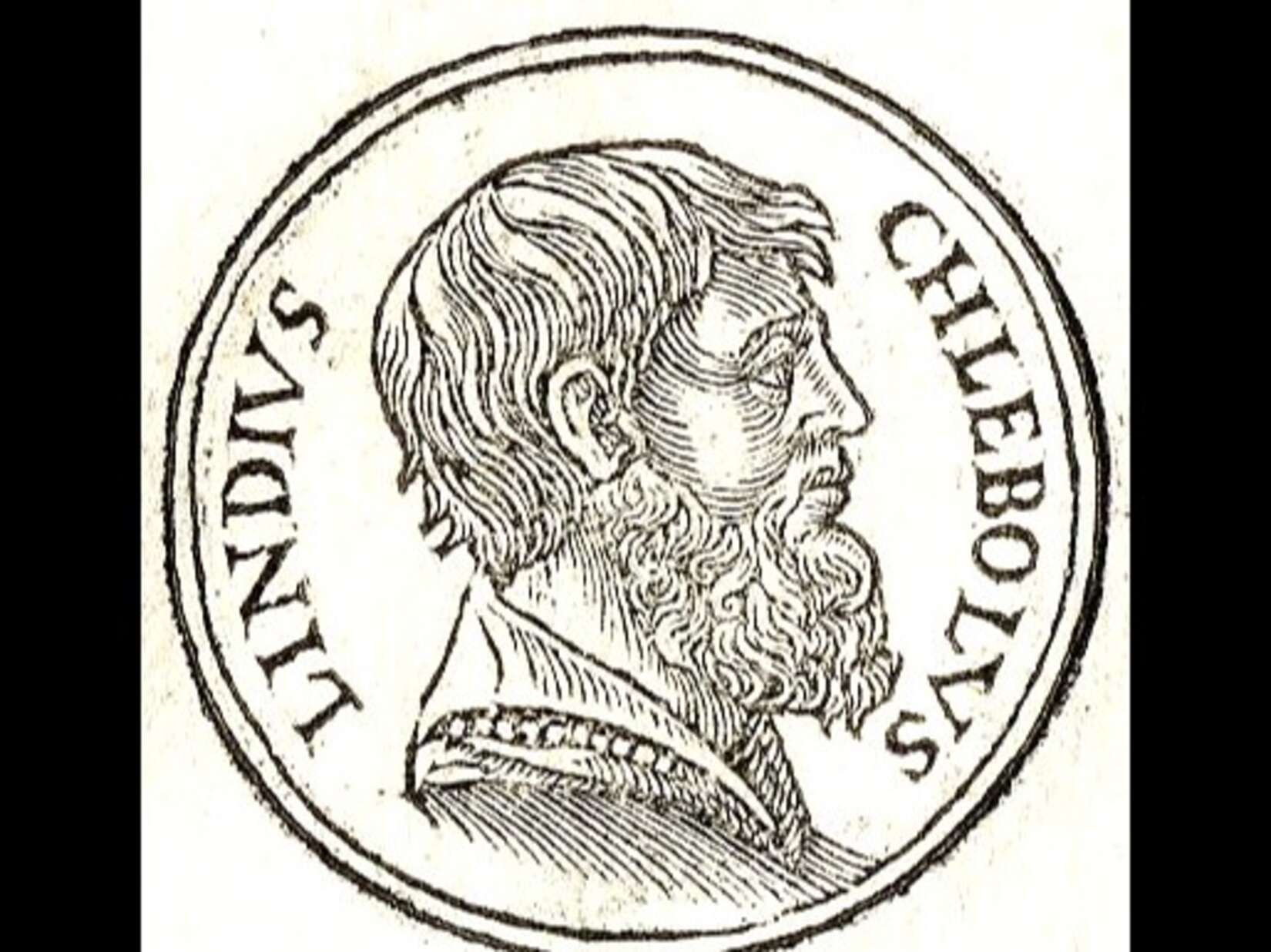
Cleobulus of Rhodes
Cleobulus, born in 530 BC, was the ruler of Lindos on the island of Rhodes. He was a poet and one of the Seven Sages of antiquity.
In his political activities, he restored the temple of Athena. According to the legend, Danaus himself originally established and constructed the temple in Lindos. Although ancient sources refer to him as a “tyrant,” his rule appears to have benefited his city. He sent an invitation to Solon, then in exile, to visit Lindos.
Cleobulus had a daughter, Cleobulina. She composed riddles in hexameter verse reputed to be equal to those of her father, who died at the age of 70. An inscription on his grave reads:
“A wise man, Cleobulus, who died, was mourned,
and he was gladdened by Lindos.”
As a poet, Cleobulus composed hymns and riddles totaling around 3,000 verses. His quote, “Moderation is the best thing” (alternative: all in moderation), is one of the most famous sayings of ancient Greece.
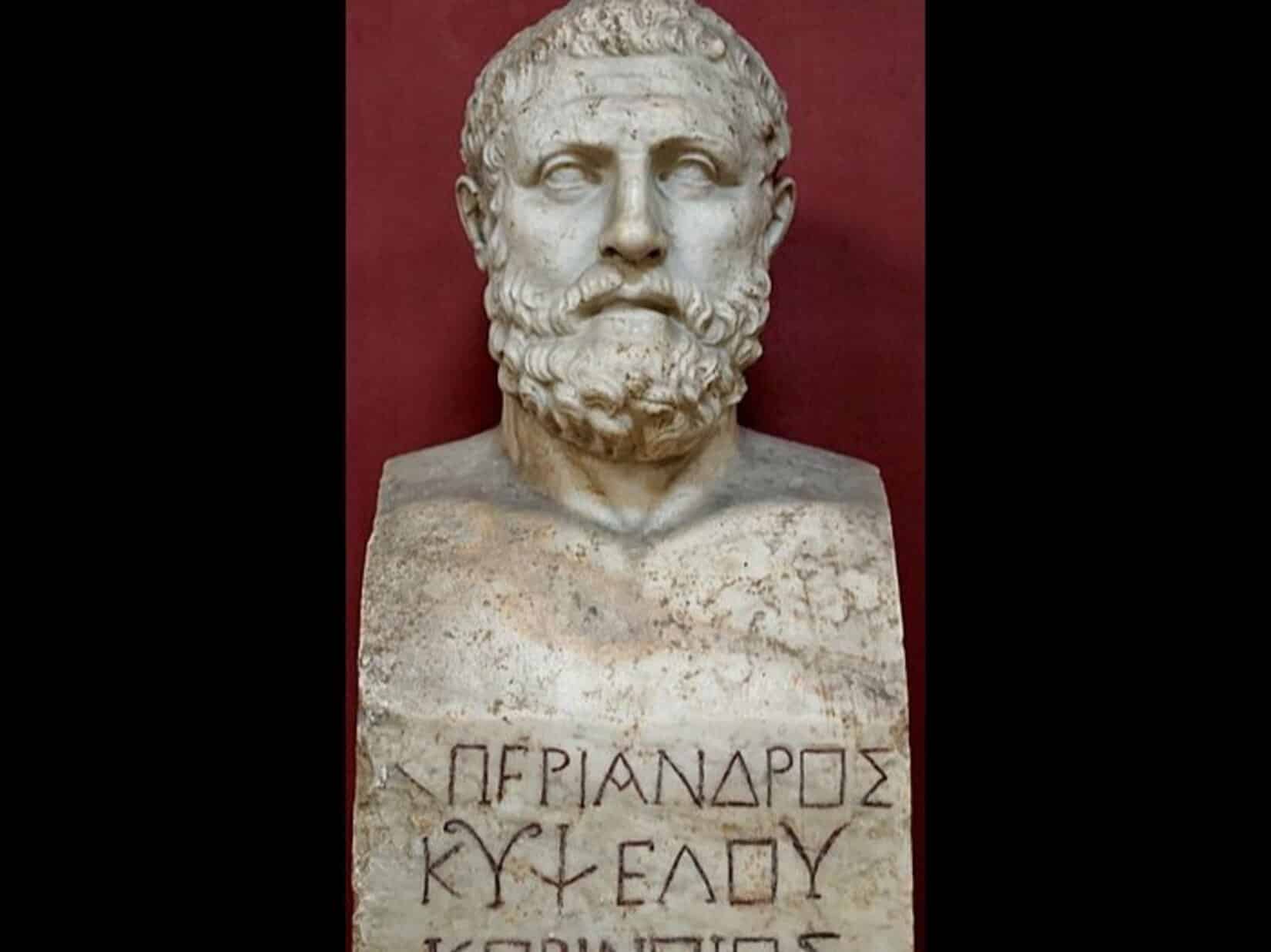
Periander the Corinthian, the last of ancient Greece’s Seven Sages
Periander lived from 668 BC until 584 BC and was the tyrant of Corinth. Under his rule, the city rose in power and prosperity, becoming a maritime force. Beyond his political influence, Periander was a social reformer. He enacted laws against promiscuity and luxury. He also created opportunities for the poor and taxed the wealthy. Furthermore, Periander supported literature and the arts, making his court a center of intellectual and artistic creation.
However, Periander did not hesitate to commit injustices and acts of brutality to secure his rule. For this reason, Plato was unwilling to place him among the ancient Greek sages. Instead, he preferred Myson of Chenae in his place.
According to Herodotus, he once sought advice from Thrasybulus, the tyrant of Miletus, on how best to consolidate his power.
Through a symbolic act, Thrasybulus conveyed that Periander should eliminate any powerful opponents or those who resisted his authority. Periander did not hesitate to resort to extreme measures, including the murder of his own relatives, to achieve his goals.
See all the latest news from Greece and the world at Greekreporter.com. Contact our newsroom to report an update or send your story, photos and videos. Follow GR on Google News and subscribe here to our daily email!

