



On July 31, 1976, as the Summer Olympics unfolded in Montreal under the shadow of financial crisis and political discord, Greek Prime Minister Constantine Karamanlis advanced one of the most ambitious proposals in the history of the modern Olympic movement. In a letter to Lord Killanin, President of the International Olympic Committee (IOC), Karamanlis urged that the Summer Olympic Games be returned permanently to their birthplace in Greece.
His proposal went far beyond symbolism. Karamanlis envisioned creating a permanent international Olympic sanctuary near Ancient Olympia—a neutral, internationally administered site where the Games could be insulated from political disputes, economic excess, and the growing commercialization that threatened their founding ideals.
Although the IOC ultimately rejected the initiative, Karamanlis’ campaign evolved into a major international debate. Following the Cold War turmoil surrounding the 1980 Moscow Olympics, his proposal won remarkable support from across the American political spectrum, including President Jimmy Carter, Republican presidential candidate Ronald Reagan, and influential members of Congress.
A Vision Born from Olympic Crisis
The Montreal Olympics exposed profound structural weaknesses within the Olympic movement.
Only four years earlier, the 1972 Munich massacre had demonstrated that the Games were no longer immune from international terrorism. Montreal then presented a different set of dangers. More than twenty African nations boycotted the Games over New Zealand’s sporting contacts with apartheid South Africa, while the host city accumulated nearly $1.5 billion in debt—an enormous burden that would take decades to repay.
For Karamanlis, these crises were not isolated events but symptoms of a flawed system. Rotating the Games from one host nation to another every four years made them vulnerable to political pressure, escalating costs, and nationalist competition.
His solution was revolutionary. Greece would establish a permanent Olympic complex near Ancient Olympia under an international legal framework that guaranteed political neutrality. Purpose-built venues would eliminate the need for each host city to spend billions constructing new infrastructure, while athletes would compete on ground dedicated exclusively to the Olympic ideal.
The proposal echoed the ancient Greek principle of ekecheiria, or Olympic Truce, which suspended warfare so athletes could travel safely to Olympia.
Lord Killanin acknowledged both the historical significance and moral appeal of the proposal, but the IOC maintained its longstanding belief that rotating the Games among nations promoted international participation and global development.
Carter Revives the Proposal

Karamanlis’ initiative might have remained a historical footnote had world events not dramatically changed.
In December 1979, the Soviet Union invaded Afghanistan, triggering the most serious political crisis in Olympic history. President Jimmy Carter responded by leading an international boycott of the 1980 Moscow Olympics, eventually joined by more than sixty countries.
As the Olympic movement became increasingly divided by Cold War politics, Karamanlis revived his proposal, arguing that only a permanent neutral home could protect the Games from becoming geopolitical battlegrounds.
President Carter embraced the concept. On January 20, 1980, in a letter to U.S. Olympic Committee President Robert Kane, Carter urged fundamental reform:
“I also urge that the IOC take a further step to eliminate future political competition among nations to serve as hosts for the Olympic Games. I call upon all nations to join in supporting a permanent site for the Summer Olympics in Greece, and to seek an appropriate permanent site for the Winter Olympics.”
This represented far more than a passing endorsement. Carter viewed a permanent Olympic home as a structural solution to recurring political crises rather than simply a response to the Moscow boycott.
Two months later, speaking to American Olympic athletes at the White House on March 21, 1980, Carter revealed that discussions had already advanced beyond rhetoric.
“It would suit me fine if we had a permanent Olympic site near the original Olympic game in Olympus [Olympia] in Greece. We’ve advocated that. We’ve sent a delegation from the White House, along with Prime Minister Karamanlis of Greece to look at a potential site. That would please me completely.”
The statement demonstrated that Washington had begun exploring the proposal in cooperation with the Greek government, giving Karamanlis’ vision an unprecedented level of international credibility.
Reagan Crosses Party Lines

Perhaps even more striking was the proposal’s bipartisan appeal.
Among its strongest congressional advocates was Senator Bill Bradley of New Jersey, an Olympic gold medalist who promoted the establishment of a permanently funded international Olympic center in Greece. Bipartisan congressional resolutions encouraged international cooperation to create permanent facilities at Olympia.
Even Ronald Reagan, then campaigning against Carter for the presidency, publicly endorsed the concept.
On April 2, 1980, Reagan argued that permanently returning the Olympics to Greece would help remove them from the arena of international politics. He even suggested that the United States should relinquish its right to host the 1984 Summer Olympics in Los Angeles to begin the process.
“I believe also that many of the political problems that plague the Olympics would be eliminated by permanently moving them back to their historic home, Greece. We could begin this process by foregoing the 1984 Olympics in the United States.”
The proposal generated immediate controversy. Los Angeles Mayor Tom Bradley and Olympic organizing committee president Peter Ueberroth strongly opposed any suggestion that America surrender the Games after years of preparation.
Nevertheless, Reagan’s support illustrated the extraordinary reach of Karamanlis’ campaign. Few international initiatives could claim the backing of both Carter and Reagan during one of the most polarized periods of American politics.
Reagan Reaffirms His Position
Although Los Angeles ultimately hosted the 1984 Olympics, the Soviet-led boycott mirrored the American boycott of Moscow four years earlier, reinforcing Karamanlis’ original warnings that the Games had become hostages to international rivalry.
As the crisis unfolded, President Reagan revisited his earlier thinking. Speaking to reporters at the White House in May 1984, he recalled:
“I went through a stage of thinking in which I said… should we not consider removing [the Games]… and from that I went to exploring what so many have and are exploring now: possibly having the Olympics from now on be in the home of their origin, Greece, and not have them move around the world.”
His remarks underscored that the idea had remained alive even after he assumed the presidency.
Why the IOC Said No
Despite the remarkable political support Karamanlis assembled, the IOC never seriously considered abandoning its traditional model.
The committee argued that rotating the Games allowed different nations and cultures to participate as hosts, reinforcing the Olympics’ universal character. Equally important, the 1980s witnessed an explosion in television rights, corporate sponsorships, and commercial revenues that transformed hosting into a multibillion-dollar enterprise.
Ironically, the very forces Karamanlis warned against—politicization, commercialization, and escalating costs—became central pillars of the Olympic system.
A Vision That Endures
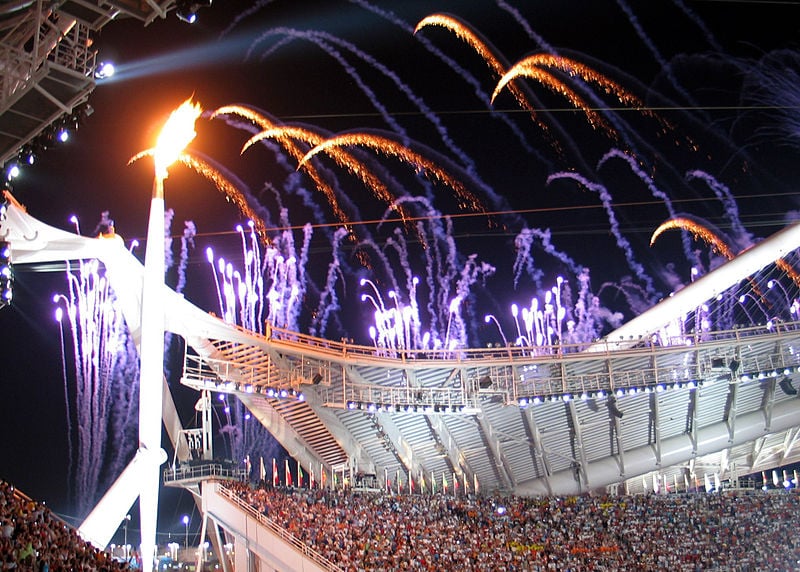
Nearly fifty years after Karamanlis first wrote to Lord Killanin, his proposal remains one of the boldest diplomatic initiatives ever advanced in the name of the Olympic movement.
It united two American presidents from opposing political parties behind the same fundamental idea: that the Games might best serve humanity if they returned permanently to their birthplace.
Although the IOC rejected the proposal, Karamanlis accurately anticipated many of the challenges that continue to confront the Olympics today, from political boycotts and security concerns to soaring construction costs and abandoned venues.
See all the latest news from Greece and the world at Greekreporter.com. Contact our newsroom to report an update or send your story, photos and videos. Follow GR on Google News and subscribe here to our daily email!

