



Konstantinos Karamanlis (March 8, 1907- April 23, 1998) was one of Greece’s greatest modern national leaders, who dominated post-World War II politics in the country. He is often credited with restoring democracy and steering Greece toward European integration. However, his long and dominant political career was marked by significant controversy and sustained criticism.
He was the man chosen to pull Greece out of seven dark years of a dictatorship in 1974. He took on the mammoth tasks of restoring democracy, attempting to forge unity between Greeks and making Greece the eighth full member of the European Union in 1980. The EU was then called the European Economic Community.
Karamanlis made his first appearance on the national stage on October 5, 1955, when King Paul appointed him to form a government following the death of Prime Minister Alexandros Papagos. His eight-year career as Prime Minister was interrupted unpredictably with his resignation in June of 1963, following a disagreement with King Paul, which marked a major break with the Palace.
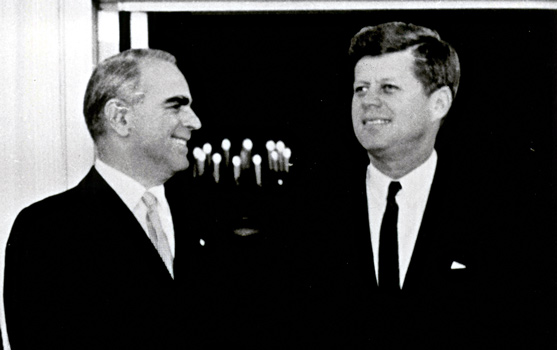
It was a time of great political turmoil. Main opposition leader Georgios Papandreou, the president of the Centrists Union, had declared an endless war against Karamanlis, accusing him of winning the 1961 election with violence and ballot rigging. Critics argued that Karamanlis presided over a “para-state” (παρακράτος)—a network of right-wing security organizations and intelligence services that operated outside formal democratic control. These groups were accused of monitoring, harassing, and suppressing the political Left, which was still viewed with deep suspicion following the Greek Civil War.
At the same time, the murder of leftist MP Grigoris Lambrakis by right-wing extremists in Thessaloniki had cast a shadow over his administration.
In the early 1960s, former German occupation official Max Merten alleged that Karamanlis and other government members had collaborated with Nazi occupation authorities and were rewarded with business assets that had been confiscated from the Jewish community in Thessaloniki. Karamanlis strongly rejected these claims as extortion and libel, but the scandal provided significant ammunition for his opponents
As a result, Karamanlis, as the leader of the ERE, lost the 1963 election to Papandreou and fled to Paris, France, spending the next eleven years in self-imposed exile in Paris.
Karamanlis’ triumphant return in 1974
Karamanlis returned in glory to Greece on July 24, 1974 following the collapse of the dictatorship under the weight of the failed coup in Cyprus and the resultant Turkish invasion of the island.
He was requested to return to form a government of national unity and lead the country to democratic elections. Karamanlis restored democratic governance in Greece, legalizing the Communist Party of Greece (KKE) which had been outlawed for twenty-six years. He also pulled Greece out of the military arm of NATO after the Alliance had failed to take any action regarding the Turkish invasion of Cyprus.
From 1974 to 1980, and despite the international energy crisis, national income in Greece grew at a rate of five percent a year while per capita income rose by fifty percent. Karamanlis did not hesitate to nationalize large companies in the private sector, including Olympic Airways and Emporiki Bank, when circumstances warranted it, leading some industrialists to accuse him of socialism.
In foreign policy, Greece’s accession to the EEC and the forging of good diplomatic ties with the neighboring Communist countries and Moscow are recorded as great successes for Karamanlis. He abandoned active politics in 1980 after the formal signing of the treaty for the accession of Greece to the EEC, and Georgios Rallis succeeded him as Prime Minister of Greece.
On May 5, 1981 Karamanlis was elected by Parliament as President of the Hellenic Republic at a time when PASOK with Andreas Papandreou at the head was in power. In 1985, Prime Minister Papandreou did not keep his promise to Karamanlis for a second term and proposed the well-regarded Christos Sartzetakis. Karamanlis ended up leaving that position as a bitter man.
However, he was re-elected to the country’s highest office for the 1990 to 1995 five-year term after which he finally left politics for good. He had completed 60 years in politics, including eight years as a minister, fourteen as Prime Minister, and ten as President of the Hellenic Republic.
Konstantinos Karamanlis passed away at the age of 91 on April 23, 1998.
Famous quotes
Karamanlis was very laconic in his manner of speaking. He preferred to listen and spoke rarely. His words were few but quite meaningful. Below are some of his most famous quotes:
- “There is nothing more difficult than to govern the Greeks. And that’s because everyone thinks they are capable of everything.”
- “It seems to me, ladies and gentlemen, that in Greece we should be afraid of successes and not of misery, because disasters unite us, while successes cause affliction and divide us.”
- “In our country, we have the habit of talking a lot, so that we do not make decisions, because decisions involve responsibility.”
- “All Greeks ask for things, no one wants to give.”
- “Who governs this country?”
(His reaction after the murder of Lambrakis) - “Every ten years, Greece is kicking its luck.”
- “History will be unfair to me, because I did not start a revolution or a war.”
- “We belong in the West.”
(in the late 1970s, as he was trying to persuade Greeks to join the EEC) - “And when we say life imprisonment, we mean life imprisonment.”
(After the death penalty sentence to the junta colonels was commuted to life imprisonment). - “And when we say “left,” we mean left of the left.”
(Describing PASOK) - “There is only one Macedonia, and Macedonia is Greek.”
See all the latest news from Greece and the world at Greekreporter.com. Contact our newsroom to report an update or send your story, photos and videos. Follow GR on Google News and subscribe here to our daily email!

