



Archaeologists studying an ancient Greek gate in Libya have found new clues about how the structure was built, funded and dated, thanks to hundreds of carved marks left behind by the stonecutters who built it.
A new study of the Tauchira Gate at Ptolemais, on Libya’s northern coast, examined 626 stonemasons’ marks and concluded the gate was likely built during the reign of Ptolemy VIII in the second century BC.
The research was carried out by Anna Urszula Kordas of the Faculty of Culture and Arts at the University of Warsaw in Poland. It was published in the European Journal of Archaeology.
The Tauchira Gate is considered the best-preserved section of the fortifications built around Ptolemais, a city founded by the Greeks and later absorbed into the Ptolemaic kingdom of Egypt. The gate has drawn the attention of travelers and scholars for centuries, but its stonemasons’ marks were rarely studied closely until now.
Ancient Greek gate in Libya reveals hidden construction secrets
Kordas worked from photographs taken by the Polish Archaeological Mission to Ptolemais in 2006 and used digital mapping software to trace where each mark appeared on the gate’s two towers. She sorted the marks into 27 types and split them into two groups.
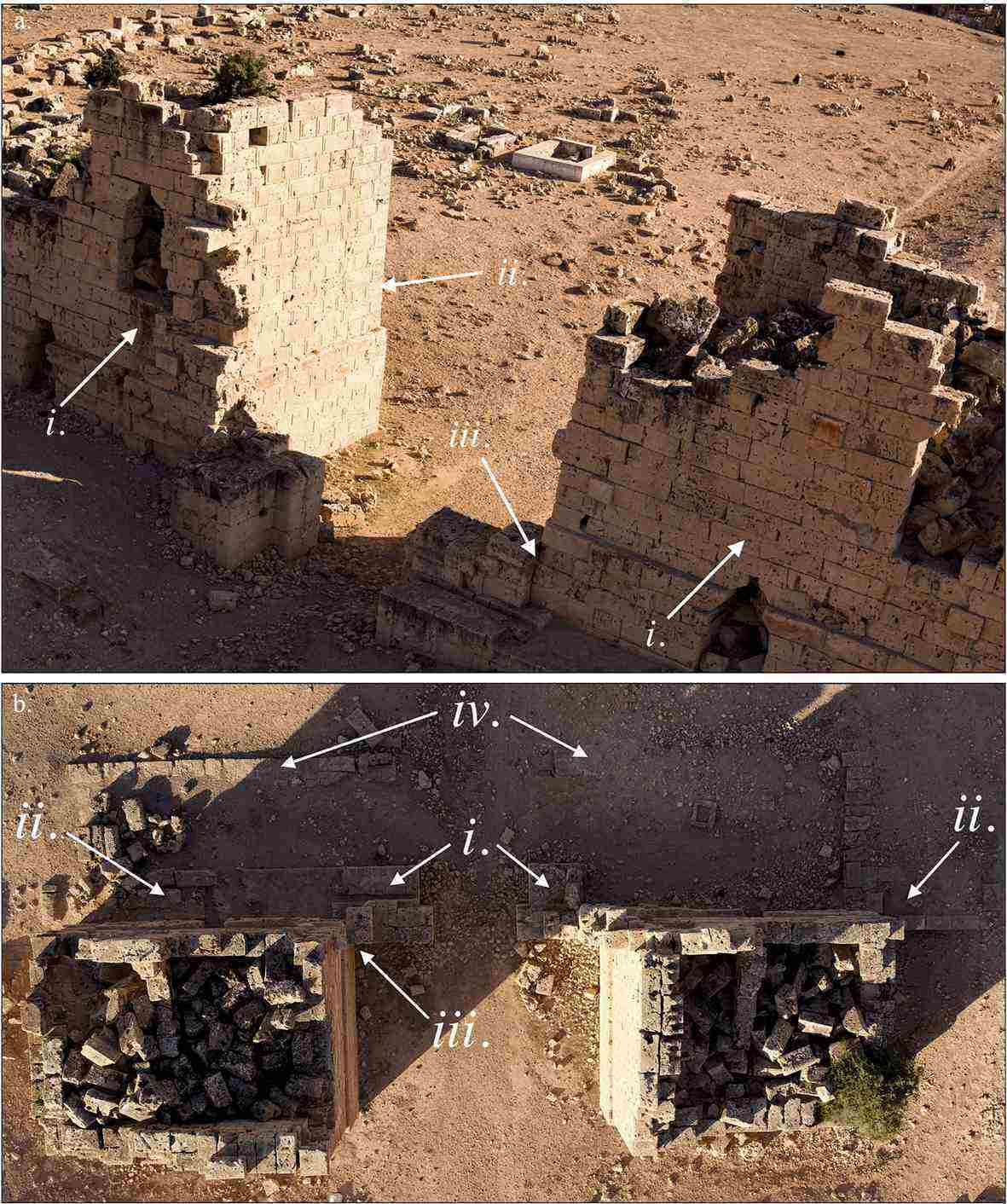
The first group appeared on rough, unfinished blocks, mostly hidden from view, and likely recorded quarrying or transport work. The second group appeared on the finished, textured outer surfaces of the towers and was carved with much greater care.
Kordas explained that the pattern of marks points to two separate systems used to organize and pay for the work. Some marks follow a simple letter sequence, suggesting workers were divided into teams labeled with letters of the Greek alphabet.
Other marks form more complex monograms, which Kordas believes may represent the names of workshop owners or private donors who helped fund the project, a common practice in Greek cities at the time.
How digital mapping uncovered the stonemasons’ team system
The study also found that the two towers of the gate were built at the same time rather than one after another, contradicting an earlier theory from a German team that examined the site in 2009. Kordas said the marks show construction moved quickly, likely because the gate served an urgent defensive purpose.

Unlike similar marks found at other ancient construction sites, where such symbols were typically hidden once the stone was finished, the marks on the Tauchira Gate were left visible on purpose.
Kordas suggested this was intended to publicly credit the teams or donors involved, a form of recognition similar to how ancient cities honored civic benefactors.
To help date the gate, Kordas compared the shapes of the letters used in the marks with other dated inscriptions from the region. She also pointed to a nearby graffito mentioning a visitor from Rhodes, which offers additional support for placing the gate’s construction in the earlier half of the second century BC.
See all the latest news from Greece and the world at Greekreporter.com. Contact our newsroom to report an update or send your story, photos and videos. Follow GR on Google News and subscribe here to our daily email!

