



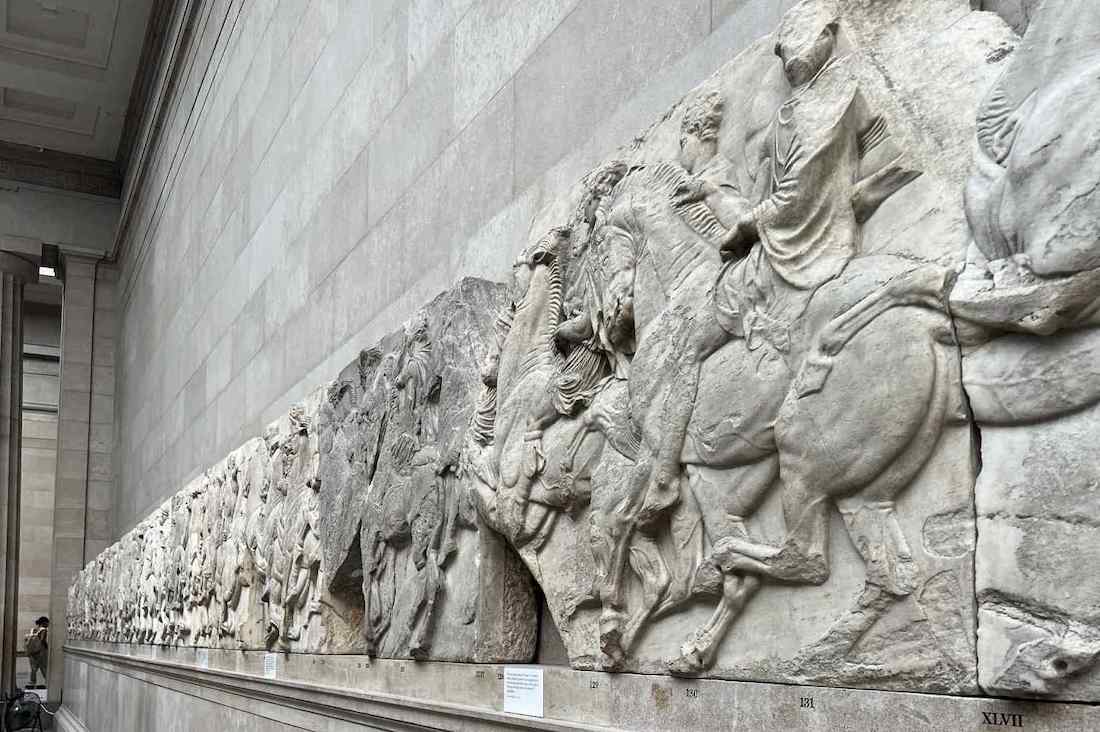
The Intergovernmental Committee of UNESCO has issued a formal call to intensify efforts for the reunification of the Parthenon Marbles. Concluding its session on Friday (May 22, 2026), the committee’s decision marks a highly positive development for Athens’ long-standing diplomatic goals.
The permanent return and reunification of the Parthenon Sculptures has been on UNESCO’s agenda since 1984. This year, the matter was thoroughly reviewed during the 25th Session of the Intergovernmental Committee for Promoting the Return of Cultural Property to its Countries of Origin (ICPRCP).
Greece’s case for the reunification of the Parthenon Marbles
According to a statement from the Greek Ministry of Culture, the Greek delegation presented a comprehensive, well-documented history of the case, underscoring the rightful demand for the sculptures’ return and their permanent reunification at the Acropolis Museum. The Greek arguments focused heavily on several key points:
- Illegal acquisition: Lord Elgin acquired the sculptures illicitly before they ultimately ended up in the British Museum.
- Lack of documentation: There is a total absence of an official imperial firman or relevant Ottoman documents authorizing their removal.
- Historical damage: The violent detachment of the marbles caused severe, irreversible damage, which was further compounded by subsequent, botched restoration attempts.
- Lack of respect: The British Museum continues to fall short in how it manages and respects Phidias’ masterpieces to this day.
Furthermore, the Greek delegation briefed committee members on Athens’ continuous efforts to find a viable solution in line with UNESCO recommendations. However, progress has stalled due to the UK’s insistence on a temporary “loan” as the only basis for a potential deal.
The delegation also highlighted a recent maneuver by the British government. In an effort that bypassed Parliament, the UK government attempted to exempt sixteen national museums, including the British Museum, from chapters 15 and 16 of the Charities Act 2022. Under these provisions, museums would otherwise be permitted to return objects from their collections to countries of origin on moral grounds. Greece emphasized that the Parthenon Sculptures and their symbolism remain an inseparable, living piece of Greek cultural heritage and identity.
Finally, Greece called upon the United Kingdom to show tangible goodwill by complying with the committee’s decisions.
UK stands firm, but international isolation grows
During its own address, the United Kingdom firmly stuck to its long-standing positions. The British delegation reiterated that the Sculptures were acquired legally and maintained that the existing UK legal framework prevents their permanent repatriation to Greece. They also argued that the high volume of museum visitors ensures millions of people can appreciate them annually.
However, the Greek presentation was met with overwhelming support from the majority of the Intergovernmental Committee’s member states, including Italy, Brazil, Colombia, Azerbaijan, China, the Czech Republic, Egypt, Poland, Guatemala, Burkina Faso, Libya, Iran, and Zambia. Observer states, such as Cyprus, Turkey, Bahrain, Nigeria, Lebanon, Mexico, and Mauritania, also strongly backed the Greek request, emphatically demanding that efforts continue until the sculptures are reunited in Greece.
In a notable moment, Turkey reiterated that no Ottoman document or firman exists to legitimize Elgin’s looting of the monument. The Turkish delegation explicitly urged the United Kingdom to stop using the alleged firman as a talking point in international intergovernmental forums.
See all the latest news from Greece and the world at Greekreporter.com. Contact our newsroom to report an update or send your story, photos and videos. Follow GR on Google News and subscribe here to our daily email!

