



The representative of Turkey at UNESCO eroded the British argument that Lord Elgin legitimately bought the Parthenon Marbles from the Ottoman authorities, saying that such a document has not been found.
Speaking at the 24th Session of UNESCO’s Intergovernmental Committee for the Return of Cultural Property to the Countries of Origin (ICPRCP), Zeynep Boz, Head of the Anti-Smuggling Department in Turkey, stated: “It is not to our knowledge the existence of a document that legitimizes the purchase.”
She was referring to the Ottoman document, called firman, cited by Britain for the purchase of the Parthenon Marbles in 1816 from Lord Elgin.
“We are not aware of the existence of a document that legitimizes this purchase, which was then made by the British colonialists, so I do not think there is any room to discuss its legality,” stated Boz.
“We wholeheartedly look forward to celebrating the return of the Sculptures, as we believe that it will signal a change in behavior towards the protection of cultural assets worldwide,” said the representative of Turkey.
For its part, the United Kingdom responded by reiterating its position that Lord Elgin had acted with the permission of the Ottoman authorities and by the firman given to him, of which an Italian translation survives, while there was talk of a second permission regarding the transport of the Parthenon Marbles to England.
On behalf of the Greek delegation, the director of the Acropolis Museum, Nikos Stampolidis, said that a firman “is a legal document signed by the Sultan himself while the Italian letter presented here by the British friends is a mere letter.”
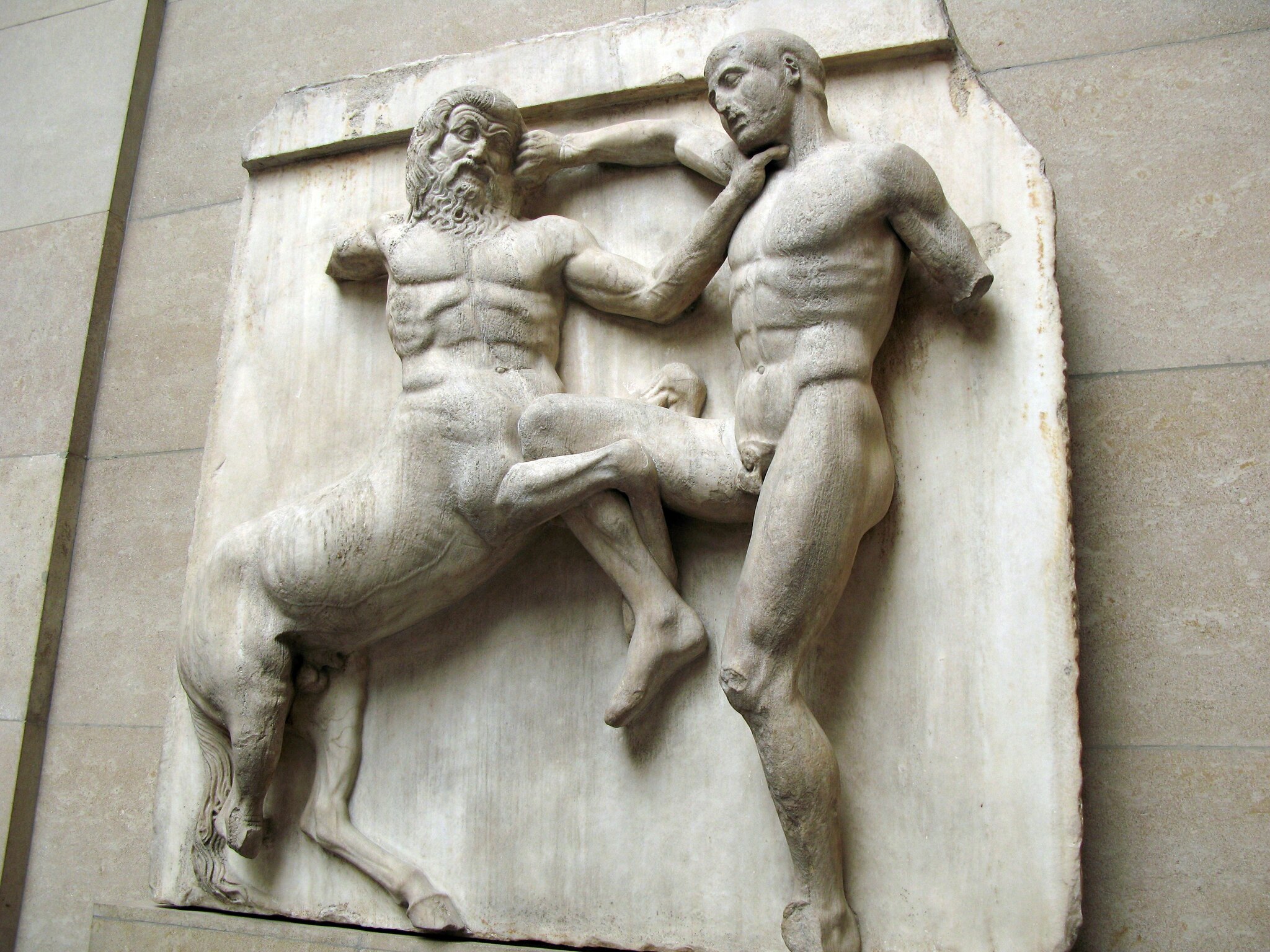
Turkey finds no record of firman for the Parthenon Marbles
The British Museum says Elgin was granted a permit, known as a firman, when he transported roughly half of the sculptures to Britain. For decades, this has been the official line of defense used by British officials to lay claim over the artifacts.
However, two Turkish researchers recently dug into the Ottoman state archives to look for any documentary evidence and found none.
“As [far] as we looked at the Ottoman archives, there is no firman allowing these marbles to be moved,” says Professor Zeynep Aygen, a conservation architect and architectural historian at Fatih Sultan Mehmet University in Istanbul.
At the heart of the controversy is what the British Museum claims is an Italian translation of the original firman—the official Ottoman permit. Museum authorities have been ambiguous on what happened to the original Ottoman permit.
Aygen says she didn’t find any such letter in the archives. “An Ottoman Firman has certain…signatures and format and can never be written in the Italian language,” Aygen told TRT World.
Some of the most important parts of the Parthenon Marbles, which include exquisite carvings of Greek gods and legendary figures, were moved during the period of Ottoman Sultan Selim III.
Knowing Sultan Selim III’s interest in heritage, Aygen says she never understood “this ‘firman’ issue” and was subsequently invited to the Acropolis Museum to start a joint research program by a colleague there.
“There I saw for the first time the so-called ‘firman’ copy and could not believe my eyes,” she told TRT World. “I immediately asked my colleague Orhan Sakin to look at it, so he shared my view that an Ottoman firman cannot look like that.”
Related: Parthenon Marbles: UK Minister Demands Ownership Concession
See all the latest news from Greece and the world at Greekreporter.com. Contact our newsroom to report an update or send your story, photos and videos. Follow GR on Google News and subscribe here to our daily email!

