




The mystery of how Egypt’s pyramids survived thousands of years of earthquakes may partly come down to smart engineering, according to a new study that examined how the Great Pyramid of Giza responds to seismic vibrations.
Researchers found that the Pyramid of Khufu has a natural vibration frequency that differs sharply from the surrounding ground, helping reduce the risk of dangerous resonance during earthquakes.
The study, led by Mohamed ELGabry and published in Scientific Reports, analyzed ambient seismic noise recorded inside the 4,600-year-old pyramid. Researchers said the findings may explain why the structure has survived centuries of earthquakes with little serious damage.
The pyramids endured centuries of seismic activity
The Great Pyramid, built during Egypt’s Old Kingdom for Pharaoh Khufu, has faced several major earthquakes over thousands of years. Researchers noted that one of the strongest known events struck near El-Fayoum in 1847 with an estimated magnitude of 6.86.
Another earthquake in 1992 caused some casing stones to fall from the pyramids, but the main structure remained stable.
Researchers measured vibrations inside the pyramid
The team carried out 37 measurements inside different parts of the pyramid, including the King’s Chamber, Queen’s Chamber, underground passages, and pressure-relieving chambers above the King’s Chamber. They used sensitive seismic equipment to detect low-level natural vibrations known as ambient noise.
The pyramid and the ground vibrate at different frequencies
Researchers found that most parts of the pyramid shared a similar fundamental frequency between 2.0 and 2.6 hertz, with an average around 2.3 hertz. The surrounding ground, however, showed a much lower frequency near 0.6 hertz.
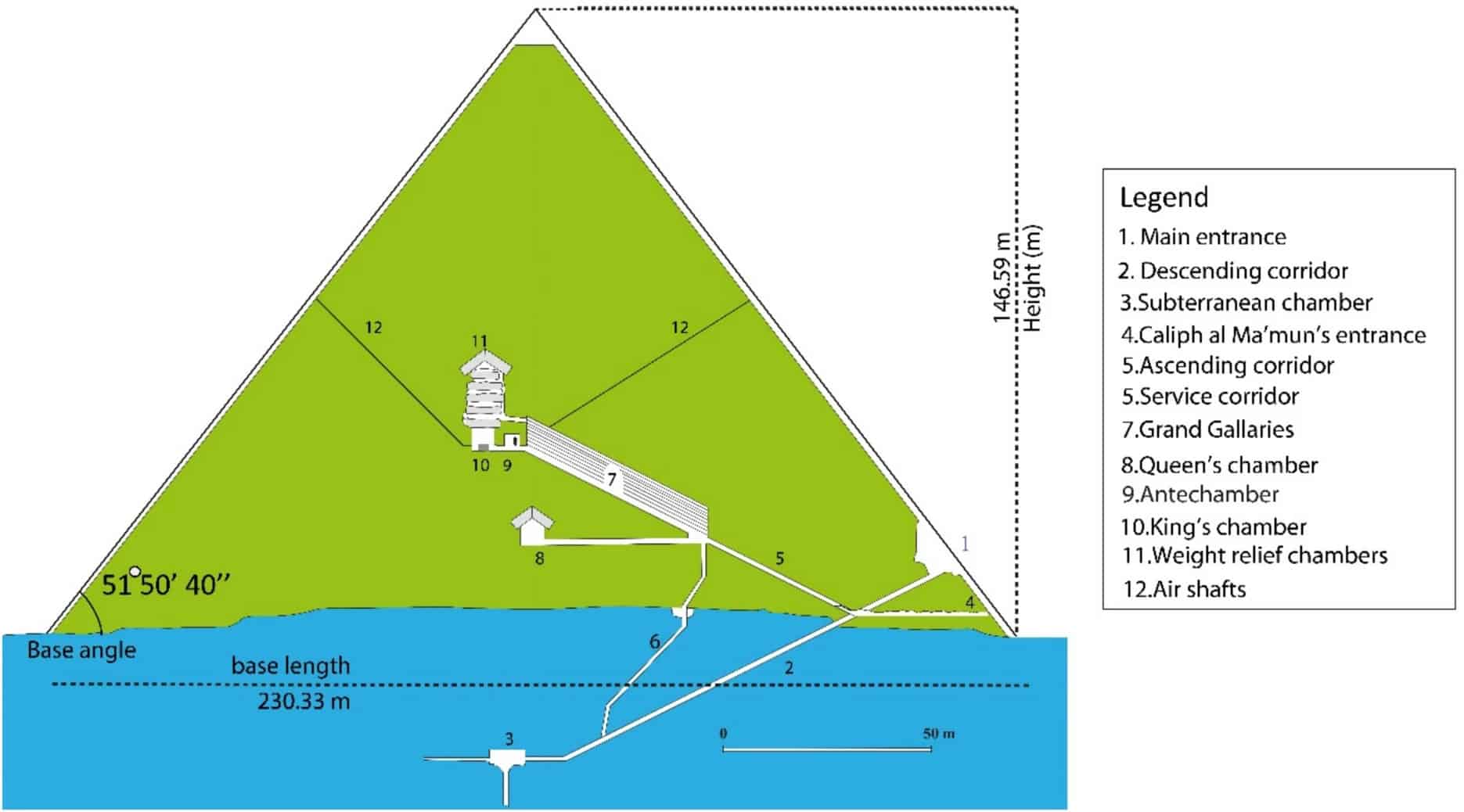
That gap is important because resonance happens when a building and the ground vibrate at similar frequencies during an earthquake. Such resonance can greatly increase structural damage.
Researchers said the mismatch between the pyramid’s vibration frequency and the surrounding soil likely reduced resonance effects over centuries of seismic activity.
Shape and mass distribution may have improved stability
The study also pointed to several engineering features that may have strengthened the pyramid against earthquakes. Most of the pyramid’s mass sits near the ground, while the structure gradually narrows toward the top. Researchers said this design improves balance and reduces the risk of overturning.
The pyramid’s symmetrical shape and dense base also help distribute stress more evenly during seismic shaking. Researchers added that the structure was built directly on hard limestone bedrock, which likely improved stability further.
Researchers avoid claims of intentional seismic design
The study stopped short of claiming that ancient Egyptians intentionally designed the pyramid to resist earthquakes. Researchers said there is no direct evidence proving ancient builders understood seismic engineering in the modern sense.
Still, the findings suggest the Great Pyramid’s geometry and construction methods naturally reduced seismic risks. Researchers said the monument remains “a testament to ancient seismic engineering principles” that could still inform modern heritage preservation efforts.
See all the latest news from Greece and the world at Greekreporter.com. Contact our newsroom to report an update or send your story, photos and videos. Follow GR on Google News and subscribe here to our daily email!

