



Archaeologists have uncovered a large ancient weapons production site on the Greek island of Andros, linked to the era of Alexander the Great’s successors, who dominated the island from around 337 BC.
A study published in Archaeological and Anthropological Sciences reveals that iron-working slags found at Palaeopolis, the island’s ancient capital, date to the 4th and 3rd centuries BC, a period of intense Macedonian military activity across the Aegean.
The site’s industrial past is visible even in the local geography. The ridge east of Palaeopolis carries the name “Skouria,” derived from the Greek word for slag, because of the enormous stockpiles of ironworking waste found there.
Lead researcher G. Stamatakis of the National and Kapodistrian University of Athens examined 22 slag samples from the city’s agora, or marketplace.
Casting pits and mould fragments reveal an ancient ironworks
Excavations at the agora, covering roughly 500 square meters (5,382 square feet) beneath two upper-terrace buildings, uncovered three casting pits and small furnaces resting on layers of burned mudbrick.
Clay mould fragments, iron and bronze particles, coal residues, small pieces of lead, and a plaster model of a miniature vase dated to the 3rd century BC, used in mould construction, were also recovered. More than 100 slag pieces, ranging from 5 to 20 centimeters (2 to 8 inches) in size, are now stored at the Andros Archaeological Museum.
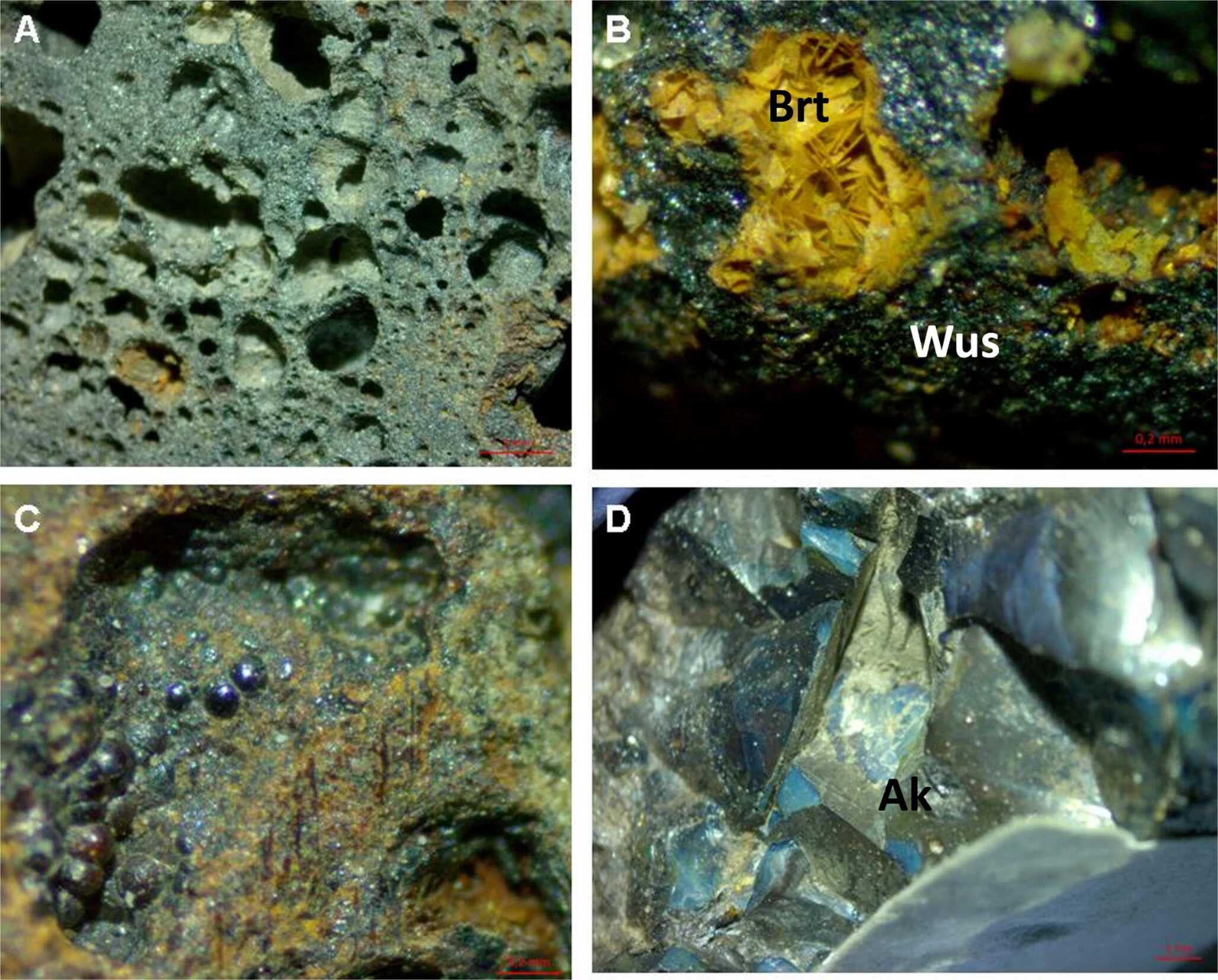
Chemical and mineral analysis pointed to local iron ore deposits near the village of Agios Petros, about 10 kilometers (6.2 miles) away, as the primary raw material source.
The slags contain elevated manganese, barium, and unusually high thallium levels reaching up to 899 parts per million, all matching the geochemical signature of the local Andros ores. The team noted that manganese and barium, naturally present in those ores, acted as flux agents, lowering furnace temperatures without separate addition.
Andros weapons production tied to Alexander the Great’s Era
Mineral phases in the slags, including wustite, fayalite, bustamite, and tephroite, confirm bloomery ironmaking at temperatures around 1,200 degrees Celsius (2,192 degrees Fahrenheit).
A ternary diagram analysis placed the slag chemistry in a zone consistent with smithing, shaping iron into finished objects, rather than primary ore smelting. Phosphorus enrichment in the slags, higher than in the raw ores, also suggests that calcium-rich metamorphic rocks from the island were added as flux material.

Well-preserved Hellenistic towers near the ancient mines at Agios Petros, similar to guard towers found near mining sites across Naxos, Kythnos, Serifos, and Sifnos, suggest the ore sources were actively protected during this period.
The researchers noted that the Macedonian rulers likely introduced ironworking techniques developed on similar iron and manganese deposits in Macedonia and Thrace.
The operations appear to have ceased in the 2nd century BC, coinciding with a reorganization of the agora. Whether the ancient weapons and artefacts produced there served direct military purposes under Macedonian command remains an open question, the researchers said, noting that a fuller picture of the entire iron supply chain is still needed.
See all the latest news from Greece and the world at Greekreporter.com. Contact our newsroom to report an update or send your story, photos and videos. Follow GR on Google News and subscribe here to our daily email!

