



Byzantine society held a deeply ambivalent view of disability, one shaped by both Christian charity and a sense of pity, with attitudes shifting depending on the nature of the impairment and the individual’s social standing.
Rather than following a single, consistent perspective, Byzantium’s approach to disability reflected a complex blend of legal constraints, Christian compassion, social pragmatism, and political calculation. Those with disabilities might be pushed to the margins or treated with stigma, yet they could also be recipients of structured care, active participants in public life, and, in rare but striking cases, even rise to the imperial throne.
Both broad societal patterns and individual imperial case studies show that disabilities in Byzantine society were not simply physical conditions. Rather, they were socially constructed, interpreted and reshaped through the intersecting forces of religion, law, and political power.
Christianity changes attitudes toward people with disabilities in Byzantine society
One of the most influential forces shaping Byzantine views on disabilities was Christianity. In contrast to certain earlier pagan traditions that sometimes linked physical deformity with impurity or ill fortune, Byzantine Christian thought emphasized charity and compassion toward those with disabilities. Institutions such as hospitals (xenones), orphanages, and almshouses were frequently attached to monasteries and supported by emperors or wealthy patrons. These establishments provided care for the sick, the elderly, and the disabled reflecting a broader religious obligation to protect society’s most vulnerable.
Modern scholarship underscores that disability was not wholly excluded from Byzantine life but rather integrated into it. As one recent study observes, Byzantine society incorporated “assistance programs and legal guarantees” for individuals with disabilities, while also situating disability within broader religious and cultural frameworks. This points to a relatively advanced level of institutional recognition that extended beyond simple acts of charity.
That said, this inclusivity had clear limitations. Byzantine law, particularly under emperors such as Justinian I, drew careful distinctions between various types of disability. For instance, individuals who were born deaf or mute often faced legal restrictions, as they were considered incapable of fully participating in civic life. One legal interpretation notes that such individuals were viewed as “legally incapacitated to make a valid testament,” reflecting prevailing assumptions about communication and rationality.
In this way, the Byzantine system both acknowledged and constrained people with disabilities. While disability could elicit care and protection, it also imposed legal and social boundaries, highlighting the tension at the heart of Byzantine attitudes toward differences.
How everyday people viewed those with disabilities in Byzantine society
Everyday attitudes toward disabilities in Byzantine society were shaped largely by practical realities. In a pre-modern world where injuries, diseases, and chronic illnesses were widespread, impairment was common. As historians increasingly emphasize, disability was not an exception to daily life but an ordinary and expected part of it. Importantly, disability was often understood in relative rather than absolute terms.
An individual’s social status played a decisive role in shaping their lived experience. Members of the elite with impairments could depend on servants, wealth, and institutional support, while poorer individuals with similar conditions often faced far harsher consequences. This pattern reflects broader continuities inherited from Roman society in which social rank frequently determined how significantly disability affected one’s life.
At the same time, stigma remained a persistent reality. Mental illness, in particular, could carry serious social repercussions. Conditions such as insanity were heavily stigmatized and, in some cases, could even justify the dissolution of marriage. These responses reveal that while Christian ideals of compassion softened certain attitudes, fear, misunderstanding, and social exclusion continued to play a powerful role in shaping everyday perceptions of disabilities.
Madness and imperial authority
In the Byzantine Empire, social and political status often outweighed physical or mental impairment, especially at the level of imperial authority. There were even rulers who governed while experiencing significant disabilities, whether physical or psychological. Their reigns demonstrate how political legitimacy could override bodily norms, while also revealing how disability was interpreted through the lens of imperial ideology.
One of the most well-known cases is Emperor Justin II (r. 565–578), who is reported to have suffered from severe mental illness. Contemporary accounts describe episodes of instability, including erratic behavior and profound psychological distress. The historian John of Ephesus offers a particularly vivid depiction, writing that the emperor would “gnash his teeth, foam at the mouth, and attempt to bite those near him.”
Despite these episodes, Justin II remained emperor for several years, with day-to-day governance increasingly delegated to his wife Sophia and later to his successor Tiberius II Constantine. His case shows that disability, particularly mental illness, did not automatically disqualify a ruler. Instead, imperial power could be sustained through court institutions, delegation, and regency structures.
At the same time, the language used by historians also exposes a clear layer of stigma. Justin’s condition was frequently interpreted as divine punishment or moral failing, reflecting the moralizing tendencies common in Byzantine historiography and the broader effort to explain political disorder through spiritual frameworks.
Emperor Heraclius and his severe health decline
Another notable example of a ruler with significant disability is Emperor Heraclius (r. 610–641), one of Byzantium’s most consequential rulers. His reign is also associated with major administrative and cultural shifts, including the broader consolidation of Greek as the empire’s primary administrative language. Toward the end of his rule, Heraclius reportedly suffered from debilitating health problems, possibly including rheumatism or edema, which severely limited his mobility.
Despite these impairments, Heraclius remained in power during one of the most critical and turbulent periods in Byzantine history, as the empire confronted the rapid expansion of Islamic forces. His physical decline did not erase his earlier achievements, including his celebrated victories in the long war against the Persian Empire.
Medical and historical sources suggest that such conditions were not uncommon among Byzantine elites. One study notes “14 cases of emperors who suffered from rheumatic disorders” recorded in the literature. This pattern indicates that chronic illness was relatively widespread among rulers and did not necessarily prevent the exercise of imperial authority or undermine political legitimacy.
The emperor with the mutilated nose
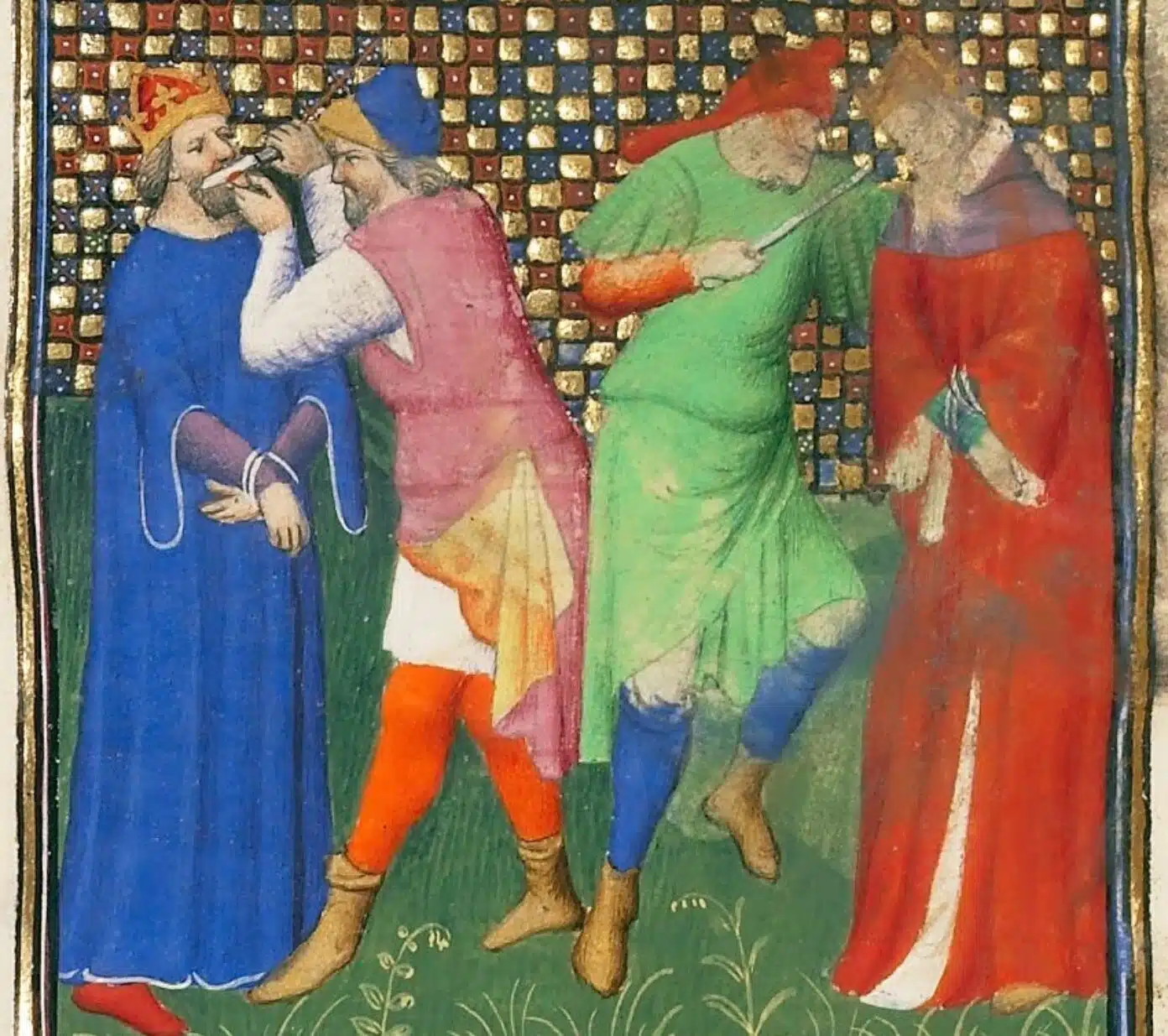
Perhaps the most striking example of disability intersecting with imperial power is Emperor Justinian II (r. 685–695, 705–711). After being deposed, he was subjected to mutilation—his nose was cut off—in an effort to permanently prevent his return to the throne. In Byzantine political culture, physical wholeness was closely tied to legitimacy, and mutilation was often used as a deliberate strategy to disqualify political rivals.
Yet Justinian defied this expectation. He ultimately returned to power wearing a golden prosthetic nose, a powerful symbol of restored authority. His comeback demonstrated that even severe disfigurement could be politically overcome through determination, symbolism, and the practical realities of power.
The case of Justinian II reveals two key dimensions of Byzantine attitudes toward disability. First, disability could be weaponized. Mutilation was intentionally deployed as a political tool to mark exclusion and prevent rivals from claiming authority. Second, disability could be transcended. In practice, legitimacy ultimately depended more on control of power than on bodily perfection.
More broadly, Justinian II’s reign highlights a wider phenomenon, namely that disability in Byzantium was not only a social condition but also a political instrument. Blinding, mutilation, and other forms of physical impairment were routinely used to neutralize opponents without resorting to execution.
This practice reflects a striking paradox at the heart of Byzantine society. On the one hand, it developed institutions of care, including hospitals and charitable foundations for the sick and disabled. On the other hand, it also sanctioned the deliberate creation of disability as a form of punishment and political control. The same culture that provided structured care for vulnerable populations could also employ bodily harm as an instrument of state power.
Religious interpretations of disabilities in Byzantine society
Religion played a vital role in shaping how disability was understood in Byzantium. While Christian teaching emphasized compassion and care for the vulnerable, it also encouraged symbolic interpretations of suffering. Disability could be framed as a test of faith, in some interpretations a consequence of sin, or even as an opportunity for divine intervention and healing.
Hagiographical texts frequently describe miraculous cures, reinforcing the idea that disability existed at the intersection of the physical and spiritual. At the same time, not all disabilities were expected to be healed. Many were accepted as part of the broader condition of human life.
This dual perspective, combining acceptance with spiritual interpretation, allowed Byzantine society to accommodate disability while still embedding it within a moral and theological framework. Overall, the Byzantine approach to disability cannot be reduced to a single, unified attitude. It was marked by persistent contradictions. Compassion and exclusion coexisted, as charitable institutions operated alongside legal restrictions. People with disabilities could be both supported and limited, depending on context.
In Byzantine society, individuals with disabilities were at times stigmatized and at other times accepted, with outcomes shaped strongly by the type of disability and the person’s social status. Even disabled emperors could command armies and issue laws, as the earlier examples demonstrate. Disability was not treated as a fixed identity but as a flexible condition defined by circumstance. A disabled person could be pitied, supported, feared, or even revered, depending not only on their condition but also on their position within the social hierarchy.
See all the latest news from Greece and the world at Greekreporter.com. Contact our newsroom to report an update or send your story, photos and videos. Follow GR on Google News and subscribe here to our daily email!

