



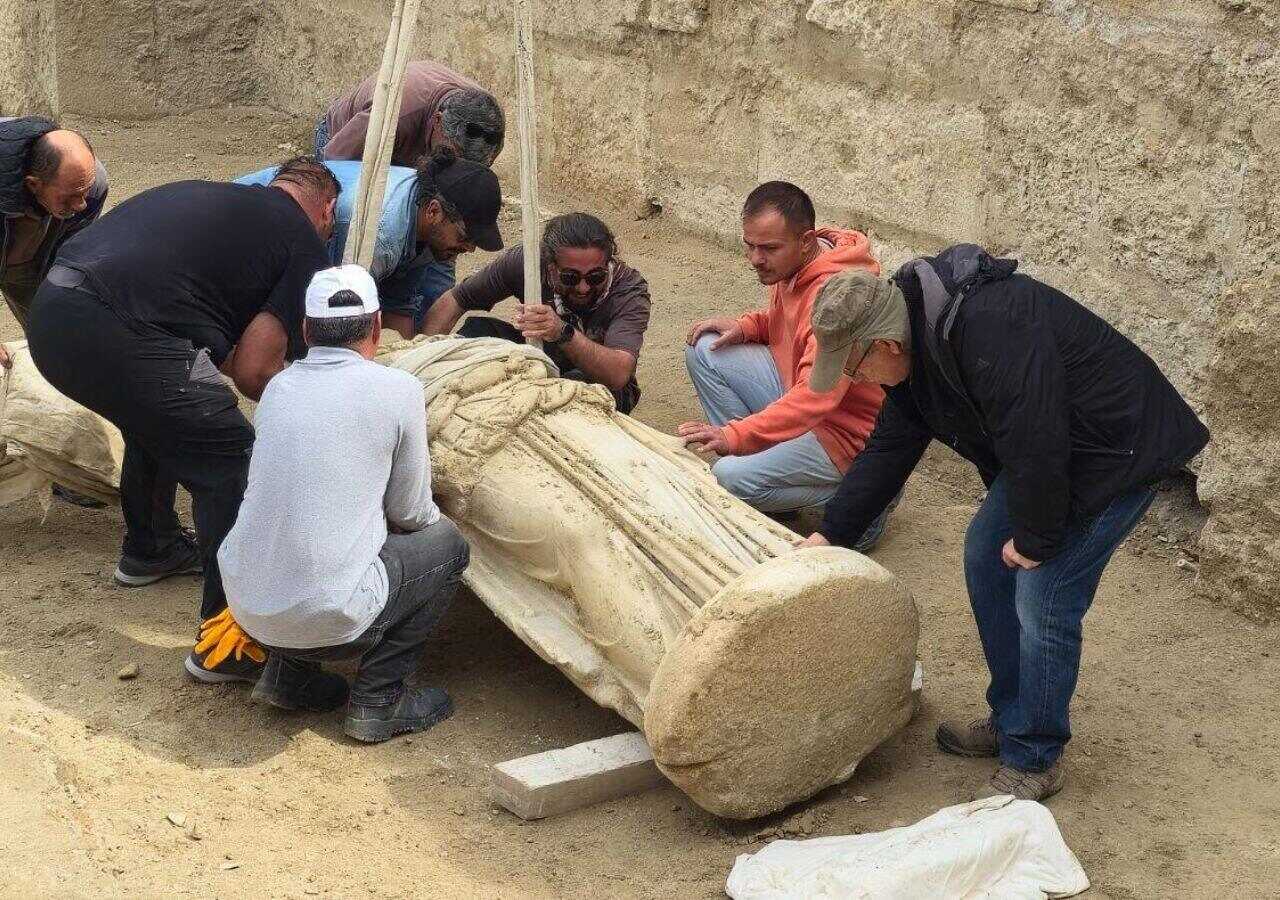
Archaeologists have uncovered a nearly 2-meter (6.6 feet) marble statue of the Greek goddess Athena at the ancient city of Laodicea, located in modern-day Turkey.
Researchers found the statue lying face-down in rubble debris along the outer wall of the theater’s rear stage section, known as the “postskene.” The statue is carved from white marble, though its head has not yet been found.
Athena was one of the most revered goddesses in ancient Greece, associated with wisdom, warfare, and handicraft. She is traditionally depicted wearing a helmet and holding a spear, with snakes and the gorgoneion among her most recognized symbols.
Unique cape typology marks the statue as a master sculptor’s work
The newly found statue stands on a round base. It wears a finely worked sleeveless peplos, a traditional draped garment. A short cape called a “hylamis” hangs around its neck. On the chest sits an “aegis” decorated with the head of Medusa and coiled snakes, symbols closely associated with the goddess.
Researchers noted that the back of the statue was left unfinished, indicating it was designed to stand between columns rather than be viewed from all sides. Experts assess the piece as the work of a master sculptor.

In terms of artistic style, the statue reflects the first classical style of the Augustus period, dating from 27 BC to 14 CE. The flowing treatment of the fabric and careful detailing of the drapery point to exceptional craftsmanship.
Researchers also noted that the typology, specifically the cape around the neck, is considered unique, which further raises the statue’s significance.
Greek goddess Athena statue tied to Laodicea’s ancient weaving culture
Laodicea carries deep Greek roots. The city was founded during the Hellenistic period around the middle of the third century BC by the commander Seleucus Antiochus II, who named it after his wife Laodike. It later came under Roman rule in 129 BC and grew into one of the ancient world’s most prosperous cities.
The city was one of the ancient world’s most prominent weaving centers, and inscriptions found at the site record that festivals were held in her honor. Researchers say the goddess was celebrated there primarily for her connection to weaving and craft.
Restoration work at the stage building has continued without interruption since early 2026.
See all the latest news from Greece and the world at Greekreporter.com. Contact our newsroom to report an update or send your story, photos and videos. Follow GR on Google News and subscribe here to our daily email!

