



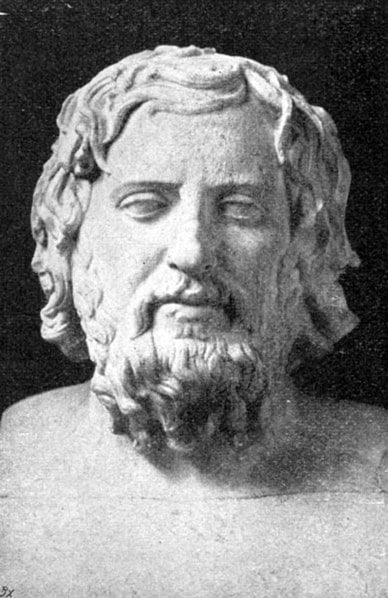
Among the innovations of Ancient Greece is tachygraphy, a method of rapid writing developed to capture speech accurately. Scholars debate its origins, but many identify ancient Greek military leader, philosopher, and historian Xenophon as a key figure in early shorthand.
In Ancient Greek and Medieval Shorthand, scholar N.P. Heffley argues that the need to record spoken words effectively drove the invention of shorthand.
The necessity of speed: Why Ancient Greeks developed tachygraphy
Ancient Greek society thrived on oratory, philosophy, and public discourse. Politicians, teachers, and philosophers spoke in courts, assemblies, and schools. Yet speech disappears unless it is recorded. Citizens wanted access to speeches they could not attend in person, creating a demand for written preservation. In response, writers developed techniques to capture lectures and orations with both speed and accuracy. Tachygraphy arose as a solution—a blend of technological innovation and cultural necessity.
In a letter to Lessius, the Flemish Catholic philologist Justus Lipsius asked, “Who, then, was the inventor of sign‑writing?” He credited the Greeks, pointing specifically to Xenophon as an early adopter of shorthand. Lipsius relied on the doxographer Diogenes Laertius’ remark that Xenophon “was the first to note…the sayings of Socrates and to publish them.” This observation fueled the idea that Xenophon practiced a form of tachygraphy while recording Socratic dialogue.
Capturing Socrates’ words demanded both speed and precision. Memory alone could not preserve nuance, emphasis, or stylistic flair. According to N.P. Heffley, early Greek writers recognized this challenge and began experimenting with rapid writing methods. Their goal was not simply to jot down fragments but to record speeches almost as they were delivered—a pursuit that set Greek shorthand apart from earlier, more limited systems.
Although no complete manual of Greek shorthand survives, scattered evidence points to a sophisticated tradition. Textual references from the grammarian Julius Pollux, the philosopher Philodemus, and later scribes suggest that shorthand symbols and rapid notation systems circulated widely in antiquity. Pollux, writing in the second century AD, describes abbreviated signals used for speech notation. While these references lack the detail of modern stenography manuals, they reveal a longstanding practice of capturing spoken words efficiently.
Shorthand as a tool for civic life and enduring rhetoric
Xenophon’s recordings of Socrates exemplify this tradition. His dialogues feel immediate, vivid, and present, as if captured in real time rather than reconstructed from memory long after the fact. Whether Xenophon relied on an organized shorthand system or simply possessed a keen ear for rapid notation, his accounts preserve speech in ways earlier authors had not attempted.
Civic life in Greece depended on accurate records. Assemblies issued decrees, courts heard arguments, and teachers delivered lectures. Without rapid writing, scribes had to rely on slow, laborious copying. As N.P. Heffley notes, tachygraphy addressed this challenge by enabling near‑verbatim transcription. Notes could circulate quickly, allowing students to share lectures with peers and citizens to consult speeches after the fact. This new relationship between spoken word and written text reshaped Greek learning and public life.
Shorthand also transformed rhetoric itself. Orators discovered that their words could reach beyond the immediate audience. A well‑delivered speech no longer disappeared with the crowd that heard it. It could circulate as written text. Rapid notation facilitated a smoother, more faithful transition from spoken performance to document. This development influenced both rhetoric and literature, teaching authors that their public words could become part of an enduring written tradition.
The expansion of tachygraphy after Xenophon: From schools to civic life
After Xenophon, other Greek figures helped spread rapid writing techniques more widely. An inscribed marble slab composed almost entirely of vowels illustrates the Greek tendency toward extreme abbreviation and symbolic condensation in writing. Such evidence supports reports that Hellenistic tachygraphy was in use from the second century BC onward, though several indications suggest it may have emerged even earlier.
The oldest securely datable reference comes from a contract in Middle Egypt, noting that Oxyrhynchos assigned the “semeiographer” Apollonios for two years to be taught shorthand. Hellenistic tachygraphy relied on a systematic combination of word‑stem signs and word‑ending signs. Over time, scribes expanded the system by adding numerous syllabic signs, enhancing both the speed and precision of recording speech. This structured approach shows that Greek shorthand evolved into a formal technical discipline rather than a loose set of casual abbreviations.
Educators also played a key role. Philosophical schools required students to take notes, and Plato, for example, elevated discussion into written dialogue even when others did not record it in real time. Scholars suggest that early academic settings likely developed note‑taking conventions that influenced shorthand practice more broadly. These conventions became part of the tacit knowledge shared by scribes and thinkers throughout Greece.
As shorthand matured, its use extended beyond philosophy. Political bodies employed abbreviated notation for decrees and official records, legal proceedings demanded quick transcription of testimony, and even theatrical performances incorporated notation systems for cues and dialogue prompts. In this way, shorthand became an integral part of multiple aspects of Greek public life.

Xenophon’s legacy and the enduring impact of Greek tachygraphy
Xenophon’s contribution lies not only in his use of tachygraphy but also in its lasting influence. By publishing Socratic dialogues, he showed that speech could be preserved without losing intellectual force. His work encouraged others to recognize the value of written records. Even if he did not invent shorthand from scratch, he exemplified its most powerful application: capturing spoken thought for posterity.
N.P. Heffley emphasizes that tachygraphy in Ancient Greece represents a remarkable intersection of intellectual culture, civic need, and practical ingenuity. The Greeks confronted the limitations of memory and slow writing by devising methods to record speech more effectively. Xenophon, through his tachygraphy, stands at the center of this innovation, illustrating Greek culture at its most practical and philosophical juncture.
Greek shorthand also laid the foundation for later developments. Medieval scribes adopted and expanded tachygraphic systems, while Roman notaries refined them further. By the time Renaissance scholars rediscovered these traditions, shorthand had evolved into a disciplined art form. Yet its roots remain firmly planted in the Greek desire to preserve speech.
The legacy of tachygraphy testifies to Greek creativity. Rather than letting words fade after being spoken, the Greeks learned to fix them on the page. In doing so, they not only preserved individual speeches but also shaped the very concept of written discourse.
See all the latest news from Greece and the world at Greekreporter.com. Contact our newsroom to report an update or send your story, photos and videos. Follow GR on Google News and subscribe here to our daily email!

