



Located in the central Peloponnese around Mount Mainalo and near the city of Tripoli, Mountainous Arcadia has long been a popular travel destination. Rather than a singular resort area, it is a network of independent mountain communities. Modern travelers visit the region not just for brief leisure, but for immersive, experience-driven travel—combining a slower pace of life, traditional cuisine, and outdoor sports like adventure tourism on Mount Mainalo.
Across prominent villages like Vytina, Dimitsana, Stemnitsa, and Karytaina, the local travel industry is evolving. The region has leveraged its history and heritage into a functional model of contemporary hospitality.
This transformation is driven primarily by people. A new wave of development is being led by young professionals and former city-dwellers who have relocated to the region to open traditional businesses, guesthouses, and eateries. Driven by community volunteerism, they are building a sustainable regional economy that attracts an international, multi-generational demographic.
Top villages of Mountainous Arcadia
Magouliana
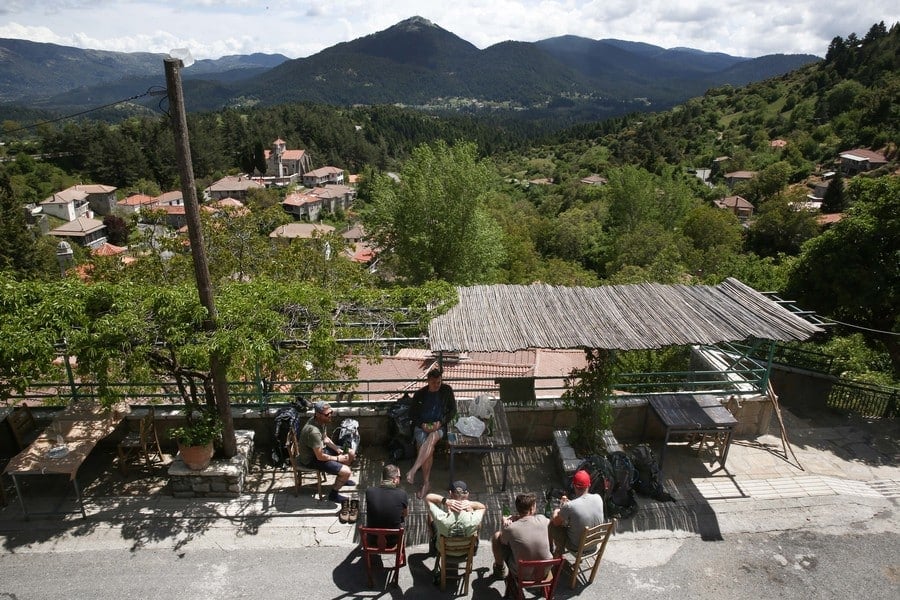
Magouliana explicitly marks its identity at the village entrance as the highest settlement in the Peloponnese, sitting at an altitude of 1,365 meters. Despite having only 45 permanent residents, the village maintains a highly active community network.
Local community leader Athanasios Kanellopoulos exemplifies this trend: he manages his family’s multi-generational tavern, develops alternative lodgings, and volunteers to maintain the Mainalon Trail hiking network.
The village preserves deep historical ties, best represented by the Church of the Dormition of the Virgin. The church features a monumental walnut iconostasis carved in 1845, which took seven years to complete and remains one of the region’s most important cultural artifacts.
To support these activities, local tourism infrastructure continues to expand, ranging from budget-friendly rentals to premium five-star hotels.
Vytina
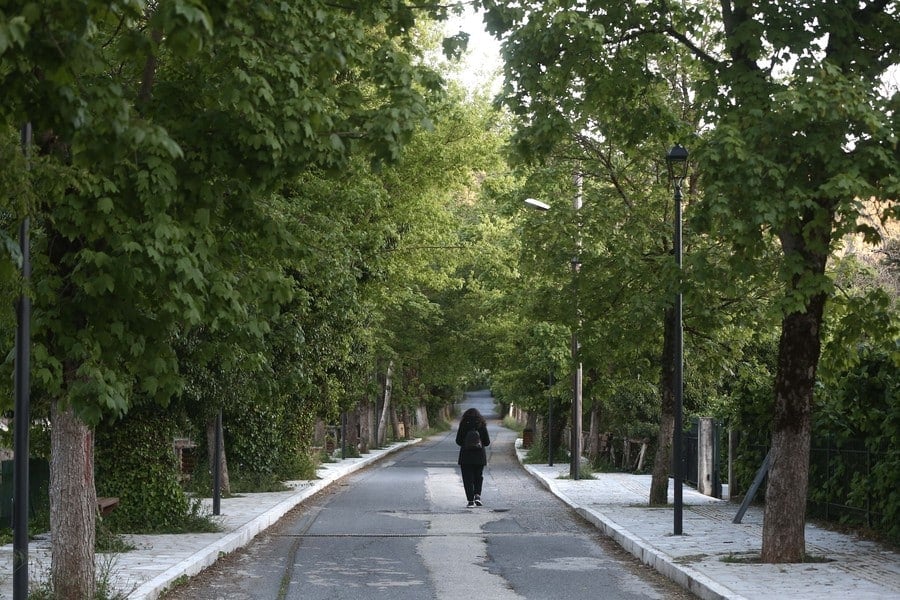
Hospitality in Vytina is defined by close personal interactions. Its famous landmark, “The Road of Love”—a tree-lined avenue where the branches meet overhead—serves as the entry point to a village run by tight-knit families. Here, local businesses are distinctly multi-generational; grandfathers and grandchildren run traditional dairy shops together, and tavern owners routinely join guests to share local history. The community structure is designed so that visitors can easily seek solitude without feeling isolated.
Lagkadia
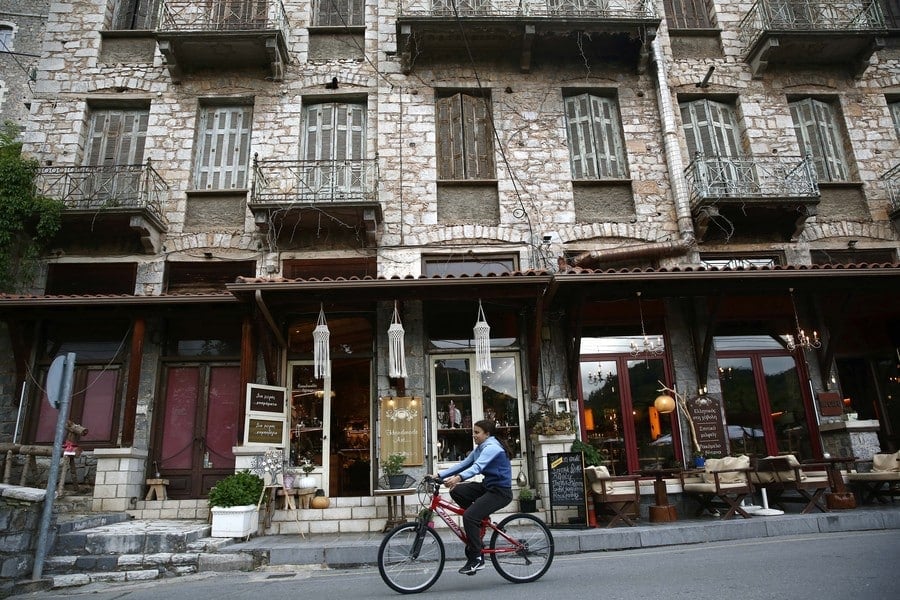
Lagkadia is renowned for its architectural heritage, shaped by the legendary stone masons who built the grandest stone mansions in the Peloponnese. The village maintains a highly domestic feel, characterized by family-run restaurants serving homemade desserts. It frequently attracts long-term international visitors who integrate into local village life, often seen playing backgammon with residents.
Dimitsana
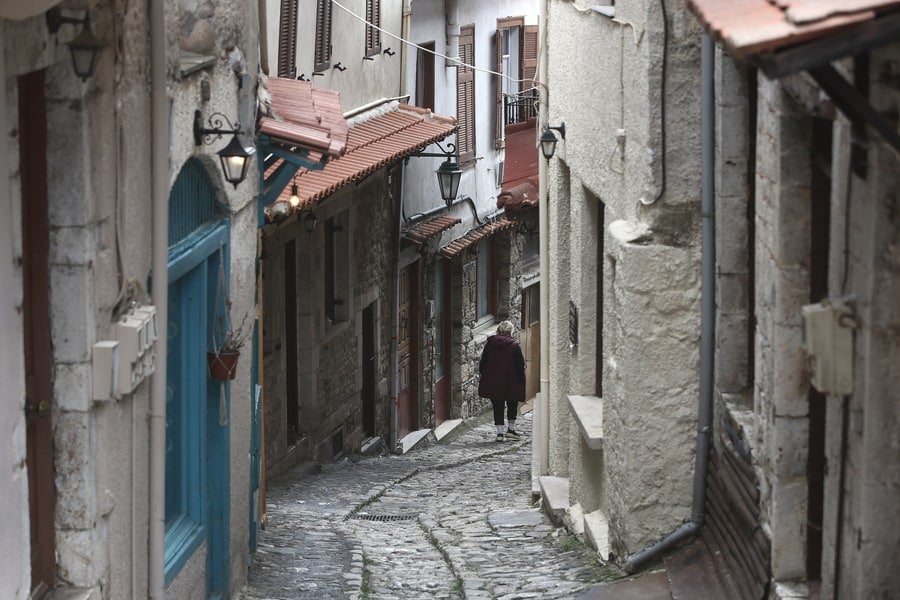
Dimitsana serves as a historic hub for the region. It was the birthplace of Metropolitan Palaion Patron Germanos and played a crucial logistical role during the 1821 Greek War of Independence due to its historic gunpowder mills.
Community president Angeliki Biri notes that the village stays active year-round through museums, cultural events, and historical reenactments. The annual torchlight processions on March 24th have grown from a local ritual into a major regional event that draws both locals and international visitors, including long-term travelers from countries like the Netherlands who have learned Greek to connect deeper with the community.
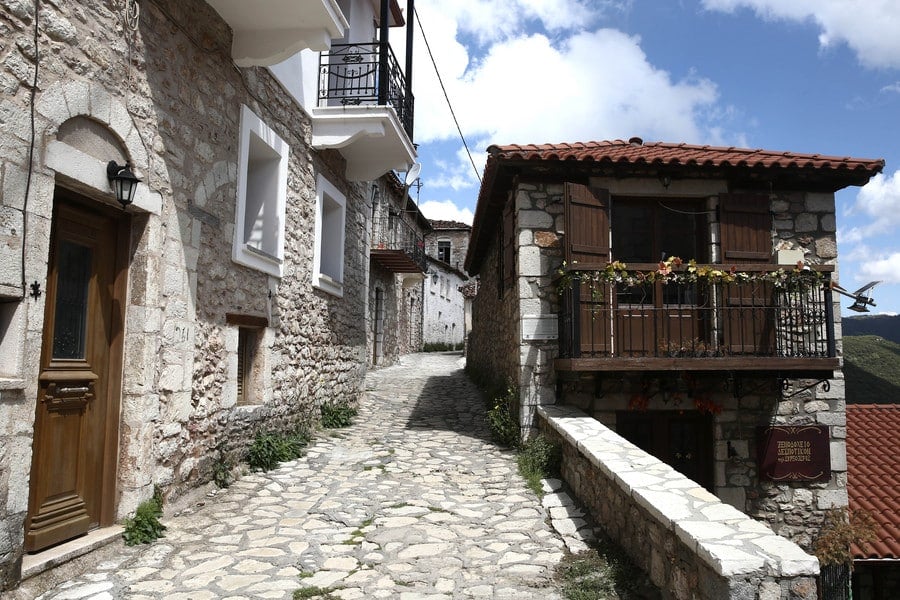
The village is also attracting permanent relocations from urban centers. Denada Palla left Athens to live in nearby Zatouna and run a business in Dimitsana:
“I originally came to Stemnitsa to study at the silversmithing school,” Palla explains. “After graduating, I decided to stay. I’ve lived in the area for nine years and have run my own shop for the last four. I have no desire to leave; I prefer this pace of life.”
Stemnitsa
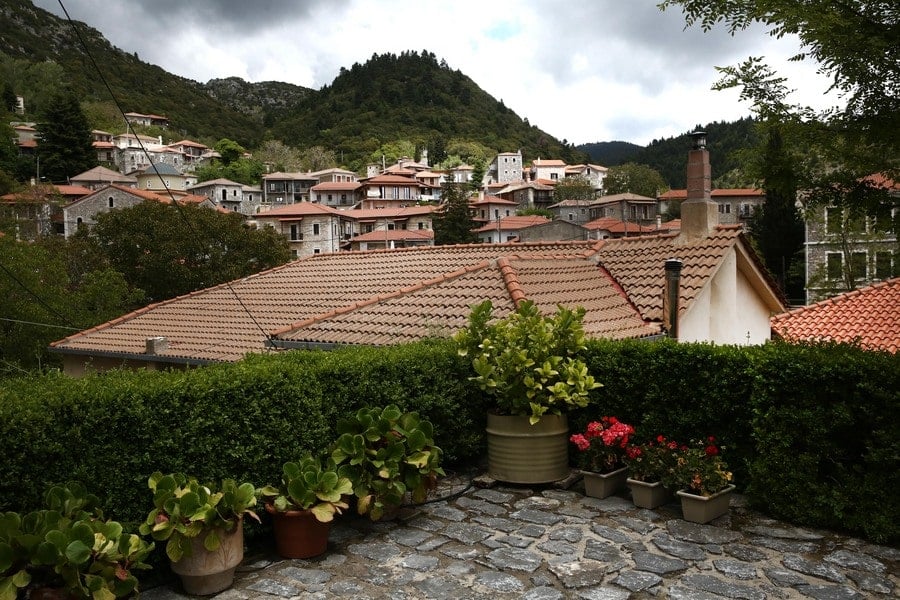
Stemnitsa, the first temporary seat of the revolutionary Greek government, retains a distinct cultural reputation rooted in its legacy of high-end silversmithing. Around the central square, the village’s economic revival is led by returning Greeks who left the capital to invest in domestic businesses and ancestral properties.
Elliniko
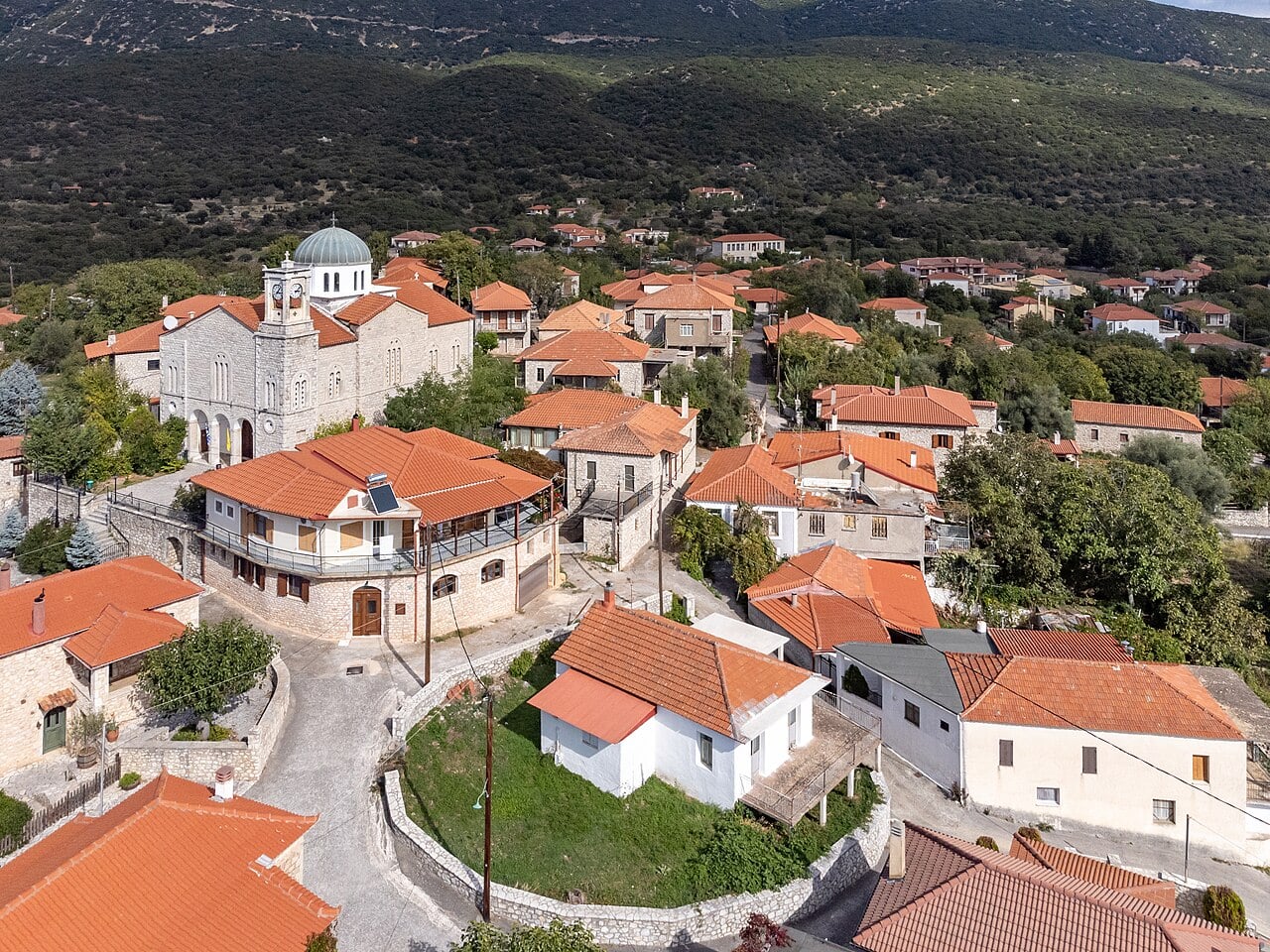
Elliniko acts as a core rest stop along the Mainalon Trail. It is a popular gathering point for hikers and rafters exploring the Lousios River gorge, offering traditional pies and omelets made with regional ingredients.
Chrysovitsi
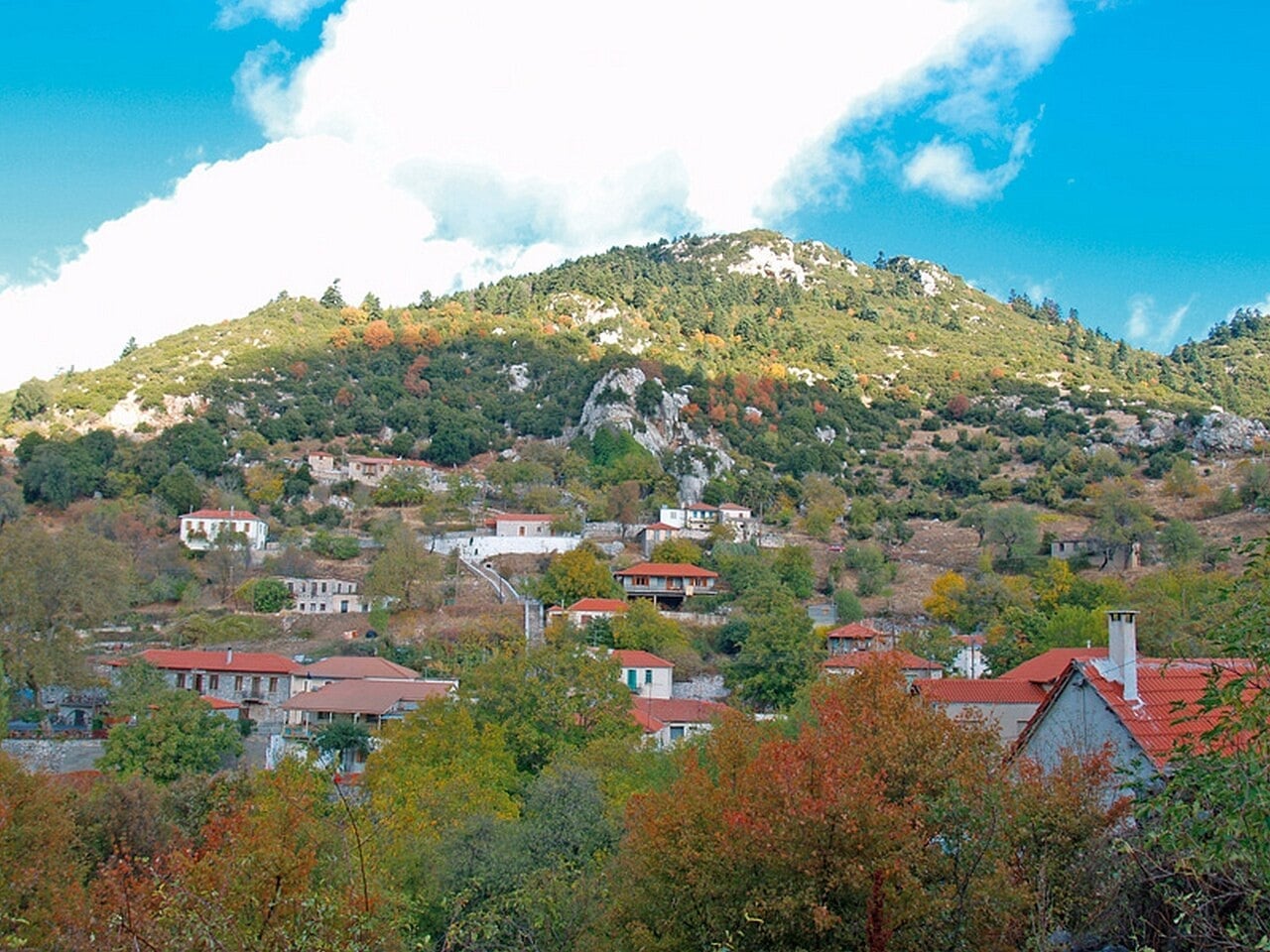
Near Chrysovitsi, Arcadia’s industrial and production history is preserved at the Museum of Forest History. Housed in a former state-owned sawmill that operated from 1831 to 1974, it was once the economic backbone of the region, employing hundreds of workers to process local Mainalo fir trees.
The mill was entirely energy-self-sufficient; it generated power by burning sawdust and wood waste, allowing the village of Chrysovitsi to have electric lighting long before most mountain towns in Greece. Today, it is the only one of Greece’s seven historic state sawmills to be converted into a museum.
Limbovisi
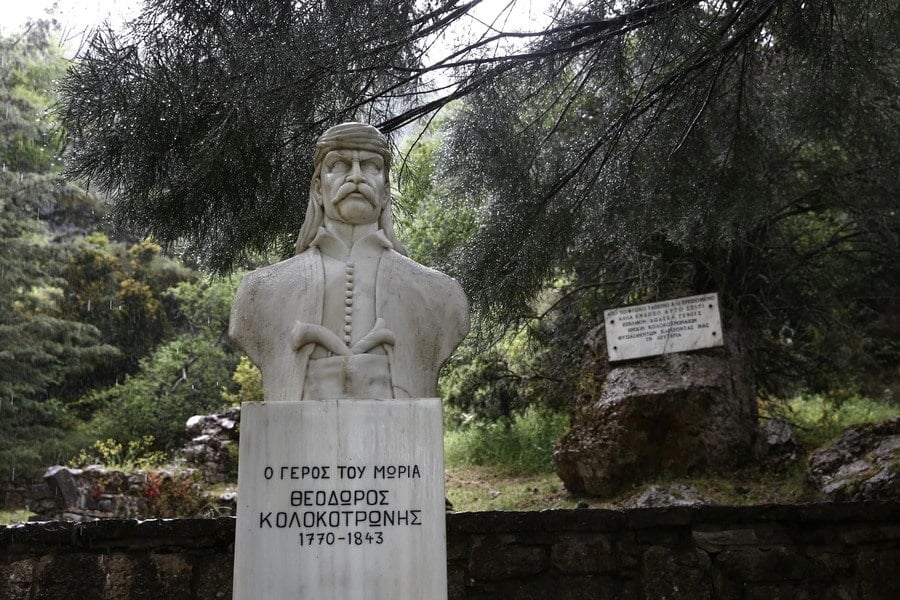
Limbovisi preserves the history of the Kolokotronis family, serving as the birthplace of the revolutionary general Theodoros Kolokotronis. Set deep within a dense fir forest, the restored family home integrates national history directly into the natural landscape.
Karytaina

Known historically as the “Toledo of Greece,” Karytaina features a medieval castle overlooking the Alfeios River gorge. Its famous 13th-century arched bridge—famously depicted on the old Greek 5,000 drachma banknote—now links the area’s history with modern adventure tourism. Today, the fast-flowing waters of the Alfeios have made the village an international destination for rafting and kayaking.
Throughout these villages, travelers from Canada, Sweden, the Netherlands, and across Europe are becoming regular fixtures. These visitors generally bypass mainstream commercial tourism in favor of hiking the Mainalo network, quiet environments, local gastronomy, and authentic cultural contact. Arcadia’s primary competitive advantage is that it does not stage a tourism experience; instead, it allows visitors to temporarily integrate into a functioning rural community.
See all the latest news from Greece and the world at Greekreporter.com. Contact our newsroom to report an update or send your story, photos and videos. Follow GR on Google News and subscribe here to our daily email!

