



New research suggests that mountain sacrifice art Peru may reveal a far more complex Moche ritual than previously believed, offering fresh insight into ancient ceremonies depicted on painted and sculpted ceremonial vessels.
Mountain sacrifices in Peru
The study suggests that mountain sacrifices in ancient Peru were part of a larger mythic story involving caves, deities, blood offerings, and ritual reenactments, rather than isolated acts of sacrifice. The findings were published in the journal Latin American Antiquity by lead author Christopher Selwyn Wai.
For decades, archaeologists have viewed Moche mountain sacrifice imagery as one of the culture’s most important religious themes. The Moche flourished along Peru’s northern coast between about A.D. 200 and 800 and produced some of the most detailed artistic depictions in the ancient Americas.
Yet many of the mountain scenes found on ceramic vessels have received limited attention compared with other well-known Moche narratives.
Wai analyzed 60 ceramic vessels from museum collections in Peru, Europe, and the United States. By comparing recurring characters, gestures, and actions, he argues that the images tell a coherent story rather than depict unrelated moments.
The proposed sequence resembles other major Moche mythological narratives that scholars have already identified.
A ritual story hidden in mountain scenes
According to the study, the story begins with a supernatural figure known as “Wrinkle Face.” He appears alongside attendants and an iguana companion. In several scenes, Wrinkle Face displays a double-headed serpent belt before beginning a climb up a sacred mountain. A sacrificial figure known as the “Bent Person” is positioned near the mountain’s peak.
As the sequence progresses, Wrinkle Face and the iguana ascend the mountain. The iguana appears to decapitate, while Wrinkle Face blows a shell trumpet known as a pututu. Researchers suggest the trumpet may play a symbolic role in triggering the events that follow.
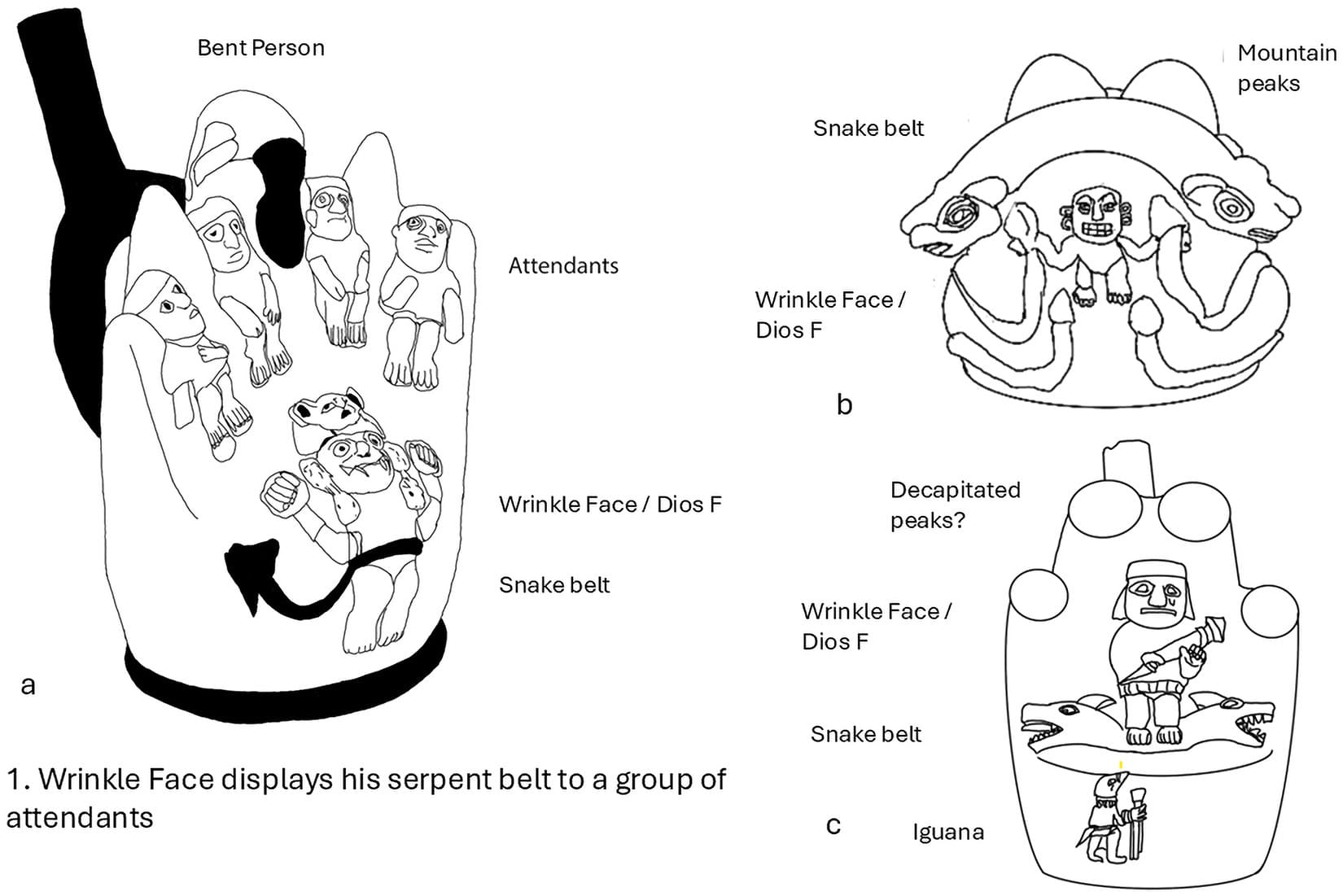
The next scenes show the mountain opening. Blood or water appears to flow from the sacrifice, creating a wave that reveals hidden features within the mountain. These include stairways, platforms, and eventually a cave containing a mysterious deity.
The identity of this cave figure remains debated. Some scholars have linked it to a solar deity known as Dios A, while others believe it represents a different supernatural being associated with the earth. Wai does not attempt to settle the debate but argues that the figure’s appearance is a central part of the narrative.
Mountains and caves as sacred places
The study places strong emphasis on the religious importance of mountains and caves in ancient Andean belief systems. Across the Andes, mountains were often viewed as living ancestral beings with supernatural powers. Caves were associated with origins, transformation, and the dwelling places of deities.
Wai argues that the Moche imagery reflects these ideas. Rather than simply portraying sacrifice, the scenes appear to describe the opening of a sacred mountain and the emergence or liberation of a hidden divine figure. The ritual may have represented a foundational myth that communities reenacted through ceremonies.
The researcher also notes that Moche art was rarely focused on everyday life. Instead, it often depicted mythological events, religious ceremonies, and interactions between humans, deities, and sacred landscapes.
New directions for archaeological research
The findings could reshape how archaeologists investigate Moche ritual practices. Much previous research has focused on large adobe ceremonial centers such as Huaca de la Luna. Wai argues that mountainsides and caves deserve equal attention because they may have played a major role in Moche religious life.
Several mountain sites in northern Peru have already produced intriguing clues, including shrines, human remains, and ceremonial structures. However, evidence directly connecting these locations to the iconographic scenes remains limited. The author says future surveys and excavations should place greater emphasis on mountain landscapes and cave settings.
While researchers cannot yet identify a specific mountain depicted in the artwork, Wai suggests the scenes may represent a sacred mythic place rather than a real location.
If correct, the mountain sacrifice theme would stand alongside the most important narratives in Moche religion and offer a new window into how ancient Peruvians understood sacrifice, divine power, and the sacred landscape.
See all the latest news from Greece and the world at Greekreporter.com. Contact our newsroom to report an update or send your story, photos and videos. Follow GR on Google News and subscribe here to our daily email!

