



The philosopher Plutarch records a striking Ancient Greek custom in Greek Questions pertaining to the reason behind why those from Samos allowed for the theft of clothing when it came down to sacrifices for Hermes the Giver of Joy (Hermes Charidotes).
Plutarch explains that the Samians once obeyed an oracle and transplanted themselves from Samos to Mycale, where they lived for ten years through robbery and piracy. When they eventually returned to Samos, they conquered their enemies. As a result, the community honored Hermes by permitting temporary theft during sacrificial rituals. This practice, he suggests, commemorated their reliance on plunder to survive—and ultimately to prosper.
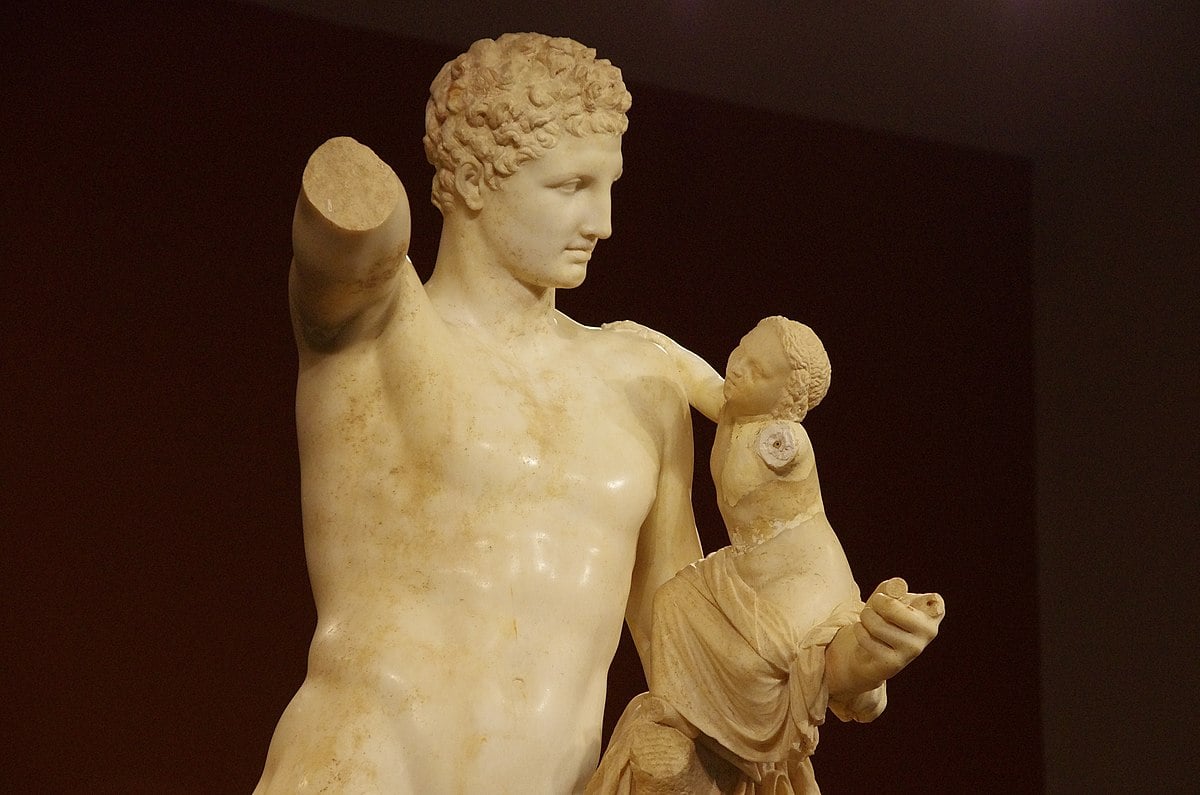
Hermes: God of mischief and patron of thieves
Plutarch’s account reveals how deeply Ancient Greeks embedded piracy and theft into communal memory and divine favor. The story reflects a lived reality in which sea raiding functioned as a means of survival for island communities. In this context, theft was not merely tolerated but ritualized under the auspices of Hermes himself. This demonstrates that early Greek societies did not always regard robbery as inherently shameful. Instead, some framed it as behavior sanctioned by divine precedent and practical necessity.
Hermes occupied a unique position in the Greek pantheon as a god who embodied ambiguity. He served as the herald of the gods and the messenger of Zeus while simultaneously acting as the patron of thieves, tricksters, and cunning individuals. Ancient poetry portrayed him with a blend of admiration and unease. From the moment of his mythical birth, Hermes displayed a talent for thievery. On the very night he was born, he stole Apollo’s cattle. Homeric tradition even credits him as the inventor of clever theft and as a god of many shifts and cunning plans.
Hermes’ reputation as a patron of thieves made him a natural divine symbol for communities whose livelihoods depended on seaborne plunder. Greeks celebrated his ingenuity in myth, but they also invoked him in everyday life when engaging in trade or other risky undertakings. His capacity for mischief made him equally suitable for legitimate travelers and maritime raiders. He could open pathways for commerce, but he could also create opportunities for theft—an ambiguity that lay at the heart of his enduring appeal.
Social acceptance of piracy
Indeed, if one looks to Greek literature, it reflects a culture that did not uniformly condemn piracy. As early as the Homeric epics, raiding and plunder appear as familiar pursuits. From Odysseus’ men sacking coastal towns to references in the Iliad and Odyssey, plunder exists as a regular part of heroic exploits. Homer even depicts socially-acceptable thievery: heroes repeatedly commit theft without stigma. In the Odyssey, Nestor asks Telemachus whether he plans to act as a pirate, treating maritime raiding as a familiar and understandable activity rather than a dishonorable one. This suggests that early Greek culture often viewed robbery as a legitimate extension of heroism or necessity.
Later Greek historians, such as Thucydides, confirm that piracy once occupied a central role in Greek life. He writes that, as sea travel became common, the Greeks and coastal barbarians often turned to piracy for livelihood. In early times, no shame was attached to such raiding. Instead, Greeks sometimes regarded it as respectable and even glorious. Thucydides specifically notes that island and coastal people once relied upon piracy as a stable source of income, since the sea offered more opportunities than the poor soil and rough terrain of their islands.
Thucydides also explains that piracy affected urban settlement patterns. Because pirates regularly plundered unfortified coastal populations, early Greek settlements avoided the shoreline. Only after extensive piracy did communities relocate to secure, inland locations or build walls to defend against raiders.
From heroic plunder to maritime piracy
The geographer Strabo adds another layer to this understanding. He notes that, after the fall of Troy, many returning heroes found their homelands occupied or rebellious. With no place to return, these displaced warriors turned to piracy and raiding. Strabo presents this not as exceptional behavior but as a pragmatic solution for men who had fought abroad and could not reintegrate into their former communities. This ties the Homeric and historical traditions together, showing continuity between heroic plunder and later maritime raiding.
This historical testimony aligns with Plutarch’s Samos story. Raiders formed regular economic and social patterns. Oceanic mobility and ambiguous social codes made raiding a viable and at times respectable livelihood. Only later, during the Classical period, did state-level powers like Athens attempt to suppress piracy through naval dominance and alliance systems.
Greek attitudes to piracy also emerge in Homeric settings and cultural memory. For Greeks of the Archaic age, sea raiding could connect to honor and heroism. Homeric heroes sometimes bragged about plunder as a sign of prowess. Thucydides explicitly notes that this early view saw the pirate as a competitor for wealth rather than as a social outcast. Over time, as trade and civilized norms expanded, especially under Athenian naval power, large-scale piracy became less esteemed.

Piracy, ritual, and the shifting morality of theft in Greek society
Nevertheless, these positive associations did not disappear overnight. Greek island communities depended on one another’s corsair networks and shared a cultural acceptance of plunder. Plutarch’s anecdote explicitly links earlier piracy to later military success. This connection implies a continuity between raiding practices and what eventually came to be regarded as legitimate conquest.
Plutarch’s Greek Questions also illustrates how myth and ritual could justify acts that were morally ambiguous. The people of Samos ritualized their tolerance for theft during Hermes’ festival, memorializing a collective historical experience in which piracy served both protective and redemptive functions. Their return to Samos and subsequent defeat of their enemies following decades of raiding suggests a positive outcome tied directly to their piratical past.
Ancient Greek conceptions of theft also intersected with ideas of honor and necessity. In Homeric times, raiding could generate wealth that sustained heroic households and reinforced community alliances. In early Greek history, chronic insecurity and external threats made armed robbery one of the few reliable means of survival and gain. Thucydides’ remark about piracy’s initial glory underscores this reality—and highlights how moral judgments about theft shifted over time.

Enduring legacy of maritime raiding
As trade matured, Greek city-states gradually developed systems to suppress piracy. Alliances such as the Delian League sought to clear sea lanes and protect commerce. Even so, pirates did not simply vanish. They adapted, often reemerging as privateers and mercenaries during periods of war, blurring the boundary between state policy and illicit raiding.
Even beyond strictly Greek contexts in the Mediterranean, piracy retained a complex and persistent role. The Phoenicians, Cilicians, and later Hellenistic mercenary crews plundered coastal settlements and maritime trade routes. These groups frequently operated from islands and rugged coastlines that provided natural refuges for raiders.
Plutarch’s account of the people of Samos reflects a broader Ancient Greek worldview in which theft and piracy once occupied accepted social and even religious spheres. Hermes, as a trickster and patron of thieves, embodied this outlook. Greek literature and historical traditions reveal that piracy shaped early settlement patterns, economic strategies, and heroic ideals. Through Thucydides, we also see how attitudes toward maritime raiding evolved over time—yet far from marginal, piracy stood at the core of Greek maritime culture and remained intertwined with divine patronage and practical survival for centuries.
See all the latest news from Greece and the world at Greekreporter.com. Contact our newsroom to report an update or send your story, photos and videos. Follow GR on Google News and subscribe here to our daily email!

