



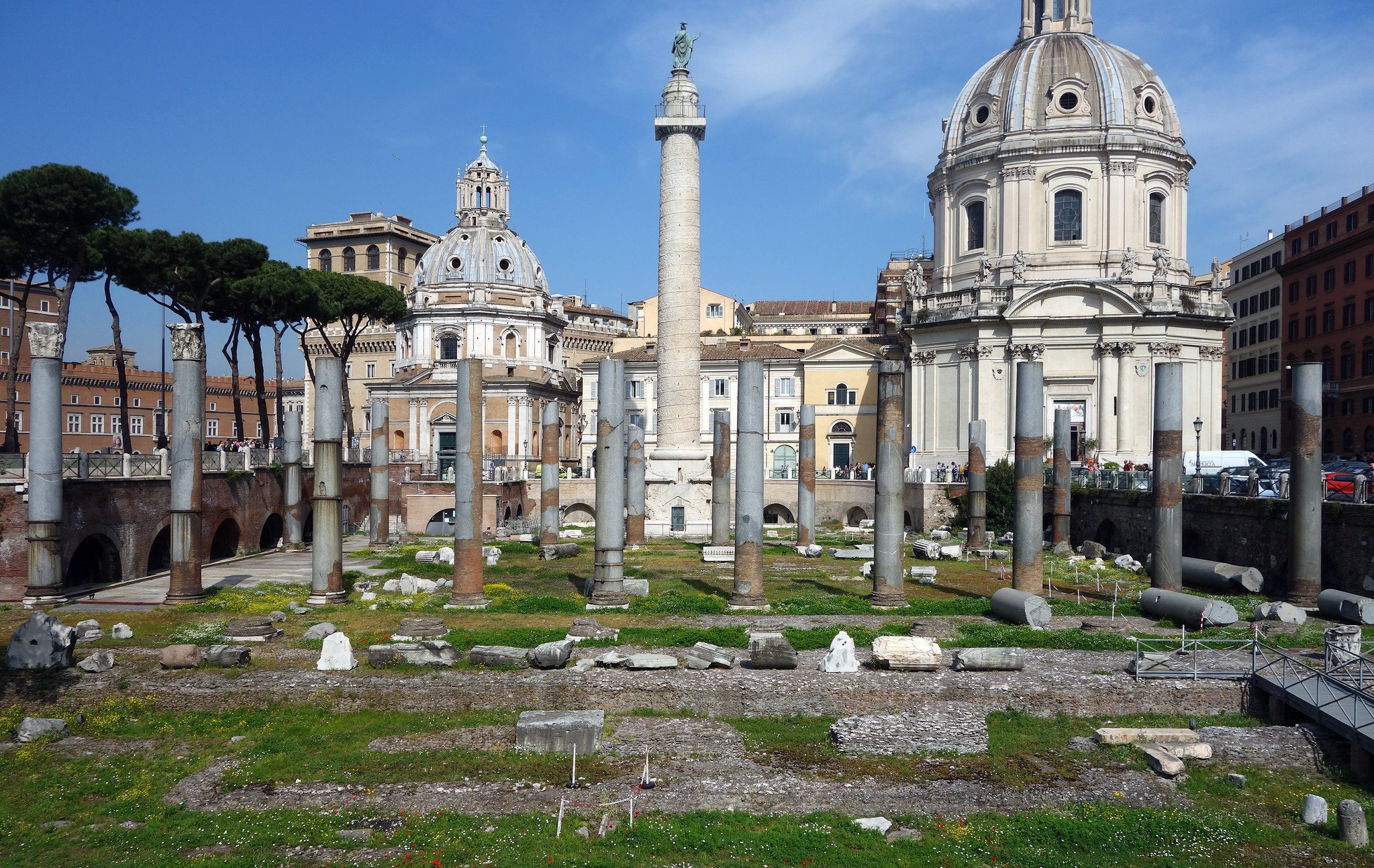
Before the Roman Republic was formed, Rome was ruled by kings. The first of these was Romulus, while the last was Lucius Tarquinius Superbus—at least, this is what has been claimed by ancient records written centuries after the fact. Is there any evidence that the legendary kings of Rome actually existed, or was the concept of a Roman monarchy merely fictitious?
The early history of Rome
Roman historians wrote extensively about the early history of their city. According to these accounts, the founder was a figure named Romulus. After establishing the city and a basic administrative structure in 753 BC and giving the settlement his name, Romulus was succeeded by Numa Pompilius. This king instituted various religious reforms and also brought the calendar in line with the modern count of twelve months.
After Pompilius came Tullus Hostilius. He was responsible for establishing the Curia Hostilia as the new home of the Roman Senate. Ancus Marcus followed him. The Romans remembered him for consolidating Rome’s rule over surrounding populations and building up the city in an architectural sense, creating aqueducts and the city’s very first prison.
The next king, Lucius Tarquinius Priscus, was an Etruscan. He followed Ancus in building up the city of Rome by commissioning various impressive building projects and reorganizing the Senate. He was followed by Servius Tullius, a king who significantly reformed the political structure and voting system of the city. Finally, Lucius Tarquinius Superbus was the last king of Rome. The Romans primarily remembered him as a tyrant, for which reason he was overthrown and the Republic was established.
Why do some doubt that the kings of Rome really existed?
If Ancient Roman historians widely agreed that their city was initially ruled by kings, then why is there doubt today? The reason is that none of these accounts are contemporary. In fact, all of them date from many centuries after the fact. In the fourth century BC, Celtic tribes attacked Rome and burned it to the ground, destroying its records.
Largely as a result of that attack, we have no records from the supposed monarchial period of Rome. In the opinions of some, the idea that there was ever a monarchy at the start of Rome’s existence was an invention of the Republic.
According to the traditional account, the reason why the Romans rejected the monarchy and formed the Republic was essentially because of the tyranny of the final king of Rome, Lucius Tarquinius Superbus. The existence of this narrative was useful propaganda to prevent the people from accepting anyone who attempted to overthrow the Senate and set themselves up as king.
What does the archaeology show?
However, just because the story of the monarchy could have been invented to ensure the continued acceptance and stability of the Republic, does not necessarily mean this is what occurred. What does the archaeological evidence reveal?
There is no direct evidence for kings in Rome in the eighth or seventh centuries BC. However, once we get to the sixth century BC, we do find two pieces of archaeological evidence which directly point towards their existence.
The first is a bucchero cup from the last quarter of that century. The word “rex” is inscribed on it, which is the Latin word for “king.” Why would the Romans make mention of a king on their pottery if Rome did not have kings? Furthermore, archaeologists found this bucchero cup at the site of the Regia, which was traditionally the royal palace of Rome. This is exactly where we would expect to find a reference to the king.
An additional piece of evidence comes from the Lapis Niger, or the Black Stone. This dates to the second half of the sixth century BC. On this fairly lengthy inscription, there is a reference to the king. The pertinent word in question is “recei,” a form of the Latin “rex.”
Of course, these two pieces of evidence alone cannot prove specifically that the traditional seven kings of Rome actually existed. Nevertheless, they do very strongly support the conclusion that Rome did, in fact, have a monarchial system prior to the establishment of the Republic.
See all the latest news from Greece and the world at Greekreporter.com. Contact our newsroom to report an update or send your story, photos and videos. Follow GR on Google News and subscribe here to our daily email!

