



Greek mythology is surprisingly intertwined with Greek Christmas food traditions in ways that most diners rarely consciously recognize.
Long before Christmas, the Ancient Greeks marked the darkest time of the year with winter festivals such as the Rural Dionysia, held during the month of Poseideon. This roughly corresponds to December and the winter solstice, closely aligning with modern Christmas.
These celebrations of Dionysus—the god of wine, fertility, and rebirth—included elaborate processions, wine drinking, songs, and cakes and bread made from the land’s harvest. Such traditions established a communal pattern of celebrating with seasonal products gathered before the onset of harsh winter. Later, Christian customs naturally incorporated these practices as society transitioned from worship of the old gods to Christianity.
As Christianity spread throughout Greece, it did not eradicate these older customs but rather absorbed and reinterpreted many of their symbols. One clear example is the timing of Christmas near existing winter rites, preserving the notion that midwinter represents a turning point from darkness toward renewed light and life. Consequently, modern Greek Christmas traditions retain the structure of a sacred seasonal feast, even as the official focus has shifted from Dionysus and the agricultural cycle to the Nativity and Christian theology.
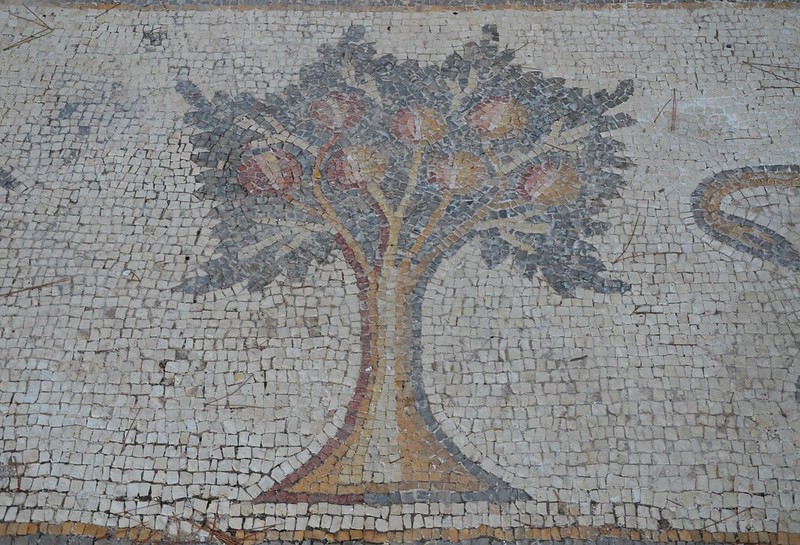
Pomegranates and rebirth
The pomegranate is one of the clearest mythological threads connecting antiquity to contemporary Greek Christmas traditions. In Greek mythology, Hades compels Persephone to eat pomegranate seeds, binding her to the underworld for part of each year and making the fruit a symbol of death, return to life, and the cyclical nature of the seasons.
Because Persephone’s ascent signals the earth’s renewed fertility ahead of spring, the pomegranate came to embody both the realm of the dead and the promise of rebirth and abundance that follows the barren weeks of winter. Today, when Greek families ceremonially break or smash a pomegranate on Christmas or New Year’s to invite good luck and prosperity, they are, in effect, reenacting this ancient myth—using the fruit as a symbol that life, fertility, and good fortune will triumph over winter’s darkness.

Sacred breads and Christmas loaves
Traditional Greek Christmas breads are another example of how modern festive foods preserve elements of ancient religious observances. Christopsomo, literally “Christ’s bread,” is a rich, carefully prepared loaf often decorated with a cross, symbolic patterns, or nuts. It is blessed at the table and shared in a way that evokes both Christian Eucharistic rituals and the older Greek practice of dedicating special breads during seasonal festivals.
The ceremonial care involved in mixing, decorating, and breaking Christopsomo is a direct remnant of the ancient festival loaves offered to the Olympian gods. While its explicit meaning today is tied to the Nativity and Christian faith, the underlying notion that bread symbolizes divine protection, fertility, and family life can be traced directly back to the religious traditions of Ancient Greece.
Sweets, honey, and divine favor
Greek Christmas sweets carry layers of symbolism that reach back to Classical beliefs on sweetness, blessings, and the afterlife.
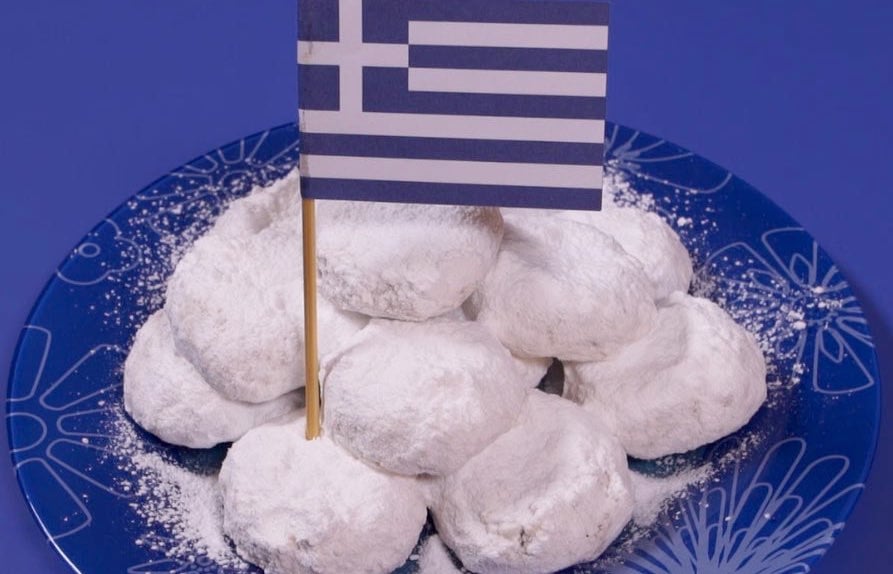
Take kourambiedes, the almond butter cookies dusted with powdered sugar, for instance. Nowadays, these are often likened to snowballs and commonly associated with the purity and innocence of the Christ child. Yet these beloved treats, found in many variations across the Eastern Mediterranean, also reflect an older belief that rich, sweet foods invite divine favor and protection.
Melomakarona, the honey-soaked spice biscuits filled with walnuts, are even more closely associated with ancient traditions. Their name combines meli (honey) with a word related to makaria, a barley-based offering that the Ancient Greeks presented at funerals and rites for the blessed dead. Over time, this evolved into a honey-sweetened treat symbolizing happiness and prosperity. By enjoying melomakarona around the Christmas holidays, Greeks are unknowingly following a pattern that stretches back thousands of years.

Olive oil and Athena’s gift
Olive oil, a staple of Greek holiday cooking from savory dishes to Christmas sweets like melomakarona, carries mythological significance that extends far beyond the kitchen. In Greek myth, Athena secures her role as patron of Athens by gifting the first olive tree—a symbol of peace, prosperity, and practical wisdom, providing fruit, oil for food and light, and wood for shelter and tools.
Over time, the olive tree and its oil came to signify not only material well-being but also divine protection, resilience, and the enduring identity of the Greek people.
From animal sacrifice to Christmas pork
The Christmas focus on pork in many Greek regions, particularly in the northern part of the country, reflects a deep connection between ancient sacrificial practices and modern Greek holiday cuisine. In rural antiquity, families commonly raised a pig throughout the year to be slaughtered during major winter festivals, including celebrations for Dionysus and other deities. The meat was then shared in a communal feast, with every part of the animal carefully used.
Although the ritual purpose has shifted from honoring a pantheon of gods to commemorating the birth of Christ, the underlying pattern remains the same: a carefully fattened animal is prepared for a lavish winter meal that symbolizes abundance, gratitude, and protection for the household. The modern Greek Christmas table, abundant with roasted pork and pork-based dishes, thus continues this ancient tradition of sacrificial feasting, even as it is framed today in terms of family, heritage, and holiday celebration.

Together, these dishes transform the Greek Christmas meal into a kind of edible archive, preserving ancient myths and rituals under new names and explanations. The pomegranate cracked for luck, the Christopsomo decorated and blessed, the honey-soaked melomakarona, the ever-present olive oil, and the central pork dishes all carry echoes of earlier stories about gods, the dead, the land, and the turning of the seasons.
By preparing and sharing these foods each year, Greek families do more than celebrate a Christian holiday—they engage in a long-standing chain of practices that stretches back to rural Dionysian processions, the Eleusinian focus on death and rebirth, and Athena’s promise of peace and prosperity through the olive tree. In this way, Greek Christmas food is not a break from pagan antiquity but a transformed continuation of it, subtly reminding diners—whether they recognize it or not—that their most familiar festive dishes rest on foundations laid thousands of years ago.
See all the latest news from Greece and the world at Greekreporter.com. Contact our newsroom to report an update or send your story, photos and videos. Follow GR on Google News and subscribe here to our daily email!

