



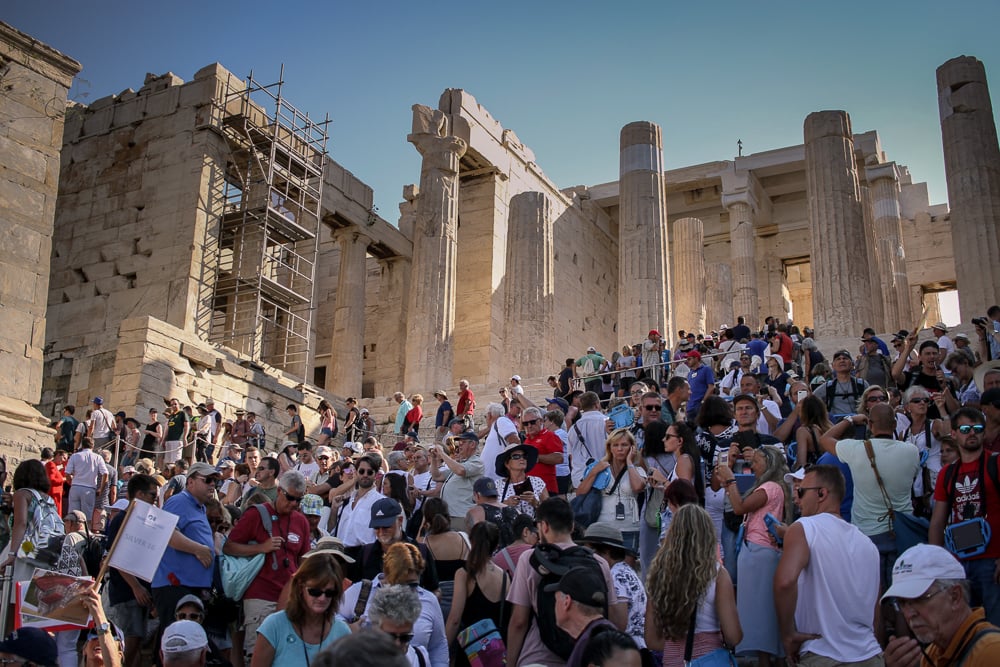
The Acropolis attracted more than 4.6 million visitors in 2025, averaging approximately 12,600 people per day, as Greece’s most visited archaeological site continued to benefit from the expansion of tourism in Athens.
According to data from the Hellenic Statistical Authority (ELSTAT), the Acropolis recorded 4,609,113 visitors last year, compared with approximately 4.55 million in 2024.
The figures represent a 32% increase from 2019, the last year before the COVID-19 pandemic, when the archaeological site welcomed approximately 3.5 million visitors. In absolute terms, the Acropolis received more than 1.1 million additional visitors in 2025 compared with 2019.
The site accounts for approximately 35% of total visits to archaeological sites across Greece, maintaining its position as the country’s leading cultural attraction.
Visitor Limits and Crowding
The sustained increase in visitor numbers has prompted the Greek Ministry of Culture to introduce measures aimed at managing crowds and protecting the archaeological site.
A daily limit of 20,000 visitors is in place, alongside a timed-entry system requiring tourists to select a specific admission slot when purchasing tickets. Visitors can book electronically through the official government ticketing platform.
Although tickets are also available at physical ticket offices, visitors arriving without advance reservations risk being denied entry when their preferred time slots are fully booked. In such cases, the next available admission time may be several hours later.
Despite these restrictions, long lines, sometimes extending hundreds of meters, continue to form at the entrance.
The measures are intended to regulate visitor flows while limiting pressure on the ancient monuments and surrounding archaeological infrastructure.
Athens Tourism Continues to Expand
The Acropolis figures reflect broader growth in tourism across Athens and the surrounding Attica region.
Athens International Airport handled a record 34 million passengers in 2025, up from 31.9 million in 2024. Passenger traffic continued to increase during the first nine months of 2026, reaching 27.31 million, a rise of 4.3% compared with the corresponding period last year. September alone accounted for approximately 3.6 million passengers, indicating continued demand beyond the traditional summer tourism season.
Athens hotels have also benefited from the sustained increase in arrivals, alongside properties offered through short-term rental platforms. During the first quarter of 2026, traditionally a quieter period for urban tourism, revenue per available hotel room increased by 4.5%, while occupancy rose by 2.4%.
Tourism activity in Athens continuous to become less dependent on the summer months, with visitor demand extending into autumn and winter.
According to Bank of Greece data, Attica was the country’s most visited region in 2025, accounting for a significant share of the approximately 38 million international arrivals recorded nationwide, excluding cruise passengers. Tourism receipts in Attica increased by 125.3% compared with pre-pandemic levels in 2019, reflecting the region’s growing contribution to Greece’s tourism economy.
The continued expansion of tourism has also increased pressure on major attractions, particularly the Acropolis, where authorities are seeking to balance rising visitor demand with the preservation of the historic site.
See all the latest news from Greece and the world at Greekreporter.com. Contact our newsroom to report an update or send your story, photos and videos. Follow GR on Google News and subscribe here to our daily email!

