



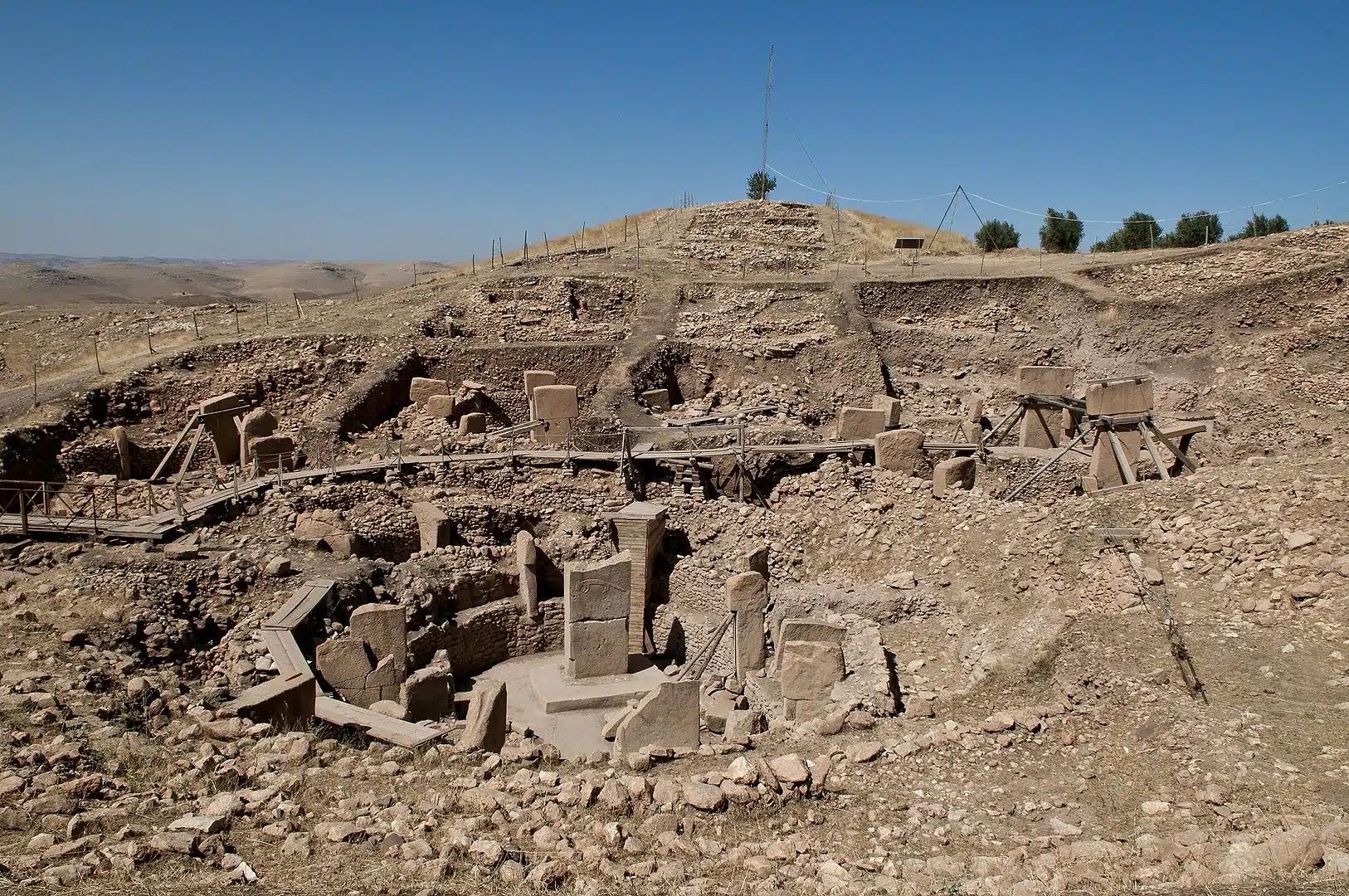
Turkey announced a new wave of 12,000-year-old archaeological discoveries on Wednesday from Göbeklitepe, Sefertepe, Karahantepe, and Sayburc. The findings were presented during the “Tas Tepeler 5th Anniversary Program,” attended by Culture and Tourism Minister Mehmet Nuri Ersoy.
Researchers say the discoveries offer rare evidence of belief, ritual, and symbolic expression at the dawn of settled life. The results strengthen the view that Tas Tepeler, a cluster of Neolithic sites across southeastern Turkey, is one of the world’s most important prehistoric cultural landscapes.
Early communities show complex symbolic traditions
Tas Tepeler, known as the Stone Mounds, includes several early ritual and settlement areas. The latest findings deepen understanding of how the region’s earliest communities built monuments, crafted symbolic objects, and organized social life long before pottery, metallurgy, or agriculture emerged.
TAŞ TEPELER PROJESİ’NDE İLK DEFA SERGİLENEN BAZI ESERLER
1-İnsan Heykeli MÖ 9500 – Sayburç
2-Leopar Heykeli MÖ 9400 – Karahantepe
3-İnsan Heykeli MÖ 9600 – Göbeklitepe
4-İnsan Figürini MÖ 9400 – Karahantepe pic.twitter.com/pjNar1hUDm— arkeolojihaber ® (@arkeolojihaber) November 26, 2025
Speaking in Şanlıurfa, Minister Ersoy said the project’s first five years had “opened a horizon far beyond what we originally imagined.” He added that the discoveries show early communities possessed “a far more advanced level of consciousness in belief, ritual and social organisation than previously thought.”
Human statue in Göbeklitepe wall draws global attention
One of the most striking finds came from Göbeklitepe’s Enclosure D, where archaeologists uncovered a human statue deliberately placed inside a wall. Researchers interpret the placement as a likely ritual offering.
Ersoy described the sculpture—found shortly before a visit by Japan’s Princess Akiko—as “an impressive example of the aesthetic and expressive sculptural tradition of the Neolithic period.” Scholars say more time is needed to understand why the figure was sealed within the wall, but note that its craftsmanship shows refined artistic ability 12,000 years ago.
Sefertepe reveals new faces of Neolithic art
Sefertepe also produced headline discoveries in the 2025 season. Excavations uncovered two carved human faces on shaped stone blocks, one in high relief and one in low relief, both in a style distinct from carvings at other Tas Tepeler sites.
Sefertepe’de Blok Taş Üzerinde 2 Adet İnsan Yüzü Kabartması Bulundu
Kültür ve Turizm Bakanı Mehmet Nuri Ersoy, Şanlıurfa'da yürütülen Taş Tepeler projesinin 5'inci yılında Karahantepe Karşılama Merkezi’nde düzenlenen bilgilendirme toplantısında bilim dünyasını heyecanlandıran… pic.twitter.com/lBEtqmSAPZ
— arkeolojihaber ® (@arkeolojihaber) November 26, 2025
A dual-faced bead carved from black serpentinite was also found. The bead, pierced through the center, carries expressive human faces on each side. Ersoy said the discoveries expand the symbolic vocabulary of the region and offer insight into how identity, memory, and ritual were expressed more than 12 millennia ago.
Sayburc sculpture challenges ideas about prehistoric death
Sayburc added another major find: a human sculpture with a stitched mouth. Researchers interpret the figure as a depiction of a deceased person. Ersoy said the statue creates “an opportunity to reassess prehistoric concepts of death beyond burials and skull traditions,” noting that the sealed mouth appears to carry symbolic meaning tied to ritual or belief.
Karahantepe restoration continues as network expands
Although no new structure was uncovered at Karahantepe this season, restoration of the site’s AD Structure continues. With nearly 250 documented T-shaped pillars, Karahantepe remains one of the largest and most complex ritual centers in the Tas Tepeler network.
The broader project now includes 12 active excavation and research areas, including Ayanlar Höyük, where work began this year with Japanese archaeologists.
Findings reshape understanding of early family and settlement life
Ersoy said evidence across all Tas Tepeler sites points to dense, multi-scale settlements containing both domestic and communal buildings. Excavations show homes with burials, ovens, and food-preparation features, demonstrating that symbolic acts were closely linked with daily life.
He said this carries special meaning during Turkey’s “Year of the Family,” noting that the discoveries show “the foundations of family and social organisation emerged far earlier than previously believed.”
Global interest grows through exhibitions and research
Ersoy also highlighted international outreach efforts. The Göbeklitepe exhibition at Rome’s Colosseum drew 6 million visitors, and upcoming displays in Berlin, London’s Guildhall Art Gallery, and the Tokyo National Museum are underway. Findings from Tas Tepeler have been shared at more than 100 conferences worldwide.
New discoveries shape future interpretations
With new sculptures, symbolic artefacts and ritual objects now added to the record, researchers say the 12,000-year-old discoveries at Göbeklitepe and Sefertepe will guide future interpretations of belief, identity and social structure in humanity’s earliest settled communities.
Ersoy closed the program by thanking excavation teams and partners, expressing confidence that Tas Tepeler “will be recognized as the Neolithic capital of the world.”
See all the latest news from Greece and the world at Greekreporter.com. Contact our newsroom to report an update or send your story, photos and videos. Follow GR on Google News and subscribe here to our daily email!

