



Among the stories of ancient Greek mythology, the friendship of Orestes and Pylades stands as one of the most powerful. It is a tale of two men who faced hardship, danger, and death together.
Orestes’ and Pylades’ bond became a model of enduring friendship, one that transcends time. The myths of ancient Greece offered more than heroes and gods—they also provided examples of loyalty that went beyond ordinary bonds. Orestes was the son of Agamemnon, the king who led the Greeks at Troy. His mother, Clytemnestra, murdered Agamemnon upon his return from war, aided by her lover, Aegisthus. Orestes fled as a child and grew up in exile. His cousin Pylades, son of Strophius of Phocis, became his constant companion. From the very beginning, the two men were inseparable.
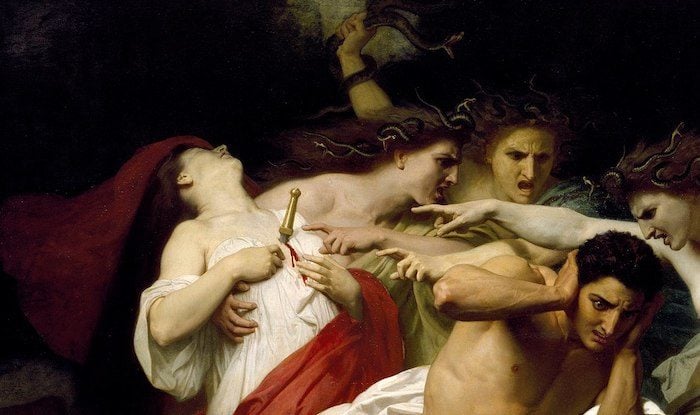
The story of Orestes is one of vengeance and justice. Apollo commanded him to avenge his father’s murder—a task that required killing his mother, plunging him into a cycle of blood and guilt. However, Pylades remained by his side throughout. When Orestes returned to Mycenae, he did not act alone; Pylades was with him when he killed Aegisthus and Clytemnestra, and he stood firm when the Furies, the spirits of vengeance, pursued Orestes for matricide.
Their bond was more than companionship. It was the lifeline of Orestes’ survival. Ancient audiences recognized in their story a friendship that touched the sacred. Pylades was not merely a helper or witness; he was Orestes’ second self, providing strength, courage, and above all, unwavering loyalty.
Euripides and the power of choice
The myth of Orestes inspired many plays of the tragic poets. Aeschylus told the story in his Oresteia. Sophocles and Euripides gave their own versions. Each author explored guilt, justice, and divine will, but Euripides gave the friendship between Orestes and Pylades its most dramatic moment.
In Orestes, Euripides presents the hero after the murder of his mother. The city condemns him to death. He lies broken, tormented by visions of the Furies, and shunned by the people of Argos. He faces execution, and his only hope rests in the loyalty of his friend, Pylades, and his sister, Electra.
The climax of Euripides’ play reveals the depth of their bond. Orestes and Pylades face death together. The court has ordered Orestes’ execution, and Pylades is dragged into the sentence as his accomplice. At this moment, their friendship shines brightest. Pylades does not shrink from the penalty. He declares that he will die with Orestes rather than abandon him. Euripides has Orestes proclaim:
“One should acquire companions, not just rely on relatives; just as a noble man, by his character and conduct, seeks to count as a friend someone far superior in merit to thousands of his peers.”
This moment is striking in its clarity. Where many friendships collapse under danger and companions flee at the shadow of death, Pylades does the opposite—choosing to share Orestes’ fate, his loyalty unshaken by fear.

Electra and the family bond, a struggle in Tauris
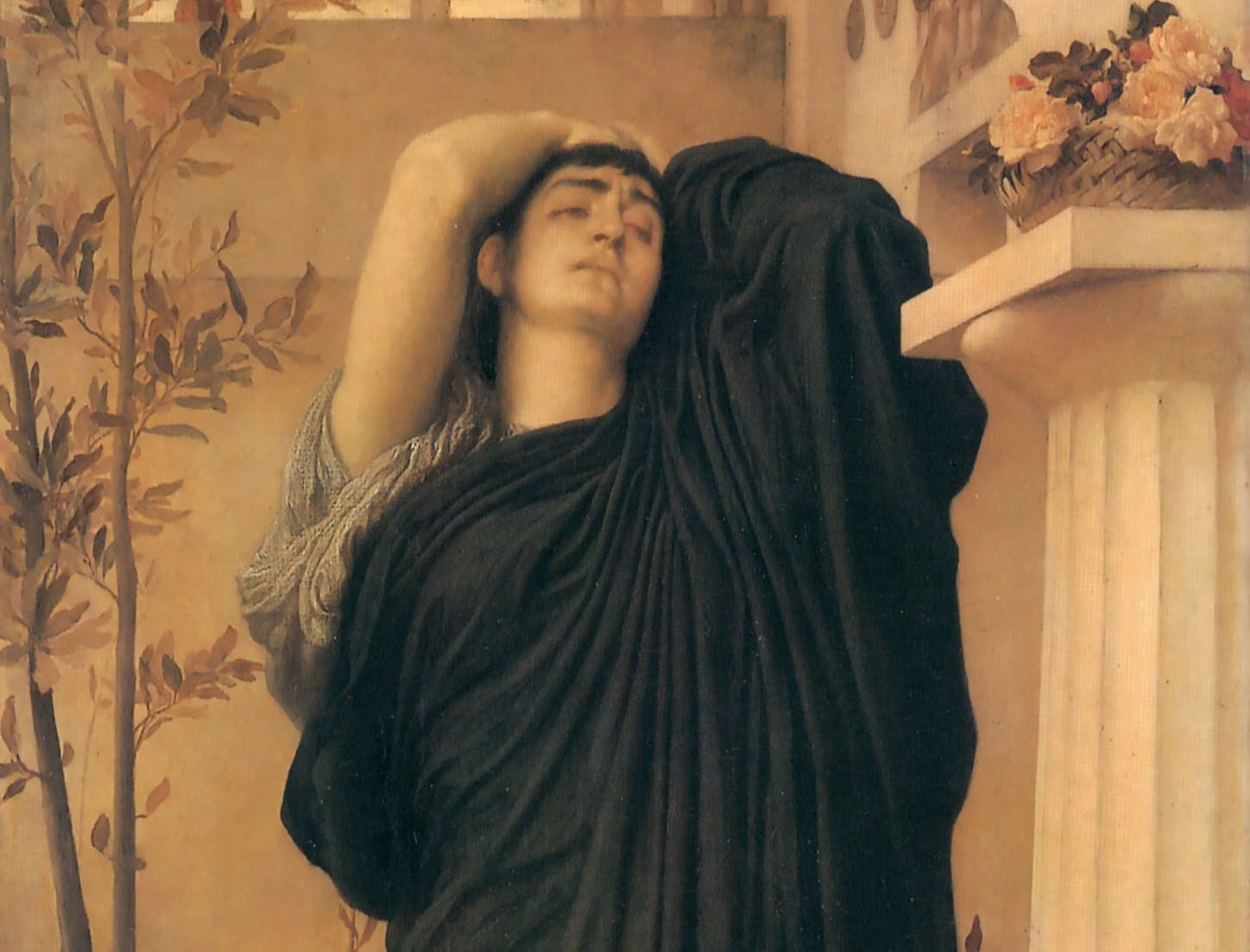
Orestes’ sister Electra played a key role in his struggle. She shared his grief for Agamemnon and supported the need for vengeance. In Euripides’ Electra, the siblings reunite after years apart, and their meeting is one of the most poignant moments in Greek tragedy.
Electra’s loyalty adds another layer to Orestes’ story. She gives him strength through blood ties, while Pylades provides strength through chosen friendship. Together, the three form a triad of resilience: family duty, divine command, and human loyalty. Pylades is especially striking in this context because he is not bound by blood; he chooses to share Orestes’ destiny when he has no obligation.
One of the most famous episodes in their story comes from Euripides’ Iphigenia in Tauris. Apollo commands Orestes to steal the sacred statue of Artemis from the distant land of Tauris. Orestes sets out with Pylades, as always, and the journey brings them into great danger.
In Tauris, the custom is to sacrifice all strangers to Artemis. The two friends are captured and prepared for sacrifice. Even then, Pylades refuses to abandon Orestes. When a message needs to be carried back to Greece, Orestes urges Pylades to escape and save himself—but Pylades resists. He will not abandon Orestes and leave him to die alone; instead, he chooses to share his fate.
Facing certain death
Orestes’ and Pylades’ loyalty reached its peak when they discovered that the priestess of Artemis in Tauris was none other than Iphigenia, Orestes’ long-lost sister. Years earlier, she had been spared from sacrifice at Aulis and transported to Tauris. The recognition scene between Orestes, Pylades, and Iphigenia stands as one of Euripides’ most powerful dramatic moments. Through their bond and clever planning, the three escape together, transporting the sacred statue back to Greece.
The Tauris adventure highlights what makes the friendship of Orestes and Pylades so enduring. Their loyalty was tested repeatedly—in Argos, in exile, in trial, and in foreign lands. Each time, they chose solidarity over personal safety. Electra and Iphigenia remind us of the role of family in Orestes’ life, but Pylades demonstrates something different: the strength of chosen friendship, one that equals or even surpasses blood ties.

An ideal that endured in Greek civilization
The story of Orestes and Pylades became one of the most enduring myths of the Greek world. It spread into Roman literature and beyond. Latin authors such as Seneca and Lucian used their bond as a model of “amicitia,” the Roman ideal of friendship. The two men became cultural symbols of loyalty, remembered as the very embodiment of devotion.
Why did this story endure? The answer lies in its extreme test. Friendship is easy in times of ease; it proves itself when life turns harsh. Orestes carried the burden of blood guilt and divine punishment, and Pylades chose to share that burden rather than walk away. By doing so, he transformed friendship into something eternal.
Ancient audiences admired examples of loyalty and sacrifice, especially stories in which men chose honor over survival. Orestes and Pylades stood apart because their devotion was mutual. Neither was master or servant, and neither follower nor leader—they were equals who gave each other strength. Aristotle even considered them an ideal example of friendship, arguing that if such bonds persisted, written laws between men would be unnecessary.
This equality made their story powerful. Greek culture valued bonds between companions in war, politics, and daily life, but the myth gave these bonds a deeper significance. It showed how friendship could rival family, even challenge the will of the gods. Orestes killed his mother at Apollo’s command, yet it was Pylades who remained steadfast when both gods and men condemned him.
A timeless truth for all ages
Modern readers can see in Orestes and Pylades a timeless truth about human relationships. Loyalty and devotion are rare. The world often tests bonds with hardship, betrayal, or fear, but true friendship survives those tests. In the myth, Pylades refuses to save himself at the cost of his friend. He proves that love and loyalty are even stronger than death.
This message continues to resonate to this today. We admire those who remain faithful in crisis and honor those who share burdens rather than turn away. The story of Orestes and Pylades captures this eternal truth in a form that echoes across the centuries.
The myth is more than a tale of ancient Greece; it is a mirror of the human heart and shows what friendship can become when tested by fire. Orestes, haunted by guilt and hunted by the Furies, finds his only refuge in Pylades, while Pylades chooses death over betrayal and love over safety. Euripides captured this bond in the darkest of moments. His play depicts two men facing execution, yet unbroken in loyalty. Their example became immortal—a symbol of friendship that refuses to yield.
Their story endures because it speaks to a longing in every age. We all desire a friend who will not abandon us, even in ruin. Orestes and Pylades embody that kind of friendship. They remind us that the greatest strength is not found in gods or kings but in the devotion of one human being to another. To the ancient Greeks, they embodied the eternal power of loyalty; to us, they still represent the ideal of a friendship that defies even death.
See all the latest news from Greece and the world at Greekreporter.com. Contact our newsroom to report an update or send your story, photos and videos. Follow GR on Google News and subscribe here to our daily email!

