



Roman copies of ancient Greek sculptures have helped researchers reconstruct the Parthenon’s east pediment, a long-damaged marble scene depicting the birth of Athena above the temple’s entrance in Athens.
The proposed reconstruction, unveiled Wednesday at the Liebieghaus Sculpture Collection in Frankfurt, brings together 39 figures once spread across a space about 100 feet wide. Only about 20% of the original sculptural volume survives, leaving generations of archaeologists to debate the missing figures and their positions.
The decisive clue emerged in 2014, when archaeologists Vinzenz Brinkmann and Ulrike Koch-Brinkmann examined a Roman sarcophagus at the Hermitage Museum in St. Petersburg. Its carved relief showed Athena’s birth and included figures resembling surviving sculptures from the Greek temple.
Further research identified nine Roman sarcophagi with related scenes, most preserved in Rome. No single relief depicted the complete arrangement. Together, however, they offered the researchers a way to identify figures missing from the original work.
Roman copies reveal lost figures on the Parthenon’s east pediment
The team compared those reliefs with about 60 surviving marble fragments, studying broken edges, fastening holes and other physical clues. Using 3D scans, computer models and printed replicas, the researchers tested where pieces belonged and how larger statues might have looked.
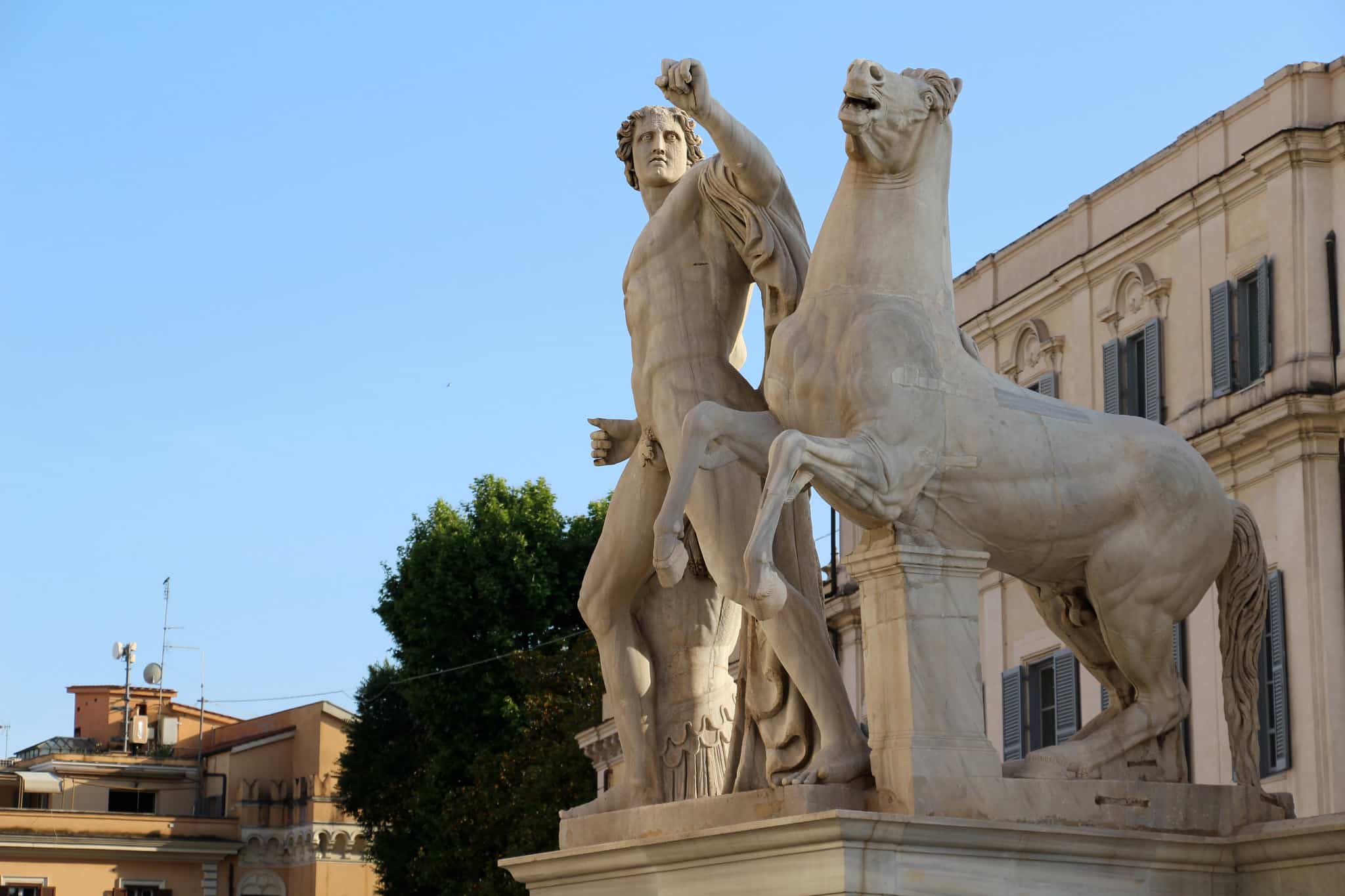
Their reconstruction places Zeus, Athena and Hera near the center. It also identifies Castor and Pollux, the twin horsemen known as the Dioscuri, as figures represented by ancient sculptures on Rome’s Quirinal Hill. The twins appear struggling with frightened horses, a scene Brinkmann links to the upheaval described in ancient accounts of Athena’s birth.
Hermes, the messenger god, also appears in the proposed scene, trying to hold onto his hat as strong winds sweep across the figures. A fragment showing a tortoise shell and drapery helped researchers connect Hermes with a Roman statue type.
“We’re very, very confident that we’ve solved the mystery,” Brinkmann said.
An ancient sculpture returns to view in Frankfurt
The original pediment was created in the fifth century B.C. Its central sculptures disappeared centuries ago. A 1687 explosion devastated the temple, and later removals dispersed surviving pieces among European museums. Earlier scholars, including British Museum curator Arthur Hamilton Smith, documented fragments and attempted partial reconstructions.
The Frankfurt exhibition, titled “Athena, the Stage is Yours: The Parthenon Puzzle,” displays a roughly 13-foot model, full-size reproductions and an animation of the proposed scene. It runs through July 25, 2027.
The opening also revived tensions over the Parthenon sculptures held in London. Greece rejected a request to lend nine fragments after learning British Museum pieces were planned for the same exhibition. The Frankfurt museum subsequently dropped the British loans as well.
See all the latest news from Greece and the world at Greekreporter.com. Contact our newsroom to report an update or send your story, photos and videos. Follow GR on Google News and subscribe here to our daily email!

