



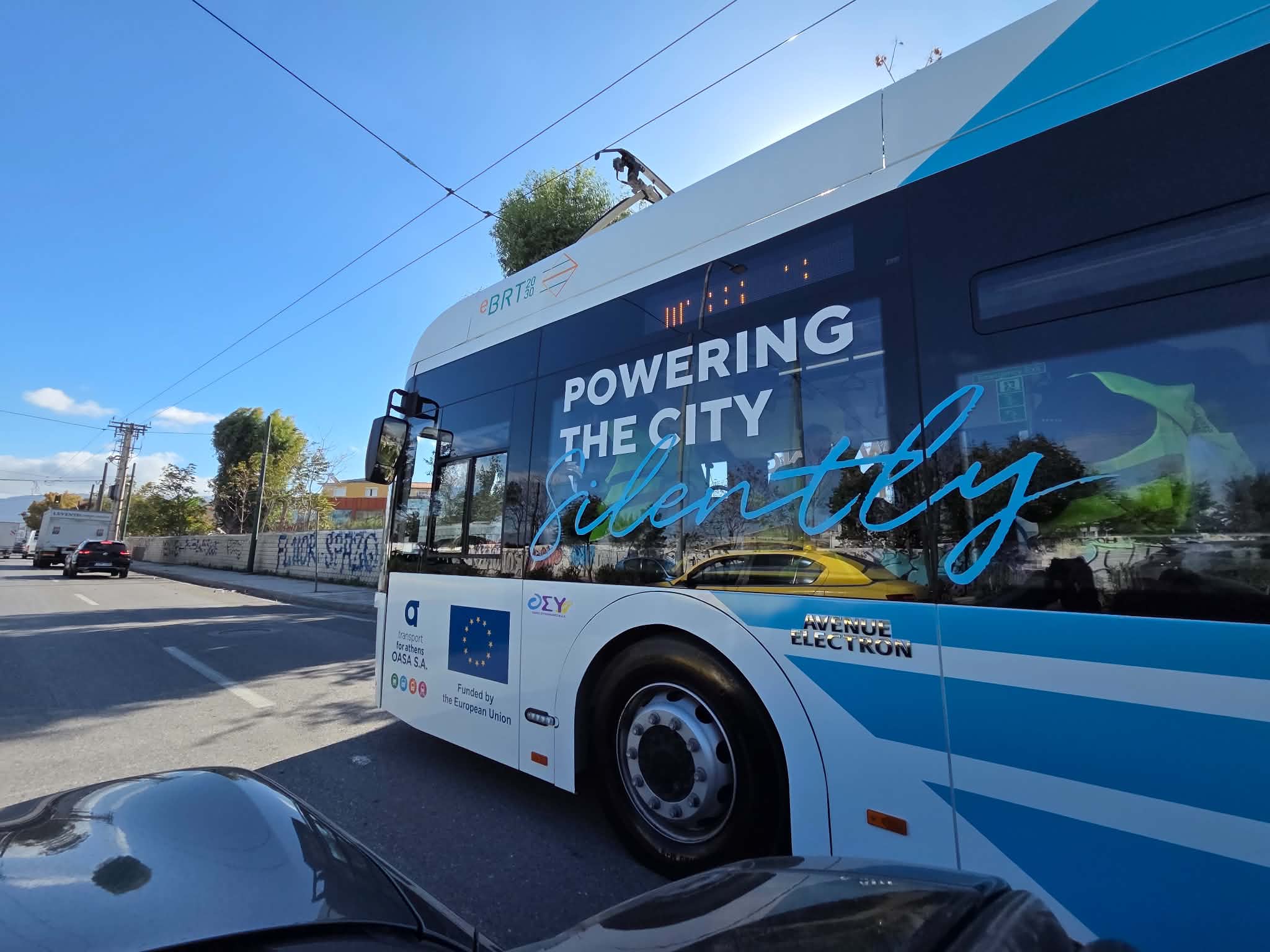
Greece is testing a new way to power electric public transport without building an entirely new charging network. An 18-meter (59 ft) electric bus is being tested on the streets of Athens as part of a European project exploring how modern buses can use the city’s existing trolleybus infrastructure.
The demonstration forms part of eBRT2030, a research and innovation project funded by the European Union’s Horizon Europe program. It brings together the Athens Urban Transport Organization (OASA), its bus operator OSY, researchers from the Institute of Communication and Computer Systems (ICCS), the National Technical University of Athens, and vehicle manufacturer TEMSA.
The experiment offers a new perspective on Athens’ transition toward electric transport. Instead of relying only on conventional depot charging, the project explores how an electric bus can draw power from overhead trolleybus wires and recharge its battery while using the existing network.
How the new electric bus works
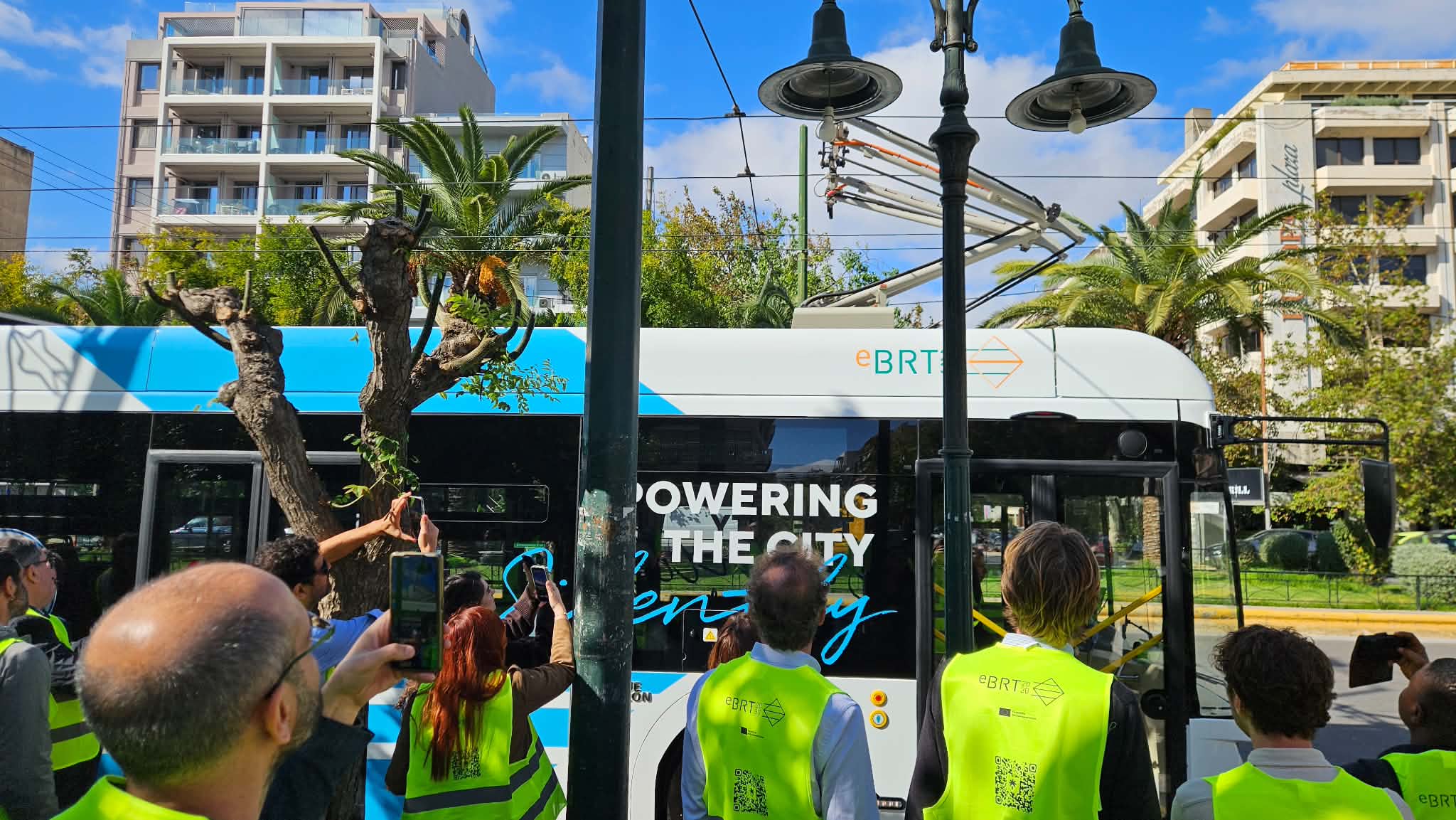
The vehicle used in the Athens demonstration is TEMSA’s 18-meter articulated Avenue Electron. It has a pantograph that connects to the overhead electrical wires used by trolleybuses.
The system combines charging from the overhead network with conventional charging at the depot. This approach, known as hybrid charging, could allow electric buses to operate along selected corridors without requiring extensive new charging infrastructure.
The pilot route follows Syngrou Avenue between the Syngrou-Fix metro station and the Stavros Niarchos Foundation Cultural Center. The corridor stretches about four kilometers in each direction and links central Athens with a major cultural destination near the coast.
The November demonstration included a drive of approximately 10 kilometers (approximately 6.2 miles), according to TEMSA. The event allowed project partners to show how the bus could work with existing urban transport infrastructure under real operating conditions.
The project is also examining technologies that could improve how the service operates. These include connected vehicle systems, real-time passenger information, sensors to count passengers at stops, and digital tools to help manage vehicles and energy use.
Why Athens is using its existing trolleybus network
The project comes at a time when Athens is changing its approach to electric public transport. Authorities have announced plans to withdraw many of the city’s trolleybuses and remove parts of the overhead wire network. The transition has prompted questions about how the capital will modernize its fleet and manage the infrastructure that remains.
The eBRT2030 pilot explores a different possibility: using existing trolleybus wires to support a new generation of electric buses. Rather than requiring every vehicle to depend entirely on a new network of charging points, the system could combine overhead charging with depot-based charging.
That does not mean the new bus is a direct replacement for all trolleybuses, or that the pilot has already become a permanent public service. It is a demonstration designed to test a particular approach to electric urban transport.
The distinction matters. The project is examining how existing infrastructure might support new technology, not announcing a complete reversal of Athens’ trolleybus withdrawal plans.
Part of a wider European transport experiment
Athens is one of seven demonstration locations in the eBRT2030 project, which studies electric Bus Rapid Transit systems and technologies for more connected, efficient public transport. Other demonstration sites include Barcelona, Amsterdam, Prague, Rimini, Nantes, and Bogotá.
In Athens, the project also looks at ways to improve passenger capacity, energy efficiency, and journey times. These are project objectives, not results that have already been confirmed for a permanent service.
The broader idea is to make electric public transport more practical by combining vehicle technology, charging systems, and smarter fleet management. For cities with existing trolleybus networks, the Athens experiment could offer useful lessons about how to adapt infrastructure rather than replace every part of it.
See all the latest news from Greece and the world at Greekreporter.com. Contact our newsroom to report an update or send your story, photos and videos. Follow GR on Google News and subscribe here to our daily email!

