



The god Amun helped Nubian kings claim Egypt’s throne as rulers, not foreign conquerors. By invoking a deity worshipped in both kingdoms, the leaders of Kush presented their expansion north as a defense of shared beliefs, according to a study of Egypt’s 25th Dynasty.
The research, published by Ahmed Khalil Ibrahim, examines Kushite rule from 715 to 656 B.C. Kush, centered at Napata in what is now Sudan, had longstanding religious and commercial ties with Egypt. Its rulers also saw an opening as rival powers, including Libyan dynasties, divided Egyptian territory.
Priests of Amun who had moved to Napata amid political upheaval encouraged Kushite leaders to challenge Libyan control. The ruler Kashta built ties in Thebes, a major center of Amun worship, restored temples, and appointed his daughter Amenirdis I to the powerful office of God’s Wife of Amun. Trade routes and gold also drove their ambitions.
Nubian kings said the god Amun had chosen them to rule
Kashta’s successor, Piye, advanced farther into Egypt and confronted rival rulers. His victory inscription credited Amun with his crown, framing royal authority as a divine choice rather than simply the result of conquest. Piye also visited Egyptian temples, including the sanctuary of Ptah at Memphis, and made offerings there.
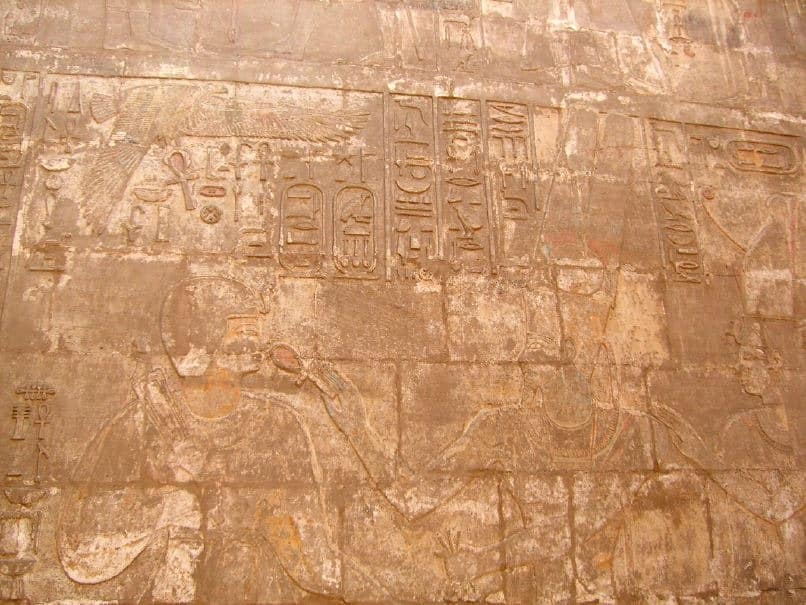
Shabaka, who followed Piye, brought Egypt under stronger Kushite control and supported religious building projects, including work at Karnak.
He also ordered a damaged religious manuscript honoring Ptah to be copied. Taharqa later built and repaired temples. Throughout the dynasty, rulers adopted Egyptian royal titles, crowns, and ceremonies to strengthen their claim to the pharaohs’ legacy.
Mount Barkal, near Napata, remained central to that claim. The Kushites regarded the mountain as Amun’s sacred home and a place associated with royal coronations. Their reverence for temples in Thebes linked their southern religious center to one of Egypt’s most influential priesthoods.
Royal women helped secure control of Amun’s temples
Royal women helped turn religion into political power. As God’s Wife of Amun, they oversaw temple property and offerings. Amenirdis I was followed by Kushite princesses Shepenwepet II and Amenirdis II, who also held influence in Thebes.
The kings retained much of Egypt’s administration, employing Egyptian officials alongside Kushites. Temples received land and gifts, giving religious institutions an important financial role.
But religious authority did not prevent military defeat. Assyrian invasions forced Taharqa south, and Tantamani’s attempt to regain Egypt ended with the Assyrian sack of Thebes. Egypt later passed to the 26th Dynasty.
The study says Kushite rulers saw Egypt and Kush as “one land connected by a strong bond of religion.” Their temples and royal appointments made that belief a basis for power.
See all the latest news from Greece and the world at Greekreporter.com. Contact our newsroom to report an update or send your story, photos and videos. Follow GR on Google News and subscribe here to our daily email!

