



If you really want to understand the core of Ancient Greek society, you have to look past the poetry and myth and take a look at marriages. We love to romanticize the ancient world, but the reality of daily life, especially when it came to marriage, was incredibly pragmatic. Romance rarely even made it to the negotiating table.
Tying the knot didn’t use to be about two soulmates finding lifelong companionship. Obviously, this type of romance did exist, but it was rare. Marriage was a carefully calculated business deal. The goals were straightforward: to protect the wealth, secure citizenship, and keep the family line going. At the center of it all was a strict engagement process and a dowry system that truly looked an awful lot like a modern prenuptial agreement.
The handshake and the dowry in Ancient Greek marriages
In classical Athens, making a marriage official didn’t normally begin with a proposal. It started with the engye, a serious, formal handshake between the future groom and the bride’s male guardian, or kyrios. This was the moment the real deal was struck, and the main talking point was always the proix (yes, this is the root word for the infamous προίκα), the dowry.
To comprehend the dowry, we need to view it as the financial anchor of the marriage. It covered the wife’s living expenses in her new home, but more importantly, it worked as a brilliant insurance policy against a complicated and hasty divorce. If a husband decided he wanted to kick his wife out of their home, the law stepped in. He had to hand the entire dowry back to her kyrios, or face crippling interest payments until he did.
Interestingly, this gave women a layer of indirect protection in a society completely run by men. That said, it wasn’t exactly financial independence either. As classical historian Sarah Pomeroy points out, women in antiquity didn’t actually own property, as they were simply the vessels it moved through. At the end of the day, marriage was viewed as an absolute economic necessity. When you look at the bitter legal battles over shared assets in family courts today, you realize that the financial bedrock of a household is still just as crucial to keeping things stable.
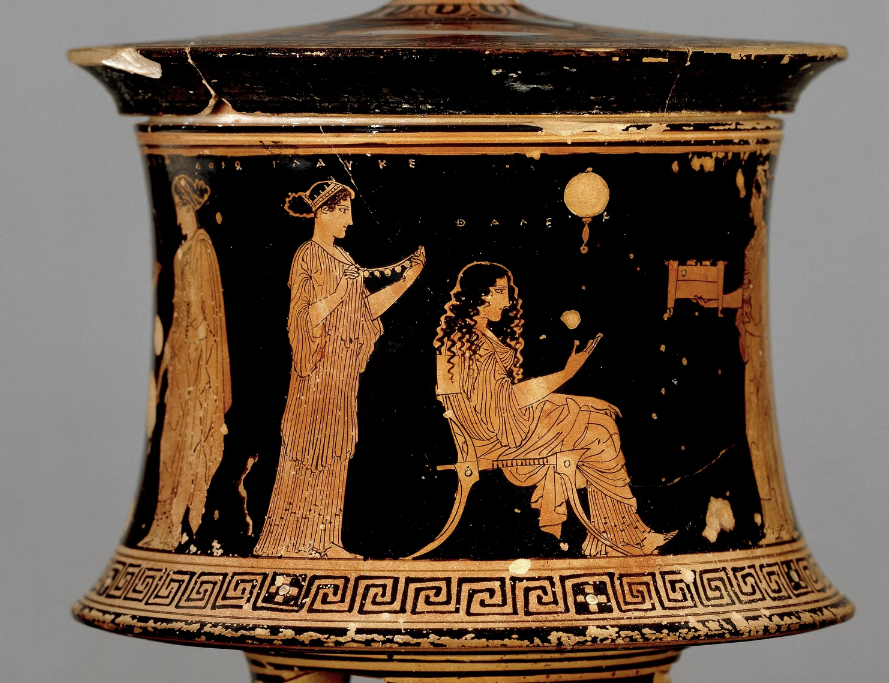
Protecting the bloodline at all costs
Things get even more intense when you look at how these ancient contracts handled sudden family crises. What happened if a patriarch died and left behind only a daughter? She instantly became an epikleros, literally, a woman “attached to the estate.”
To stop the family wealth from slipping away to outsiders, the law forced her to marry her closest male relative. Usually, this meant an uncle or a cousin. In extreme scenarios, a man might actually divorce his current wife just so he could marry the epikleros and get his hands on the estate.
This is indeed a brutal reality by today’s standards. The idea of doing whatever makes you happy made zero sense to an Ancient Athenian. Individual desires were entirely crushed under the weight of the oikos, the family unit. These marriages were built to fortify the wider community and prop up the city-state’s rigid social ladder. You can see the exact same logic playing out centuries later in European royal marriages or even when modern billionaire families merge their estates and wealth. The preservation of legacy and capital almost always wins out over feelings. The Greeks just turned that harsh truth into an institution and a social norm.
From Ancient Greek marriage arrangements to modern prenups
We mostly know all this from the messy, lawsuit-happy world of Athenian courts. Speakers such as Demosthenes were constantly taking on cases about forged citizenships, broken promises, and contested dowries. In one of his most famous speeches, “Against Neaera,” Apollodorus of Acharnae (or Demosthenes, depending on the scholar) laid out the Greek attitude toward relationships with exceptional clarity: courtesans are kept for pleasure, concubines take care of daily physical needs, and wives are there to produce legitimate heirs and faithfully guard the house (“τὰς μὲν γὰρ ἑταίρας ἡδονῆς ἕνεκ’ ἔχομεν, τὰς δὲ παλλακὰς τῆς καθ’ ἡμέραν θεραπείας τοῦ σώματος, τὰς δὲ γυναῖκας τοῦ παιδοποιεῖσθαι γνησίως καὶ τῶν ἔνδον φύλακα πιστὴν ἔχειν”). It’s a clinical breakdown that totally strips away any illusions we might have. Marriage was a civic duty, plain and simple.
Thankfully, as a society, we have moved past treating spouses as mere property custodians, but the core idea of the marriage contract hasn’t exactly disappeared either. Rather, it has just evolved. It is chilling to think about just how long this financial tradition actually held on. In Greece, the proika wasn’t officially removed from the law books until 1983, a staggeringly recent milestone driven by sweeping reforms to modernize family law by the first Socialist government of the country.
The rest of the Western world moved away from the practice a bit earlier, although rarely through a single dramatic decree. In the US and across much of Europe, the dowry system didn’t end with a law like it did in Greece; it simply became obsolete. Once the Married Women’s Property Acts started gaining traction in the mid-to-late 19th century, finally giving women the legal right to control their own money and land independently, the idea of a bride bringing a financial “sweetener” to a marriage quietly faded out. It took centuries, but the law finally caught up to the radical idea that a woman was a person and not just a vehicle for family wealth.
See all the latest news from Greece and the world at Greekreporter.com. Contact our newsroom to report an update or send your story, photos and videos. Follow GR on Google News and subscribe here to our daily email!

