



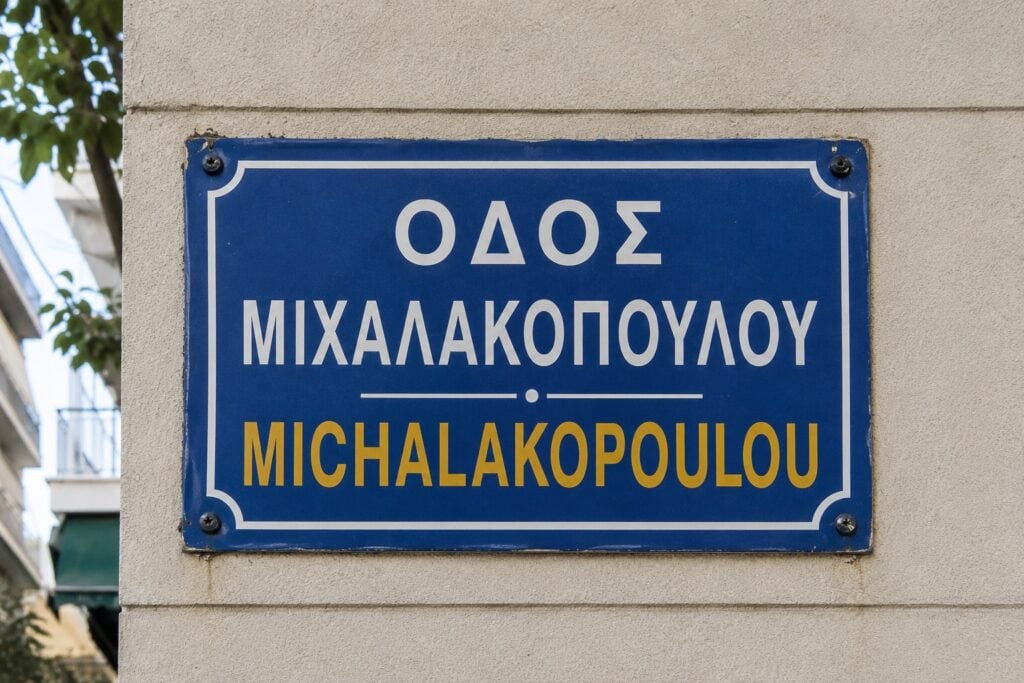
Every day, thousands of Athenians and visitors pass through Michalakopoulou Avenue, one of the main arteries of central Athens. Yet few know the story of Andreas Michalakopoulos, the forgotten Greek Prime Minister and diplomatic genius whose name the avenue carries.
Who was the man behind the Michalakopoulos name?
Andreas Michalakopoulos was born in Patras in 1876 and went on to become one of the most important statesmen in modern Greek history. He was a man who helped redraw Greece’s borders, solved Athens’ water crisis, and brokered peace with Turkey at a time when Greece couldn’t have suffered more militarily.
Yet most Greeks today could not tell you a single thing about him. History has been unkind to Michalakopoulos, largely because he spent most of his career standing next to one of the most towering figures Greece has ever produced: Eleftherios Venizelos. That proximity was both his greatest role and the reason he is so rarely remembered—a blessing and a curse for a public figure like him. Michalakopoulos rose through the Liberal Party (Κόμμα των Φιλελευθέρων) ranks after 1910, holding portfolios in Economy, Agriculture, and Military Affairs under successive Venizelos governments.
He was not a man who craved the spotlight. He was a man who understood how government actually worked, and he was trusted with the levers of it accordingly—a true politician in the best definition of the term possible. When Venizelos went before the great powers of Europe to argue for a bigger Greece after the First World War, Michalakopoulos was beside him at the negotiating table. He participated in the long, tough diplomacy that produced both the Treaty of Sèvres in 1920 and the Treaty of Lausanne in 1923, the two documents that first promised the unthinkable and then permanently fixed, without too heavy losses, the borders of the modern Greek state. Venizelos got 100% of the credit.
However, Michalakopoulos did much of the work. He became Prime Minister in October 1924, inheriting a country in a genuine, profound, and almost existential crisis. The Asia Minor Catastrophe of 1922 had sent over a million Greek refugees flooding into Greece in a matter of months. From dreams about the reinstatement of Byzantine glory, Greece woke up in ruins, literal and metaphorical. Athens had nearly doubled in population within just a few years, and the city’s ancient water infrastructure simply could not cope. Water was being sold from carts in the streets. Taps ran dry. For a capital city that had stood for thousands of years, it was an embarrassing and dangerous situation. Greece was on the brink of collapse.
Michalakopoulos wasted little time. In December 1924, his government signed a landmark contract with American engineering firm Ulen & Company and the Bank of Athens to construct the Marathon Dam. It was one of the largest infrastructure projects in Europe at the time. The Marathon Dam was a gravity dam built of the famous Pentelic marble—the same stone used to construct the Parthenon—rising 54 meters above the Haradros River outside of Athens. The project cost more than the entire National Bank of Greece and was funded with a $10 million loan. Yes, modern Greece and loans, this stereotypical love affair…
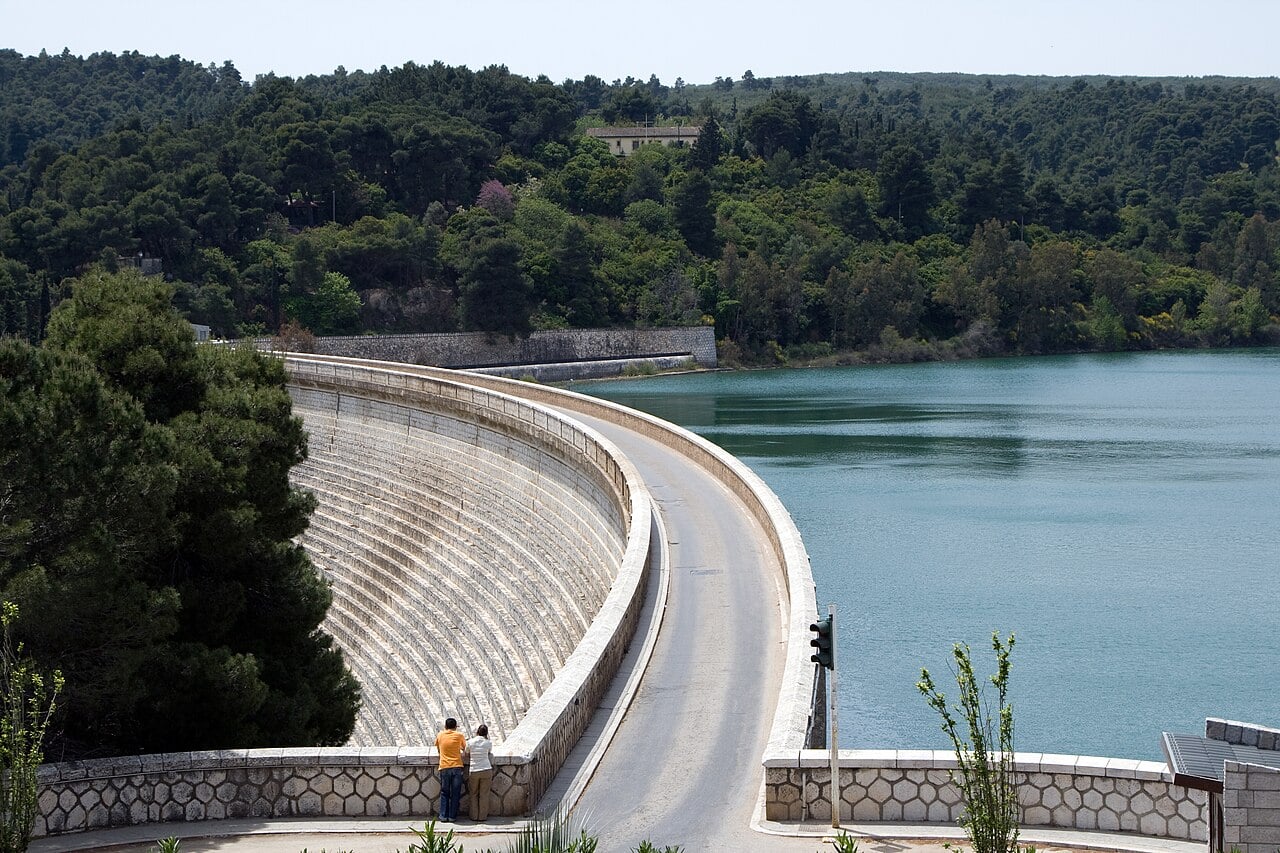
Construction ran from 1926 to 1929. The finished system delivered water to Athens through nearly 880 kilometers (547 miles) of new pipes and was inaugurated in 1931. The water that flows from Athenian taps today finds its roots in that contract and in that decision. Michalakopoulos never saw it completed. A military coup by General Theodoros Pangalos ended his government in June 1925, just months after the contract was signed.
But, thankfully, the work was done. He returned to government as Foreign Minister under Venizelos starting in 1928, and it was here that he made perhaps his most lasting contribution to the nation. Greece in the late 1920s was a country that had been through a lot. The Megali Idea, the great dream of a Greece stretching across the Aegean and into Anatolia, had collapsed spectacularly and catastrophically. The population exchange with Turkey had displaced more than a million people on each side. The two countries were locked in mutual suspicion and unresolved property disputes.
Michalakopoulos understood, more clearly than most, that Greece could not afford to stay that way. On October 30, 1930, he co-signed the Greek-Turkish Friendship Convention, also known as the Treaty of Ankara. He did that alongside Venizelos and Turkish Prime Minister İsmet İnönü. The treaty settled the border, resolved the property claims of the displaced populations, and established naval parity in the eastern Mediterranean.
It was a remarkable diplomatic achievement that helped lay the groundwork for the Balkan Pact of 1934 and brought a genuine, working peace between two nations that had spent generations at war. When Ioannis Metaxas declared his dictatorship on August 4, 1936, Michalakopoulos refused to go along with it. He had spent thirty years building democratic institutions from the inside. He spoke out against the regime and paid a heavy price for it. He was sent into internal exile on the island of Paros. He died on March 7, 1938, aged sixty-one.
Michalakopoulos’ legacy is a strange one: a man who brought water to a thirsty city, helped draw the map of modern Greece, made peace with its archenemy, and died in exile because he would not pretend that democracy was something you could simply switch off. Next time the traffic backs up on Odos Michalakopoulou in downtown Athens, take a moment to read the sign. The water in your glass and the borders of this nation have everything to do with the man it honors.
See all the latest news from Greece and the world at Greekreporter.com. Contact our newsroom to report an update or send your story, photos and videos. Follow GR on Google News and subscribe here to our daily email!

