



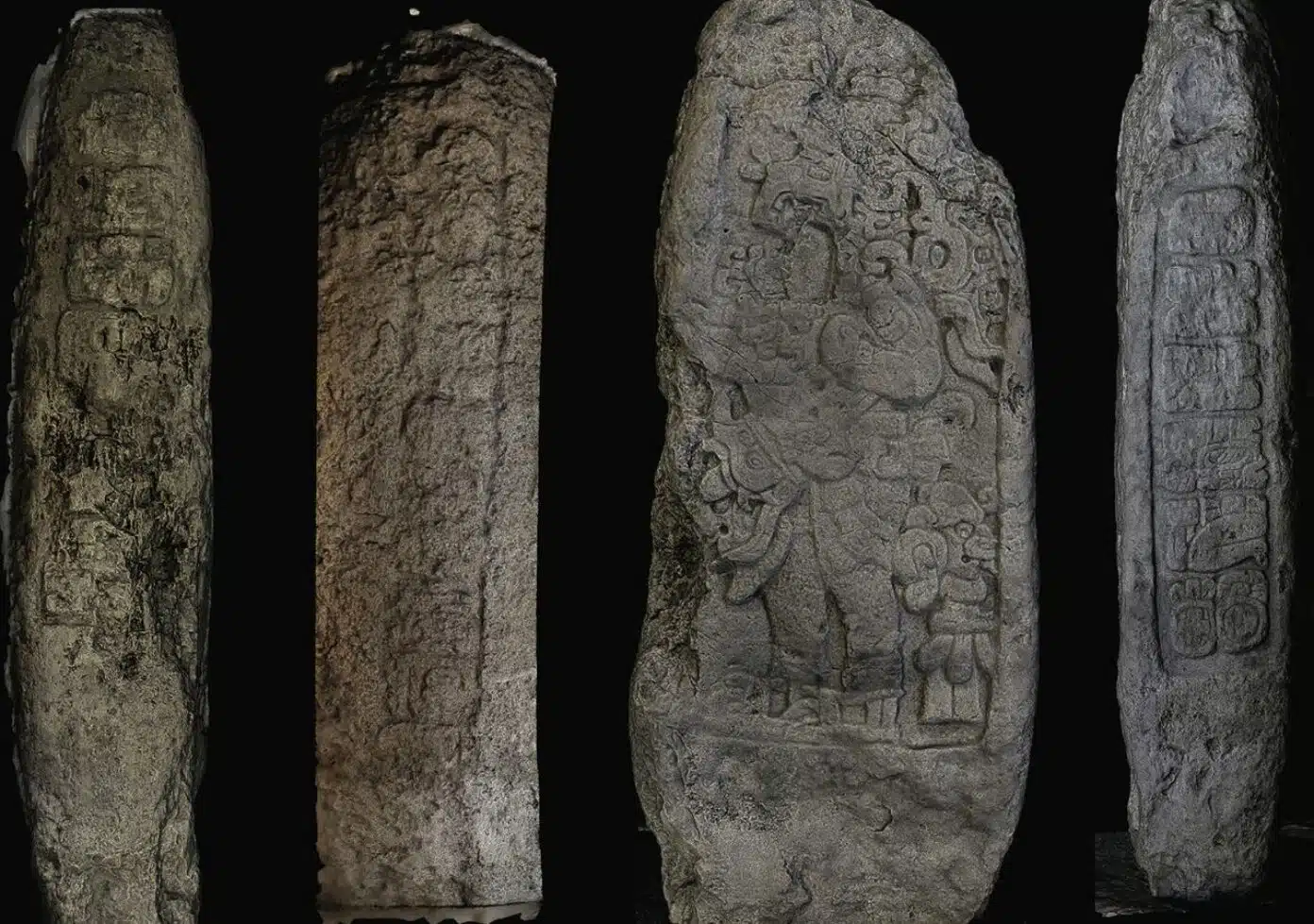
Archaeologists working at an ancient Maya site in southern Mexico have found what they say is the earliest known evidence of Maya kingship and calendar use in the region.
Kenichiro Tsukamoto, an archaeologist at the University of California, Riverside, led the study published in Ancient Mesoamerica. His team analyzed three stone monuments at El Palmar, a site in southeastern Campeche, Mexico.
One of them, Stela 46, carries an inscription dated to A.D. 180. That makes it the oldest confirmed “Long Count” calendar date discovered in the Maya Lowlands.
The Long Count is a dating system the ancient Maya used to record historical events in a fixed chronological order. Before this discovery, a stone monument at Tikal held that record with a date of A.D. 292. The El Palmar inscription predates it by 112 years.
Stone monuments link Maya kingship to an ancient calendar
What distinguishes Stela 46 from earlier finds is its direct connection to historical rulers and events. A king named Ajaw K’al Ubaah acceded to the throne in A.D. 131. Some 49 years later, in A.D. 180, he commissioned the stela as part of a royal ritual.
Alongside the Long Count, the inscription also incorporates the 260-day divinatory calendar, binding the royal event to a specific ceremonial date. No earlier Long Count inscription had ever been linked to a named ruler, the researchers said.

To read the heavily worn carvings, researchers combined traditional photography with photogrammetry and a high-resolution 3D scanner called Artec Spider II. The device captures detail as fine as 0.1 millimeters (0.0039 inches). It uncovered inscriptions that scholars had previously missed entirely.
The carvings also show that the king carried two royal titles, pointing to an already established order of royal authority at the site.
Monument traces El Palmar’s rulers back 17 generations
A second monument, Stela 20, strengthened the picture of Maya kingship at El Palmar. Its text identifies the ruler who commissioned it as the 17th king in a successive royal line.
Using the estimated average reign of 22.5 years for Classic Maya kings, the team calculated that the lineage’s first ruler likely rose to power between A.D. 102 and 154. That closely matches the accession date recorded on Stela 46.
A third monument, Stela 45, records the accession of a ruler named Tz’u Chak Ahk in A.D. 342. Together, the three stelae trace a royal dynasty from the second century A.D. to at least A.D. 884, one of the longest recorded among ancient Maya kingdoms.
Tsukamoto noted that El Palmar rose during a turbulent period. Several large Maya polities collapsed around A.D. 150 due to drought, soil erosion, and political instability. El Palmar appears to have grown as a new power center in their place.
The study concludes that calendar systems did more than track time. At El Palmar, they helped rulers legitimize and hold power for more than 700 years.
https://youtu.be/2sGZRo5POf8?si=wF6pXkzKrpiZuZ88
See all the latest news from Greece and the world at Greekreporter.com. Contact our newsroom to report an update or send your story, photos and videos. Follow GR on Google News and subscribe here to our daily email!

