



Hairstyles in Ancient Greece carried a significance that went far beyond mere looks. Hairstyles and beards allowed Greek men to express themselves, as these were tied to identity, status, political preferences and values, and military ideals.
Through the centuries, male grooming evolved alongside Greek society itself, and while aristocratic warriors of the Archaic age had long, flowing hair and full beards, Classical Athenians later favored shorter, more restrained styles. Meanwhile, Spartans continued to value long hair as a symbol of freedom and warrior virtue. Ancient Greek hairstyles thus revealed much more than one’s fashion sense. They reflected evolving ideas related to masculinity, citizenship, and power dynamics.
Hair and identity in the Archaic world

During the Archaic period, long hair dominated male appearance across much of Greece. Aristocratic men, in particular, favored elaborate hairstyles arranged in carefully formed curls or ringlets. Sculptures of kouroi provide the clearest visual evidence for these styles. The kouroi statues depict idealized young men with symmetrical braided or curled hair flowing over the shoulders. Artists emphasized order and balance rather than realism, and the hair itself became an integral part of the ideal male body.
Long hair also carried heroic associations during this period. Homeric heroes such as Achilles are often described with impressive hair, which symbolized strength and noble birth. Greek elites therefore linked long hair with aristocratic dignity and martial excellence. Men also used ribbons, bands, and wreaths to bind their hair, and these accessories sometimes signaled ritual participation or social rank. In addition, full beards became standard markers of adulthood and masculine authority.
Hairstyles in Ancient Greece shifted significantly during the Classical period. Men in cities such as Athens increasingly adopted shorter, more natural styles. Artists likewise moved away from rigid styling and toward greater realism. This transformation reflected broader social changes. Athens promoted ideals of moderation, discipline, and civic equality, and excessive luxury or aristocratic display no longer aligned with the democratic image many Athenians sought to project.
As a result, shorter hair became associated with restraint and rationality. Men still wore beards, but these were more natural and less decorative than in earlier periods. Sculptors such as Phidias portrayed hair with softer textures and a sense of flowing movement, emphasizing individuality and realism rather than abstract perfection. Nevertheless, hairstyles continued to carry political meaning. Hair length could still signal cultural loyalties and ideological sympathies.
Long hair and suspicion in Athens
Although shorter hairstyles became common in Athens, not everyone abandoned long hair. Some men continued to wear it long, especially those influenced by aristocratic or pro-Spartan ideals. This choice could arouse suspicion during periods of political tension between Athens and Sparta.
A well-known example appears in Lysias’ speech In Defense of Mantitheus (Ὑπὲρ Μαντιθέου) in which an Athenian man faces slander in court. In the speech, Mantitheus complains that Athenians judge him unfairly based on his appearance. He specifically mentions his long hair (μακρὰ κόμη). Mantitheus argues that hairstyle alone should not determine political loyalty. However, his defense reveals the extent to which Athenians associated long hair with Spartan sympathies.
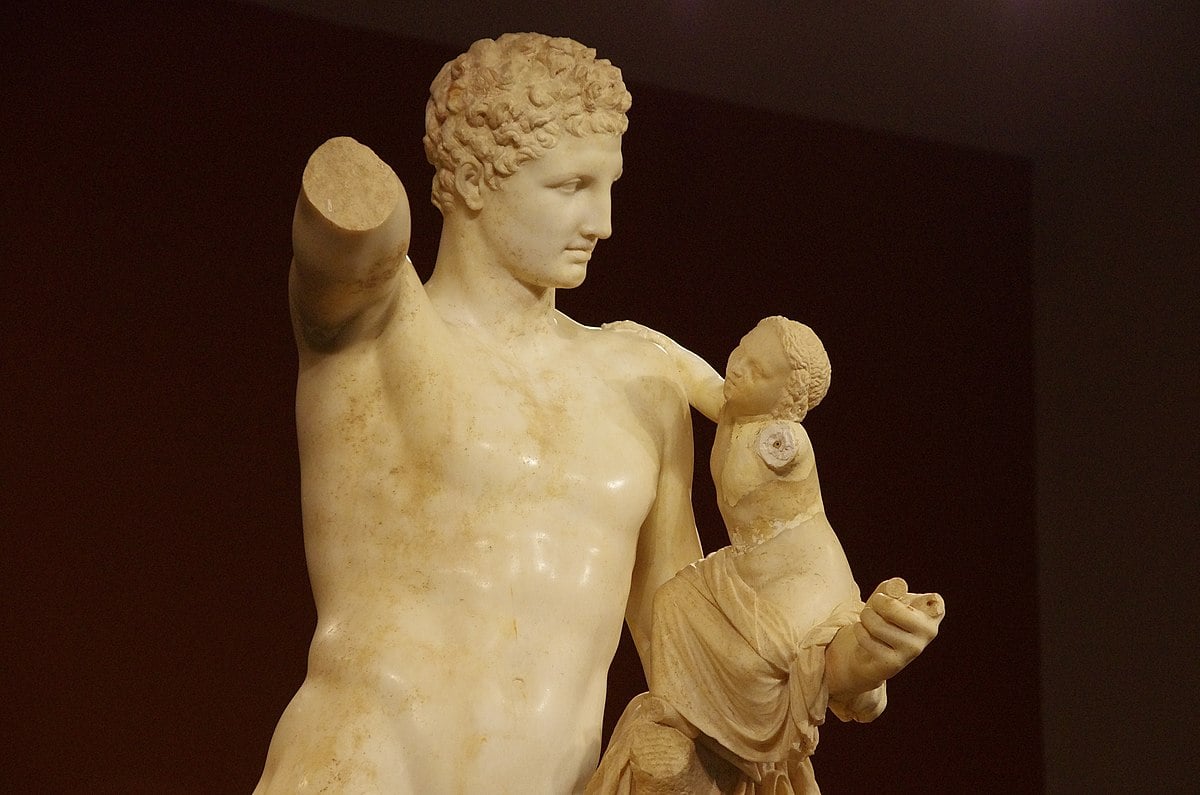
The accusation carried serious implications. During the Peloponnesian War, Athenians often viewed pro-Laconian attitudes with distrust, and outward appearance could quickly become politically charged as a result. This episode demonstrates how hairstyles functioned as social signals in Classical Greece. Hair did not merely reflect personal taste but also communicated cultural and ideological identity.

Sparta and the symbolism of long hair
Sparta preserved older Greek traditions surrounding long hair more so than other city-states. Spartan men considered long hair a sign of freedom, courage, and discipline. Ancient authors repeatedly comment on this custom. The historian Herodotus famously described the Spartans combing their hair prior to the Battle of Thermopylae. Xerxes reportedly found the scene astonishing, as the Spartans calmly prepared their appearance before facing death.
For the Spartans, grooming reflected self-control and warrior pride. Long hair did not symbolize vanity. Instead, it expressed discipline and fearlessness. Spartan tradition even connected hair with honor itself. According to some customs, cutting the hair could signal mourning or humiliation. As a result, maintaining long hair became part of masculine dignity.
Furthermore, the Spartans cultivated distinctive facial hair. The biographer Plutarch noted that Spartan men commonly carefully trimmed their mustaches while allowing their beards to grow more fully, leading to an apparently martial appearance. As a result, Spartan hairstyles became highly recognizable symbols throughout the Greek world.
Alexander the Great and the Hellenistic transformation
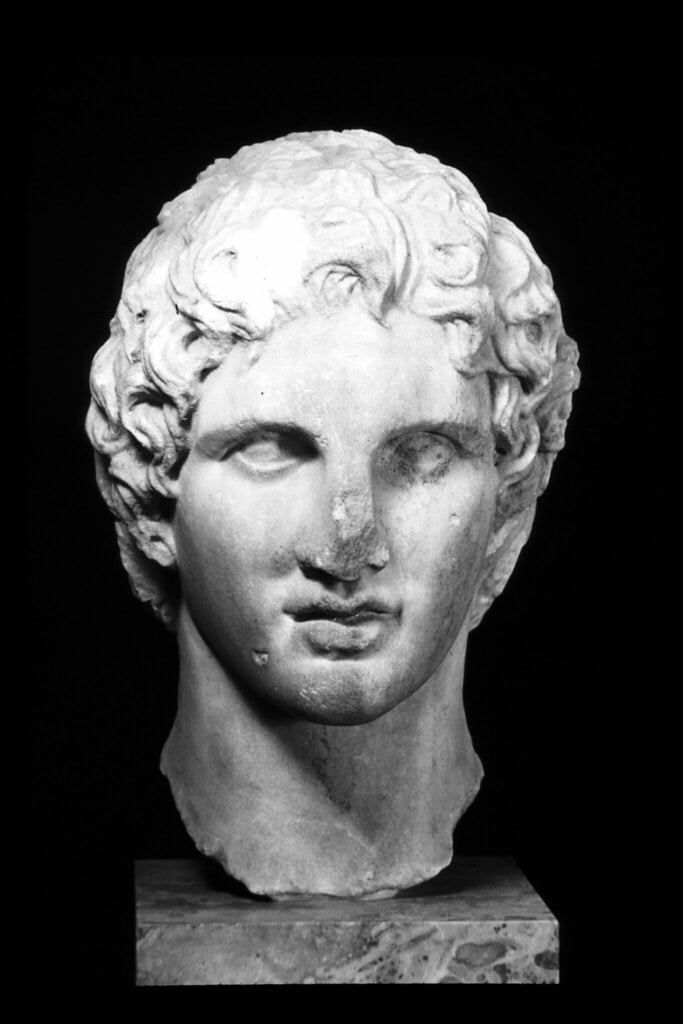
Greek grooming customs changed dramatically once again during the Hellenistic period. Alexander the Great popularized short hair and a clean-shaven face across the Eastern Mediterranean. This shift is often connected with military practicality. A clean-shaven soldier offered enemies fewer opportunities during close combat, and short hair also reduced inconvenience during campaigns.
However, Alexander’s image went beyond practicality. His youthful appearance projected energy, ambition, and charisma. Artists portrayed him with shorter hair arranged in dynamic upward curls. This new style quickly spread across the Hellenistic kingdoms, and younger men increasingly abandoned the heavy beards associated with earlier generations. As a result, the masculine ideal shifted from mature aristocratic authority toward youthful heroic dynamism.
The modern understanding of Greek hairstyles comes primarily from archaeology and art. Sculptures, painted pottery, funerary reliefs, and coins all preserve critical visual details.
Masculinity, and cultural ideals
Greek vase painting also provides valuable evidence. Artists depicted warriors, athletes, and citizens with a wide variety of hairstyles and beard styles, allowing scholars to trace changing fashions across centuries. Ancient craftsmen used sophisticated techniques to represent hair. Sculptors carved detailed strands with chisels and drills, while painters added color to enhance realism. Some statues even incorporated metal wreaths or other decorative elements.
Furthermore, Greek society supported professional barbers. Barber shops functioned not only as grooming spaces but also as centers of conversation and social life, where men gathered to discuss politics, philosophy, and public affairs.
Hairstyles in Ancient Greece reflected broader ideas about masculinity and citizenship. Long hair often symbolized aristocratic heritage, heroic identity, and martial tradition, while shorter hair later came to represent moderation, civic discipline, and practicality. At the same time, regional traditions resulted in noteworthy differences. Sparta preserved older warrior customs, while Athens embraced more restrained styles associated with democratic values.
These distinctions help explain why hairstyle could carry political meaning. A man’s appearance communicated social identity without actually saying a thing.
See all the latest news from Greece and the world at Greekreporter.com. Contact our newsroom to report an update or send your story, photos and videos. Follow GR on Google News and subscribe here to our daily email!

