



Researchers may have uncovered the world’s earliest evidence of deliberate human cremation in Ethiopia, alongside what may be the most complete adult human skeleton ever found from Africa’s Middle Stone Age.
A new study published in the Proceedings of the National Academy of Sciences documents the discovery of charred human remains and thousands of stone tools dating back roughly 100,000 years in the Afar Rift of northeastern Ethiopia.
Lead author Yonas Beyene of the French Center for Ethiopian Studies, CNRS, led the team that excavated the Faro Daba beds within the Halibee region of Ethiopia’s Middle Awash study area.
Researchers used two independent dating methods, argon isotope analysis of volcanic ash and uranium-thorium dating of ostrich eggshells, to confirm the age of the sediments at approximately 100,000 years.
Three human skeletons reveal Ethiopia’s cremation mystery
A total of 13 Homo sapiens individuals were identified at the site. Three of them are represented by partial skeletons, each showing a different postmortem history.
One skeleton, designated HAL-VP-9/1, is considered the most complete adult human skeleton recovered from any African Middle Stone Age site. It shows signs of rapid burial, with termite damage on the bones but no carnivore interference, suggesting the body was covered soon after death.
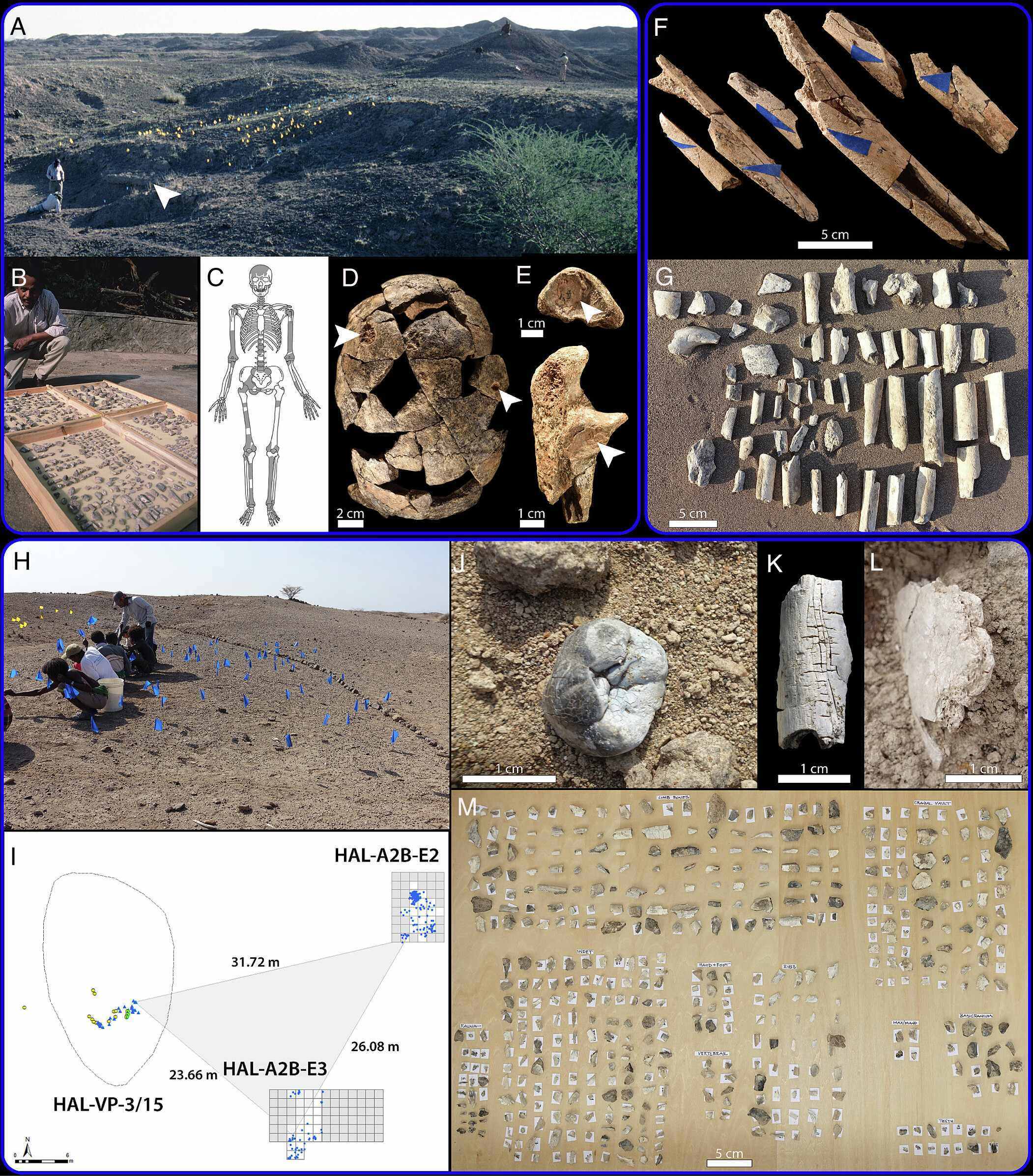
A second skeleton bears unmistakable evidence of carnivore scavenging, with tooth marks, bone fractures, and missing joints. The third individual, HAL-VP-3/15, is the one raising the question of intentional human cremation in Ethiopia.
The bones and teeth display intense heat damage, including cracking, charring, and discoloration consistent with fire temperatures exceeding those of typical wildfires. Beyene and colleagues note that in modern forensic settings, such damage would point toward deliberate cremation.
However, widespread burning evidence exists across the Faro Daba landscape, and researchers say they cannot yet rule out natural or accidental fire. They call for additional evidence before drawing a firm conclusion.
Stone tools, horn implements, and a landscape frozen in time
Researchers recovered thousands of stone tools at the site, including Levallois cores, pointed flakes, and heavy-duty picks made from locally available basalt. Notably, two fossilized eland horn core fragments showed wear patterns consistent with use as digging tools, offering a rare glimpse into non-stone implements.
Small quantities of obsidian were also present, with some pieces sourced from locations up to 240 kilometers (150 miles) away. No symbolic objects such as beads, ochre, or engravings were found at the site.
Animal fossils, including colobus monkeys, bovids, and large rodents, indicate a wooded, seasonally flooded environment along the ancient Awash River.
Researchers describe Faro Daba as one of the most extensive and least disturbed open-air Middle Stone Age sites documented in Africa, offering an unusually clear picture of early Homo sapiens life before populations expanded out of the continent.
See all the latest news from Greece and the world at Greekreporter.com. Contact our newsroom to report an update or send your story, photos and videos. Follow GR on Google News and subscribe here to our daily email!

