



The Ralph Mark Gilbert Civil Rights Museum in Savannah, Georgia hosts a permanent exhibition dedicated to Apostolos Evangelinos, a Greek immigrant. The exhibition presents his story alongside paintings by his granddaughter, Maria Giannikou, inspired by his life.
Evangelinos’ story is not merely that of an immigrant journey. It represents a living example of courage, dignity, and profound humanity. From Lesbos to the United States, his life intersected with pivotal moments in history. Throughout his journey, he confronted war, racism, and challenging moral decisions.
Today, the museum revives his memory through this exhibition, whereby the art of his granddaughter connects the past with the present. The exhibition presents more than a single man’s story. It reflects an entire era, reminding visitors that humanity can become an act of resistance even in the darkest circumstances.
The exhibition highlights the life of the Greek immigrant who traveled from Mytilene (Lesbos), began anew in Savannah, and eventually returned to his homeland. Throughout his life, Evangelinos defended humanity itself, as well as the right to self-determination and diversity.
Years after his death, his granddaughter, Maria Giannikou, met Professor Myrsini Mamoli. This meeting began a research journey into Evangelinos’ life in the United States.
Greek immigration to the United States
Apostolos Evangelinos was born on June 30, 1888 in Plagia of Plomari and spent his early years in Asia Minor. In Phocaea, his family owned saltworks and ran business activities that shaped his later path.
At the age of eighteen, he decided to travel to America in search of a better life. In 1907, he left Piraeus and arrived at Ellis Island, where he remained for about a month. The Statue of Liberty stood there as a symbol of hope for immigrants. Years later, the Greek diaspora funded a similar statue in the port of Mytilene.
In 1922, he worked with his brother Alexander at Alexander Candy Co in Savannah. In 1924, he opened his own confectionery, Crown Candy Kitchen, on West Broad Street.
The struggles of a Greek immigrant: From Lesbos, Greece to Savannah, Georgia
In his early years, Evangelinos worked as a hired soldier in the US Army in order to earn money. However, his greatest challenges lay elsewhere.
Several African Americans were employed in Evangelinos’ business. At that time, the Ku Klux Klan, the historically largest far-right organization in the United States, was active, using violence and intimidation against African Americans and other minority groups.
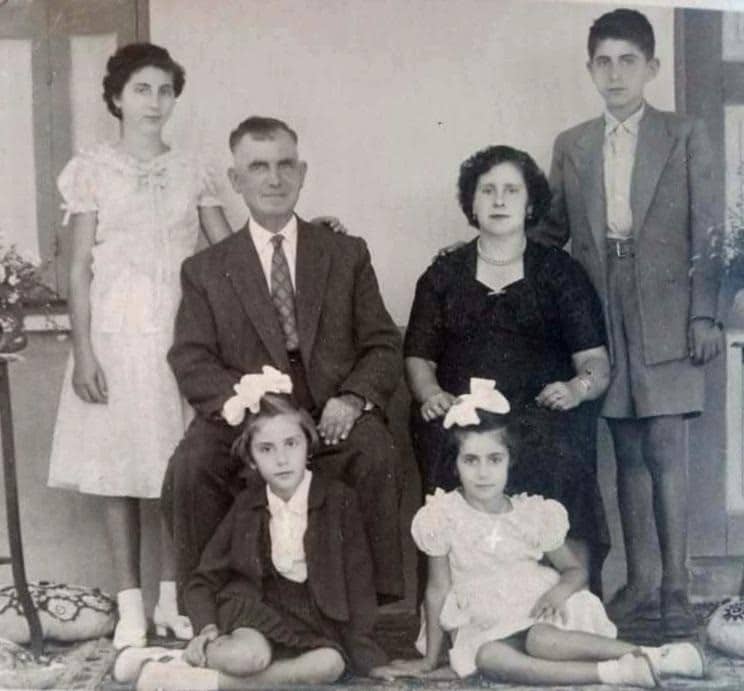
Some individuals approached Evangelinos and offered him money to join the Ku Klux Klan, but he refused. As a result, the Greek immigrant received threats and eventually abandoned his businesses in Savannah, Georgia. For approximately two years, his whereabouts remained unknown. At the age of 48, he returned to his homeland, where he later started a family and passed away in 1987 at the age of 99.
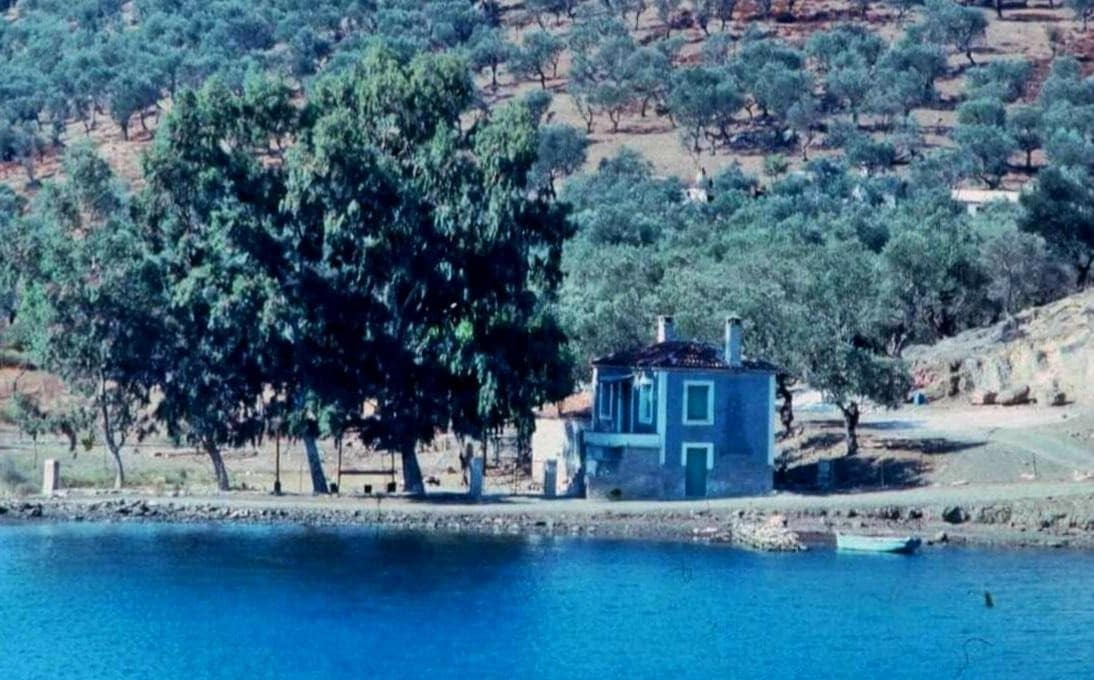
Evangelinos’ legacy of humanity
The legacy Apostolos Evangelinos left behind over his 99 years of life can be summed up in one word: humanity. He supported his birthplace, Plagia of Plomari, financially whenever there was a need. He was among the Greek immigrants who sent money to help build homes for refugees of the Asia Minor Catastrophe.
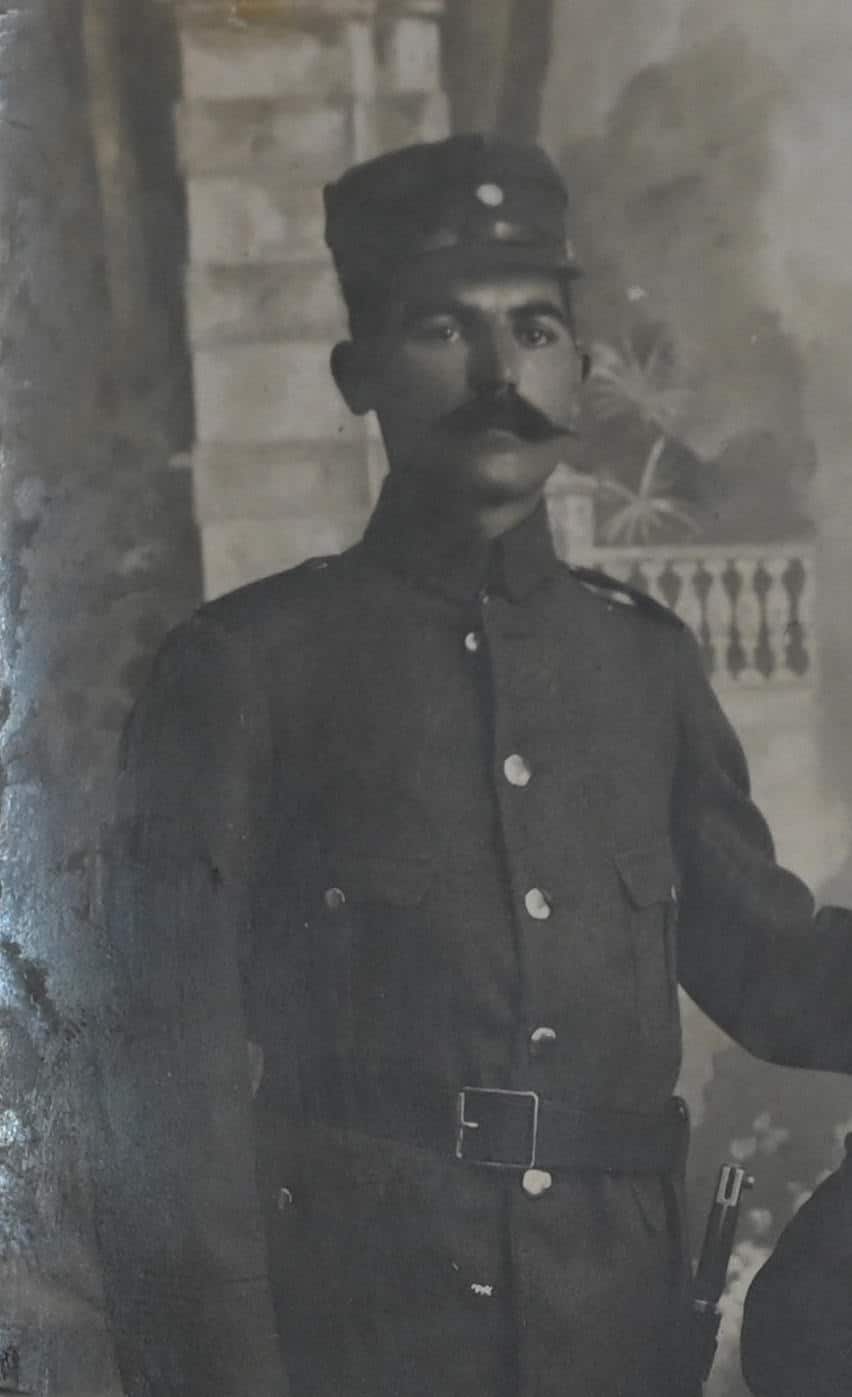
In 1912, he arrived to Lesbos along with other businessmen who had closed their shops, traveled on the “MARTHA WASHINGTON,” and took part in the Lesbian Phalanx, fighting the Turks for the liberation of the island. This is also evidenced by his photograph in which he is depicted wearing the uniform of the Lesbian Phalanx and bearing the inscription “Soldier Apostolos.”
It is particularly noteworthy that his humanity and kindness saved him from execution during World War II, when Nazi forces were operating on Lesbos. At that time, he owned a boat, which he allowed others to use for fishing so their families could have something to eat, as hunger was claiming lives. His only condition was that the oars be returned each night to prevent the boat from being used for other purposes.
Some individuals used the boat to flee to the Middle East. Evangelinos was arrested by German forces as an accomplice. When he was informed that his punishment would be execution, he exclaimed, “Oh my God.” Upon hearing this phrase, the Germans asked whether he had any connection to England—at the time, Germany and Great Britain were enemies. He replied that he knew English because he had lived for years in Savannah.
Through the conversation that followed, it was discovered that Evangelinos had been a tenant of the German officer’s aunt and that he had helped her whenever she needed assistance. Thus, the help he had offered her for years ultimately saved his life.
Greek immigrant Apostolos Evangelinos at the Ralph Mark Gilbert Civil Rights Museum in Savannah
Years after Apostolos Evangelinos’ death, his granddaughter, Maria Giannikou, happened to meet Professor Myrsini Mamoli at the University of Atlanta. This encounter proved pivotal, as Mamoli began research and set out to trace Apostolos Evangelinos’ footsteps in the US.
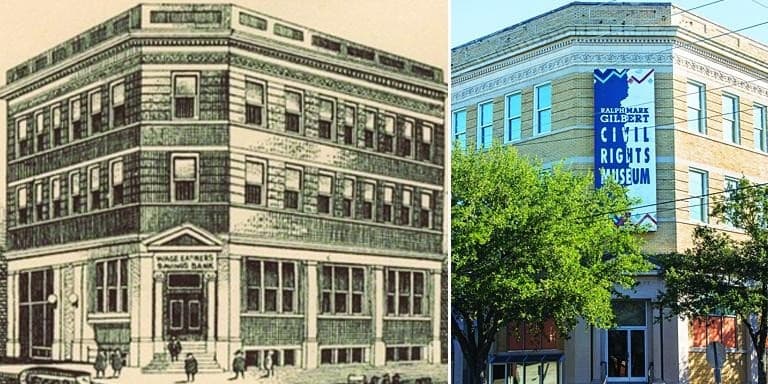
She discovered that all the buildings on West Broad Street had been demolished except for one: the building that now houses the Ralph Mark Gilbert Civil Rights Museum. On the ground floor of this building once stood Evangelinos’ Crown Candy Kitchen, while the first floor housed a bank.
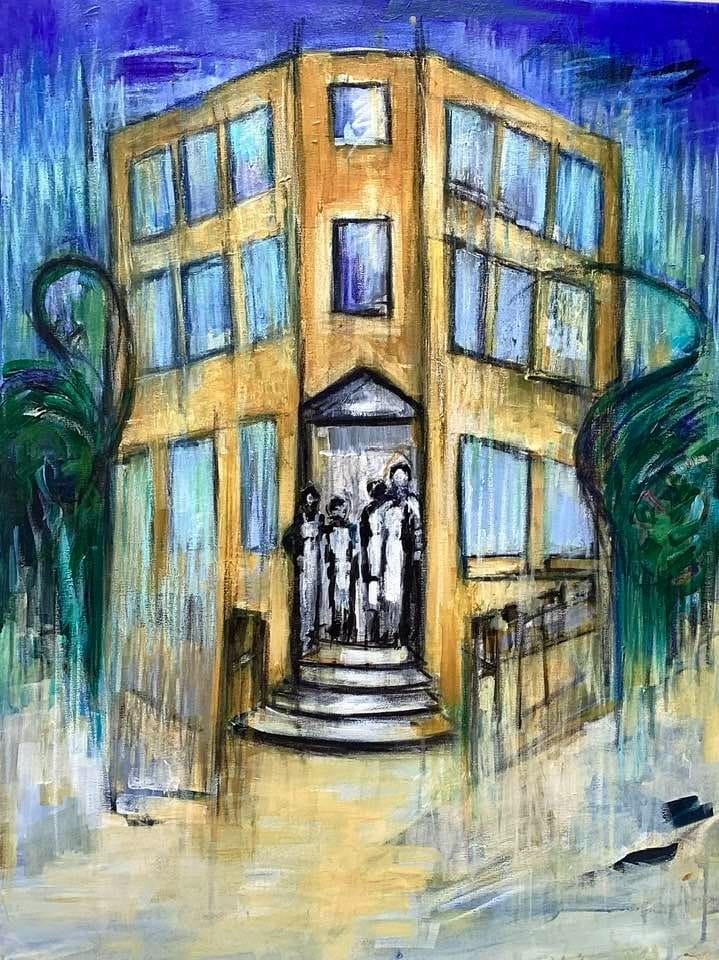
Maria Giannikou came into contact with the museum’s director, Vaughnette Goode-Walker, who is a historian and author. It was then announced that a permanent exhibition would be established featuring the life of Apostolos Evangelinos along with Giannikou’s works.
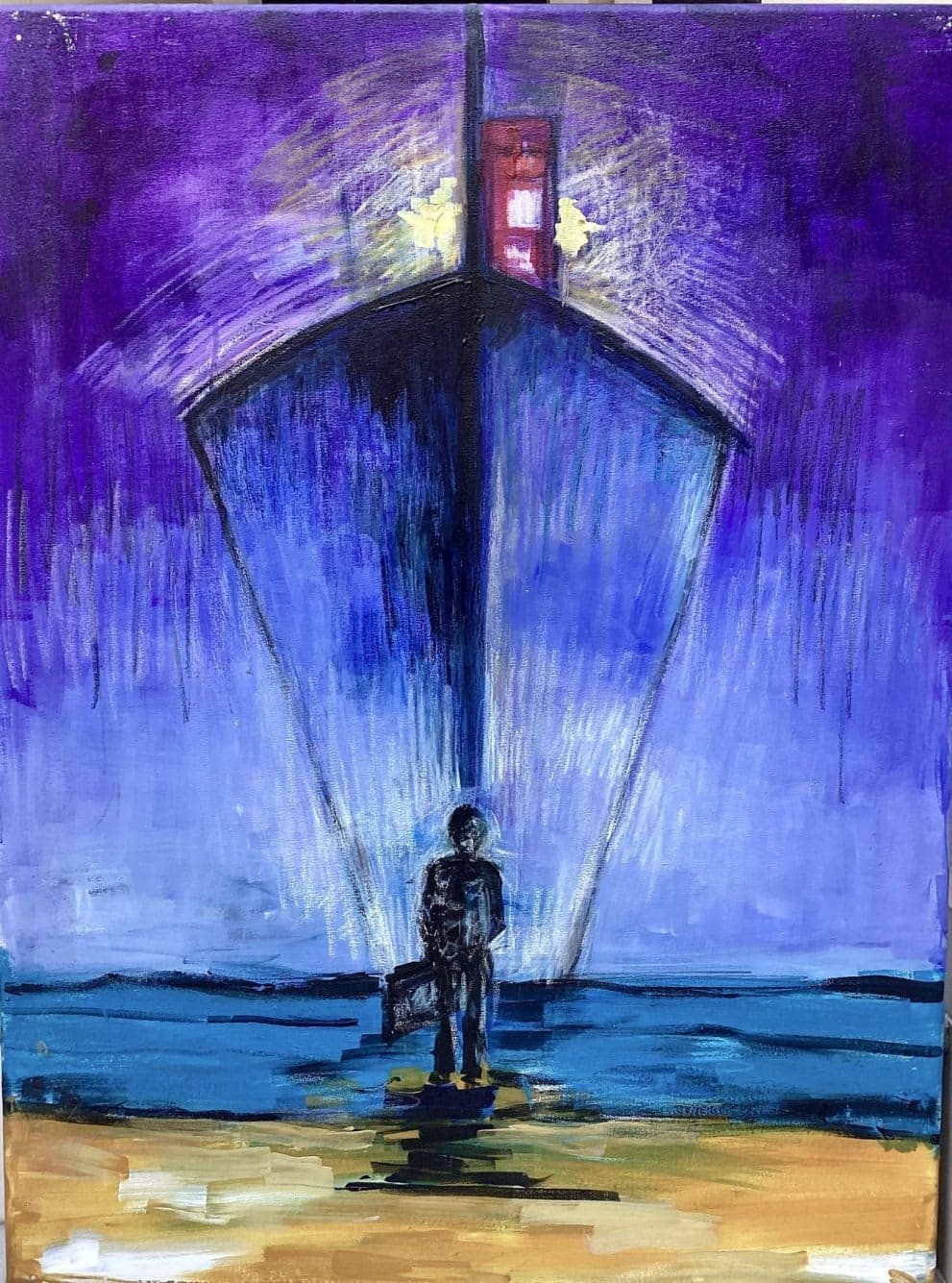
The paintings are part of the exhibition “INFINITY MIRROR” which was presented in Paris in 2023 and later traveled with the support of the Greek Consulate in Savannah, Georgia.
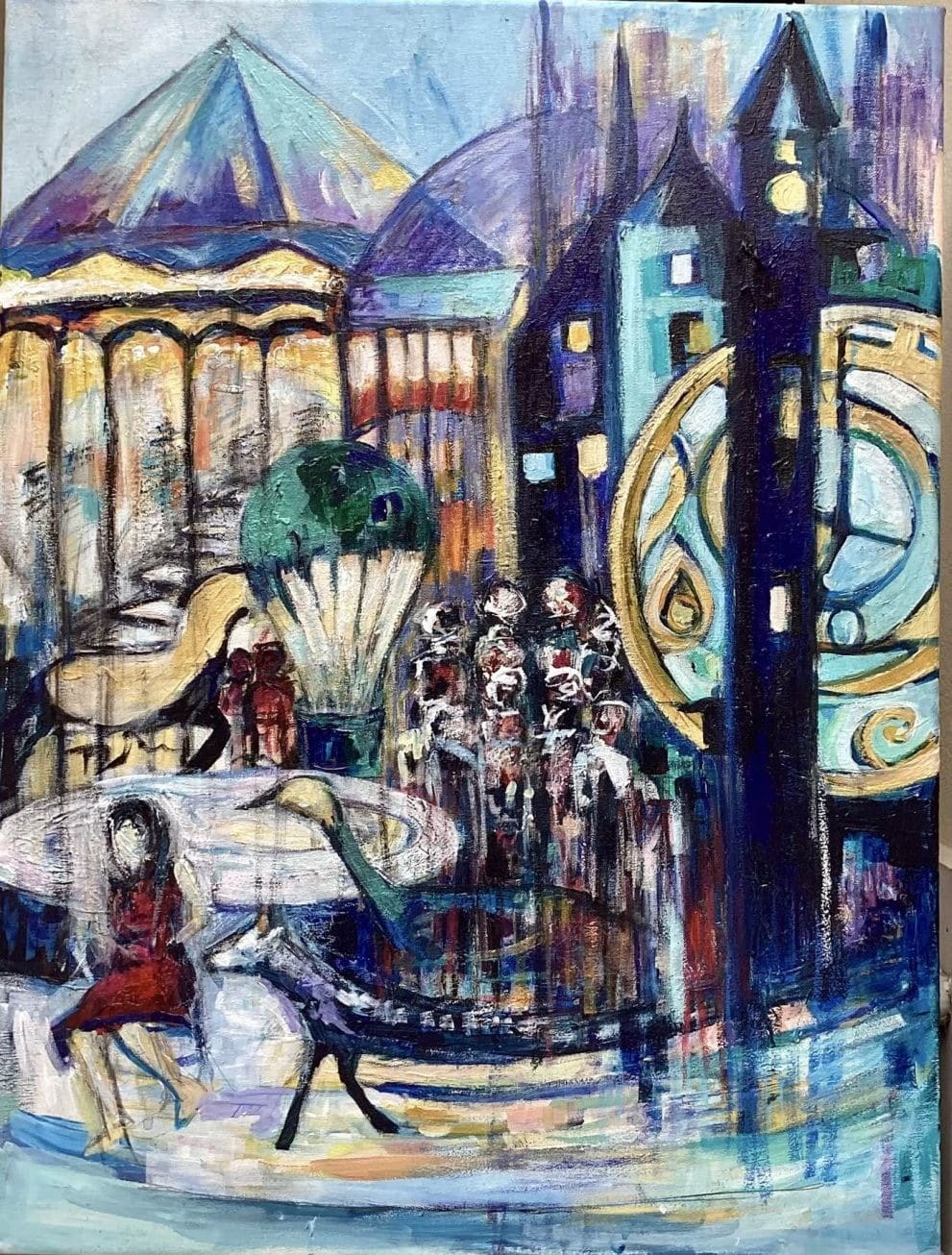
As the artist explains, the title of the exhibition serves as a reminder of the mirror of our lives, symbolizing all those individuals who have brought us to the present and of whom we are a continuation. It is the story of all those who sought a better life and faced racism, war, hard labor, and fear, much like the Greek immigrant Evangelinos who had settled down in Savannah, Georgia but eventually returned to his homeland.
See all the latest news from Greece and the world at Greekreporter.com. Contact our newsroom to report an update or send your story, photos and videos. Follow GR on Google News and subscribe here to our daily email!

