



At the farthest reaches of the Hellenistic world, the Greek philosopher Clearchus of Soli traveled all the way to what is now Afghanistan, where Greek-founded cities still stood, surrounded by unfamiliar mountains and cultures.
Far from Cyprus and the familiar sanctuaries of Greece, he stepped into a world shaped by Persian and Indian traditions. There, Greek thought was no longer at the center but part of a much larger, more complex cultural landscape.
The Greek philosopher Clearchus of Soli at Ai-Khanoum of Afghanistan
In the third century BC, the Greek world extended far beyond the Aegean. Following the campaigns of Alexander the Great, Greek cities began to appear across Asia—some founded directly under his rule, others established by his successors. It is within this expanded Hellenistic world that the philosopher Clearchus of Soli is said to have traveled to Ai-Khanoum in what is now Afghanistan.
Clearchus belonged to the Peripatetic tradition shaped by Aristotle, a background that informed his interest in observation, comparison, and the study of different cultures.
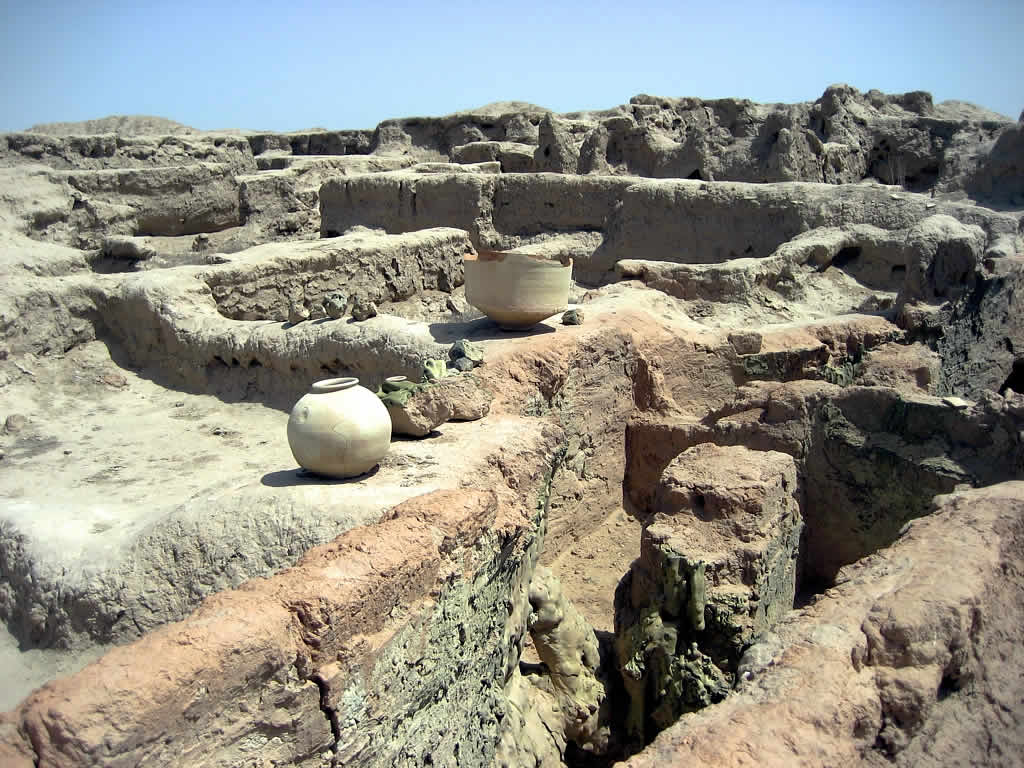
Ai-Khanoum itself is an archaeological site in Afghanistan, once a flourishing Hellenistic city that lay buried beneath desert sands for nearly two millennia. It is widely identified with Ancient Alexandria on the Oxus and is also thought to have later been known as Eucratidia. Founded within the orbit of Seleucus I Nicator, one of Alexander’s successors, the city became an important center of the Greco-Bactrian Kingdom, where Greek architectural forms, language, and ideas encountered the traditions of Central and South Asia.
Ancient Delphic maxims brought to Afghanistan by the Greek philosopher
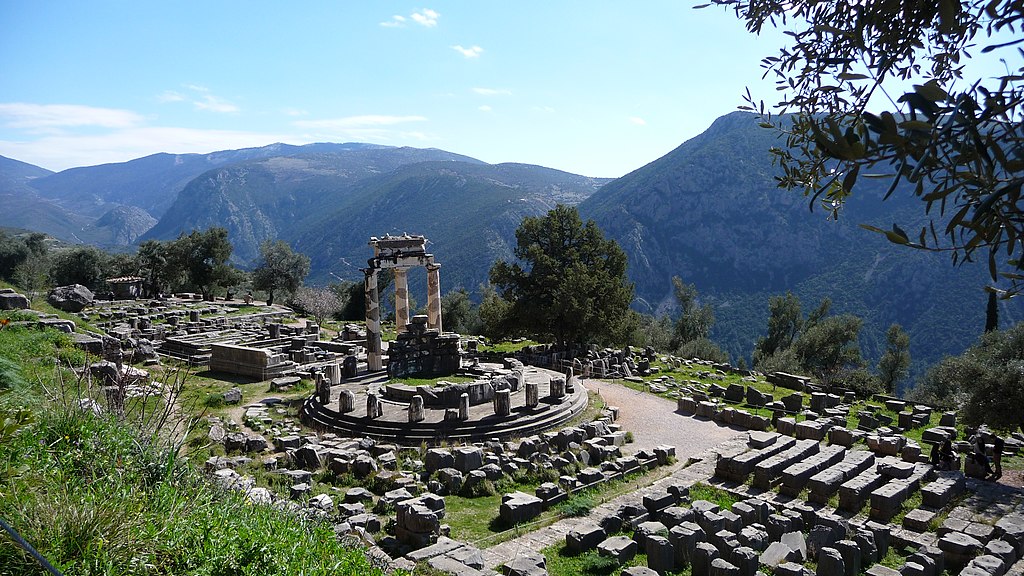
Archaeological evidence preserves a striking episode of the philosopher Clearchus of Soli’s activity in the Hellenistic city of Ai-Khanoum. Excavations uncovered a funerary monument, or heroön, dedicated to Kineas, identified as the founder of the Greek settlement. The structure dates to roughly 300–250 BC. Inscribed upon it is a set of ethical precepts traditionally associated with Delphi. The text reads:
“As children, learn good manners.
As young men, learn to control the passions.
In middle age, be just.
In old age, give good advice.
Then die, without regret.”
The inscription continues with a note about its transmission: “Whence Klearchos, having copied them carefully, set them up, shining from afar, in the sanctuary of Kineas.”
These lines create a direct link between Ai-Khanoum and Delphi, suggesting that Clearchus of Soli copied these Delphic maxims and arranged for their display in the far eastern reaches of the Greek world in what is now Takhar Province, Afghanistan.
The heroön of Kineas itself appears to have functioned as a focal point of civic identity. By inscribing a structured sequence of ethical instruction onto the monument of the city’s founder, the inscription bound moral philosophy, communal memory, and political self-understanding together, projecting Greek ethical ideals into a distant frontier of the Hellenistic world.
Cross-cultural philosophy in Hellenistic Bactria
Ai-Khanoum itself formed a unique setting for such an inscription. Although Ai-Khanoum was not located on a major trade route, it nevertheless controlled access to the mineral resources of the Hindu Kush as well as strategically significant choke points. The built environment reflected Greek urban planning, while the surrounding region remained culturally diverse. This setting encouraged contact between various intellectual traditions. Excavations have revealed a gymnasium, theaters, and administrative buildings. These structures reflect Greek civic organization, while at the same time, the city’s location ensured contact with surrounding cultures. Trade routes connected it to India and the Iranian plateau.
Clearchus engaged with this environment through observation and interpretation. His work, preserved in fragments, includes references to Indian and Persian practices. One of the most notable testimonies appears in the doxographer Diogenes Laertius, Lives of Eminent Philosophers (Book I). There, Clearchus reports that the gymnosophists of India descended from the Persian Magi. He identified similarities in their conduct and social roles.
This statement historically connects the Zoroastrian and the Hindu tradition. Meanwhile, Clearchus linked these groups through a shared framework of wisdom and discipline and interpreted their practices as part of a broader continuum of philosophical life. The gymnosophists, known as “naked philosophers,” practiced asceticism and contemplation in India. Greek authors such as Strabo described their rejection of material wealth and their focus on disciplined living, mentioning how they often emphasized endurance, self-control, and detachment. These traits resonated with existing Greek philosophical discussions like that of the philosopher Pythagoras. The Magi also served as priests within Persian religious structures. Additionally, they combined ritual practice with cosmological interpretation.
A philosopher mapping histories and the heavens
Clearchus incorporated his observations into a broader intellectual framework that also included Persian religious figures. Another tradition attributed to him—one that reveals how deeply he studied foreign customs and traditions—appears in Josephus. In Against Apion, the Jewish historian reports that Clearchus linked the Jews with Indian philosophical groups known as the Calami.
He also ventured into natural philosophy. The philosopher Plutarch preserves a theory attributed to Clearchus concerning the moon. Clearchus described it as a solid, weighty body. This places him within early debates about the physical nature of celestial objects, and his view closely resembles that of Anaxagoras.
Furthermore, Clearchus’s work reflects wider patterns of cultural transmission. Greek settlers carried their language, institutions, and philosophical traditions into new regions, where they inevitably encountered and absorbed other ways of thinking. In the end, his work demonstrates how philosophical inquiry adapted to unfamiliar settings. He extended Peripatetic methods both within and beyond the traditional Greek world, reframing inherited ideas in response to a far wider intellectual horizon.

Ethnographic fragments of Clearchus
In addition to his more theoretical writings, Clearchus of Soli composed works on customs, paradoxes, and philosophical anecdotes. Ancient sources such as Athenaeus attribute to him collections that explore unusual practices and beliefs, often drawn from a wide range of cultures, especially from the East, and arranged through comparative observation.
Athenaeus preserves one such account in which Clearchus describes the customs of Troezen. He notes that it was once forbidden there to catch certain sea creatures, including the so-called “sacred polyp,” the nautilus-polyp, and sea turtles. He also records observations of the octopus, portraying it as sluggish and easily captured, at times even approaching those who pursued it. According to Clearchus, these animals were occasionally seen close to rocky shores, clinging to coastal vegetation such as olive trees or even fig trees near the water and feeding on their fruit—an observation he included in his work On Water Animals.
Similarly, Aelian preserves further ethnographic material attributed to Clearchus. He reports that the people of Argos uniquely refrained from killing snakes, while paradoxically killing dogs that entered the marketplace on certain festival days known as the Arneia. He also describes a striking Thessalian wedding custom in which the groom, after completing a sacrifice, would lead a fully equipped warhorse and present it to his bride. Elsewhere, on the island of Tenedos, he notes the ritual care given to a cow dedicated to Dionysus, which after calving, was treated as though it were a woman recovering from childbirth.
In conjunction, these fragments point to an author attentive to cultural variation and narrative detail. They reflect a broader Hellenistic intellectual world in which philosophers and writers collected, compared, and systematized accounts of foreign and local customs alike.
In this sense, Clearchus’s work illustrates how philosophical inquiry expanded into unfamiliar settings. Working within Peripatetic traditions, he applied their methods beyond the familiar Greek world and reframed inherited categories in response to a far wider and more diverse intellectual horizon.
See all the latest news from Greece and the world at Greekreporter.com. Contact our newsroom to report an update or send your story, photos and videos. Follow GR on Google News and subscribe here to our daily email!

