



If one were asked to name the first university in Greece, the Ionian Academy would rarely come up. Instead, the most common response would likely be the University of Athens. It makes sense, of course, but the real answer is actually tucked away in the olive groves of Corfu. Decades before Athens got its academic world together, the Ionian Academy was already up and running. Founded back in 1824 under British rule, this institution was essentially a massive experiment in figuring out what modern Greece was supposed to be.
The man behind this establishment was Frederick North, the 5th Earl of Guilford (also referred to as simply “Guilford”). He was a deeply eccentric British aristocrat who loved Greece so much that he secretly converted to Orthodox Christianity. Instead of hoarding his immense fortune, he spent it trying to reboot the intellectual golden age of antiquity. He wanted to recreate the academic vigor of Ancient Greece at the heart of the 19th century.
Locals also simply called him “Lord Dimitrios,” a name that reflected how thoroughly Greek he had become in their eyes and imagination. The fact that his father was the British Prime Minister of the time, remembered for losing the American colonies, adds a layer of irony. Meanwhile, his son was sailing the Mediterranean, convinced that books rather than guns were the real path to Greek liberation from the Ottoman yoke.
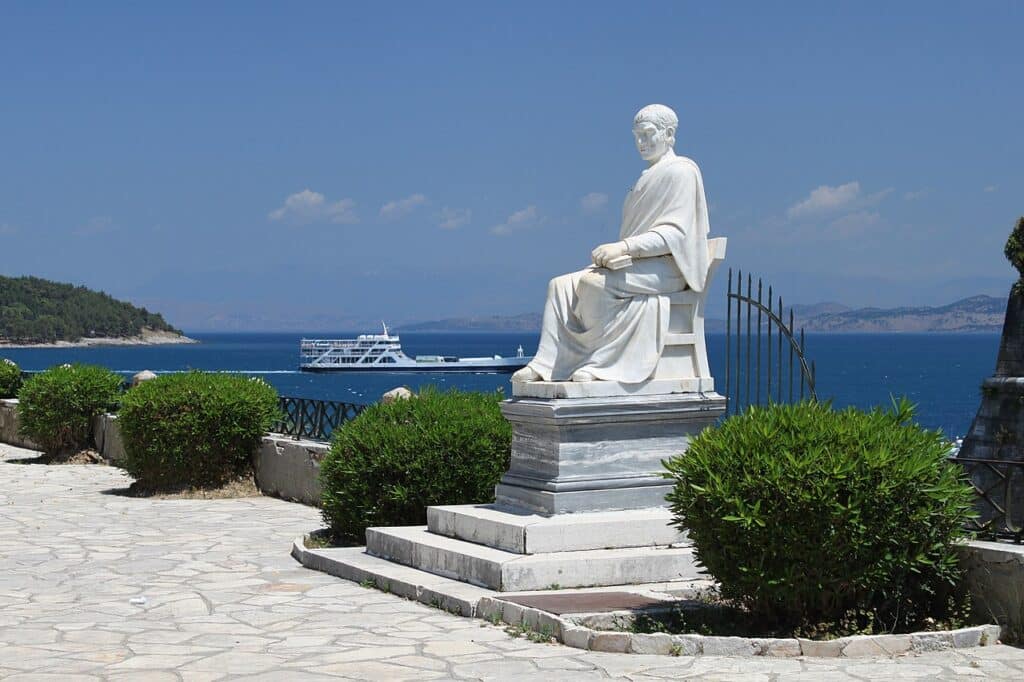
Corfu as an intellectual experiment in modern Greece
At a time when European Romantics mostly wanted to gaze at ruined ancient marble temples, Guilford actually looked at the living, breathing people of Greece. He originally wanted to place the school on Ithaca, probably because he was a huge fan of The Odyssey. However, the 1821 Greek War of Independence made things far too dangerous, so Corfu it was—safer, further north, and more cosmopolitan.
This turned the Ionian Islands into a strange sort of testing ground. While the mainland was fighting a literal war, the Academy was busy translating Enlightenment philosophy into Greek. Guilford micromanaged the entire institution, bringing in heavyweights like the mathematician Ioannis Karantinos and the poet Andreas Kalvos. The most striking part is that they taught everything, including medicine, law, and theology, in everyday, modern Greek rather than Ancient Greek. That was a massive deal at a time when most academics still insisted on archaic dialects that regular people could not even read.
Imagine walking onto a college campus in the 1820s and seeing everyone dressed like ancient Athenians. Guilford had an incredibly strict rule in that everyone had to wear ancient-style tunics. They even wore color-coded headbands to show their field of study—purple for law, green for medicine, and so on. You can imagine how baffling that looked to outsiders. It was a deliberate and calculated PR move, a way of signalling to Europe that the descendants of Plato were back in business.
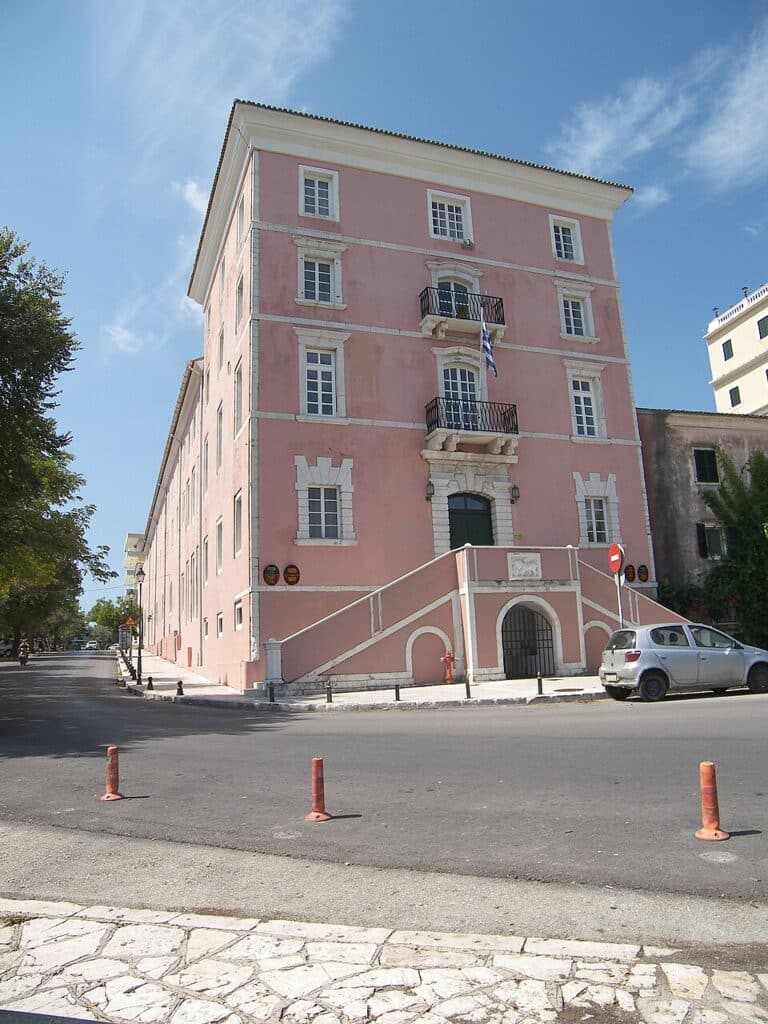
The real struggles of the Ionian Academy, the first actual university of modern Greece
Behind all the tunics and pageantry, things were precarious, as we can imagine. The entire operation ran on Guilford’s personal wealth. When he died in 1827, the money dried up quickly. British colonial authorities began slashing budgets because they cared about spreadsheets rather than cultural institutions. Local aristocrats also opposed the Academy, mostly because educating the middle class threatened their own comfortable position at the top of the local hierarchy. Still, despite everyone seemingly working against it, the Academy gave rise to the “Ionian School” of thought, blending Western liberal ideas with a fierce, unapologetic Greek pride.
The Academy’s original run officially ended in 1864, when the Ionian Islands finally joined the rest of Greece. Unfortunately, the Greek government shut the Corfu school down entirely. The reason was simple. It did not want it competing with the newly established University of Athens. It was a decision that still frustrates local historians. Most of the faculty simply relocated to Athens anyway, taking the school’s intellectual prestige with them. As for the building itself, it survived until 1943, when German bombing destroyed much of it, leaving only a scorched shell.
However, that was not the end. In 1984, the modern Ionian University opened its doors on Corfu, picking up where Guilford left off. If you walk through Corfu’s Old Town today, students are still taking classes in historic buildings under the gaze of a statue of Lord Guilford holding a book. The original Academy ultimately proved something vital to a newly emerging country: winning a war is one thing, but building an educated free society is what truly makes it last.
See all the latest news from Greece and the world at Greekreporter.com. Contact our newsroom to report an update or send your story, photos and videos. Follow GR on Google News and subscribe here to our daily email!

