



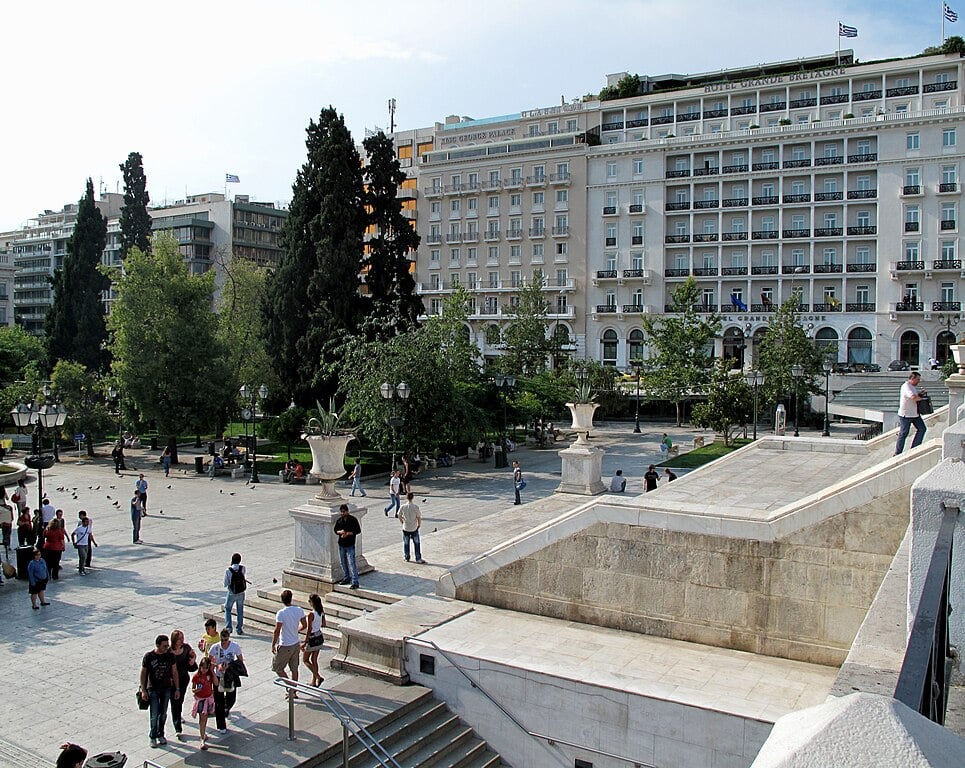
The definition of the middle class has long sparked debate among economists, policymakers, and citizens, and in Greece, the discussion has resurfaced as shifting income levels, high taxation, and social pressures reshape what it means to belong to this critical segment of society.
Economic benchmarks of the middle class
According to the Organisation for Economic Co-operation and Development (OECD)and Eurostat, the middle class is typically defined as households with disposable income between 75% and 200% of a country’s median.
In Greece, the median equivalent disposable income in 2024 was estimated at approximately €11,000–€12,000 ($12,100–$13,200) per person annually. This means the lower threshold of the middle class stood at roughly €10,000 ($11,000), while the upper limit reached €22,000–€24,000 ($24,200–$26,400).
For a family of four, this translates into a net annual income of €24,000–€60,000 ($26,400–$66,000), assuming both working adults earn between €2,000 ($2,200) and €5,000 ($5,500) monthly.
Beyond income: Lifestyle and occupation
Income alone does not capture the full scope of the middle class. In Greece, the category encompasses self-employed professionals, small and medium-sized business owners, public sector employees, corporate managers, and highly educated specialists, including doctors, lawyers, and engineers.
Ownership of property and a car, along with the ability to cover both basic and discretionary expenses, remain strong indicators of middle-class standing.
Political importance of the middle class
Politically, the middle class is seen as the backbone of both the economy and society. It drives consumption, sustains the tax base, and underpins social stability. However, the financial crisis of 2009–2019 severely eroded its strength, with declining incomes, heavy taxation, and widening inequality, causing the middle class to shrink.
Discussions about “supporting the middle class” in 2025 focus on reducing tax burdens, raising disposable income, ensuring stable employment, and improving access to education and healthcare.
Comparing Greece to the European Union
The middle class constitutes an average of 60% of the population across the Eurozone, while in the EU-27 it stands at 58%. It’s lower in Greece, reflecting both economic volatility and structural challenges.
By contrast, the middle class in Northern Europe is composed of well-paid salaried employees and company executives, backed by stable wage structures and stronger social safety nets.
The outlook
As Greece seeks to strengthen its economic foundation, the middle class remains a focal point. Its resilience—or fragility—will determine not only Greece’s economic growth but also its political and social balance in the years to come.
See all the latest news from Greece and the world at Greekreporter.com. Contact our newsroom to report an update or send your story, photos and videos. Follow GR on Google News and subscribe here to our daily email!

