



The women of ancient Sparta enjoyed freedom in all their affairs, including sexual matters. Such freedom was unseen in other parts of ancient Greece. Their unique role in Spartan society was due to the military-focused nature of the state, as there was an emphasis on producing strong warriors.
Social status and independence of Spartan women
The social status of women in Sparta was not as limited as it was in Athens. A Spartan woman managed her own property. That was the case even when she was not an heiress (epikleros). She could choose another husband if her own was absent for a long time.
Many Greek writers consider this the cause of rivalries and claims between houses. It remained active in the background of politics, influencing rulers, for whom ancient Greek philosopher Aristotle uses the pejorative description “women-ruled.” Examples such as that of Argea and Gorgo, the queen of Sparta, caused ancient Greek historian Herodotus to refer respectfully to the women of Sparta.
Ancient Sparta during the classical period was a unique city-state. The freedom and social status of Spartan women began at birth. Sparta’s laws required female infants and children to receive the same care and upbringing as males. Girls in Sparta attended public school and as Greek philosopher Plato points out, their education was not purely physical. “It was not only the men but also the women who prided themselves on their spiritual cultivation” he states.
In Sparta, girls often exercised alongside boys, running, wrestling, and throwing the discus and javelin, often in the nude. Ancient Greek historian Plutarch notes: “The nudity of maidens had nothing indecent, because it coexisted with shame and lacked any trace of indecency.”
The purpose of this training was to ensure that women developed strong bodies so that they could bear strong children.Ancient Greek military leader and historian Xenophon states: “Then he [Lycurgus] made the women, just like the men, compete with each other in running and endurance, believing that when both are strong, the children will grow stronger.”
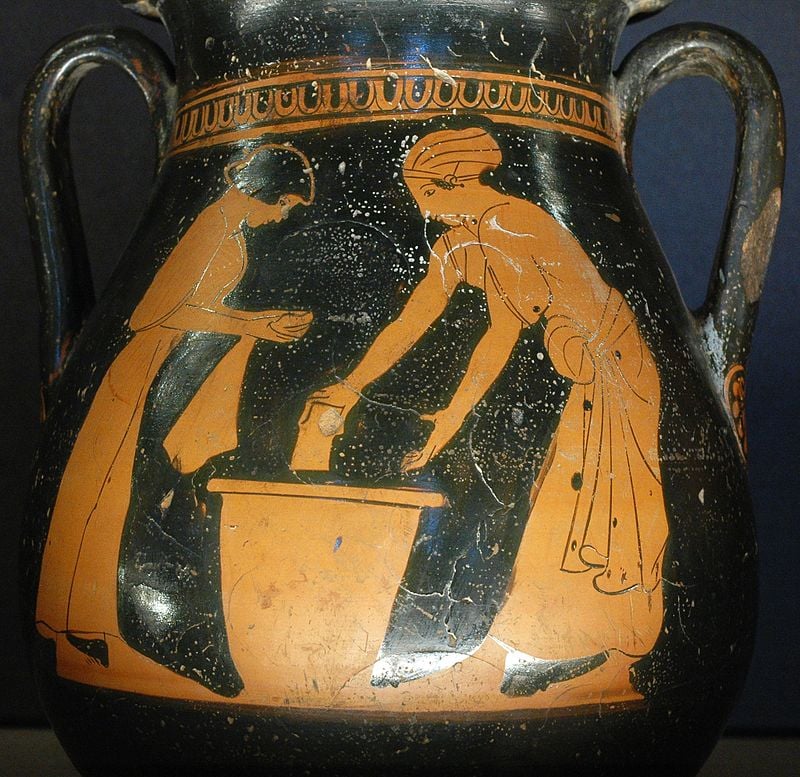
Sexual Relationships Outside Marriage Were Not Considered Immoral in Sparta
Spartan marriages were primarily intended to produce strong offspring. While Spartan men were away at war or training for most of their lives, their wives enjoyed greater independence than women in other Greek societies.
The marriage customs were less strict than those in Athens, where women would remain secluded in the home. In Sparta, women were more likely to socialize freely and could even live separately from their husbands when the men were away.
Aristotle argued that “the Spartans were ruled by their wives.”
In Sparta, they did not see sexual relationships outside of marriage as immoral, particularly if they served the purpose of producing strong children or reinforcing social alliances. This, along with the fact that Spartan men often went away on military campaigns, led Plutarch to question how adultery—where extramarital sexual relations were illicit—could occur in a society where sexual norms were more flexible and where the state’s needs could determine them. As a result, Spartan women were granted a level of sexual freedom that was unparalleled in other Ancient Greek cities.
As he explains: ”The freedom that prevailed at that time in marriage relations was aimed at physical and political well-being and was far removed from the licentiousness that was later attributed to Spartan women. So much so that adultery was wholly unknown among them.
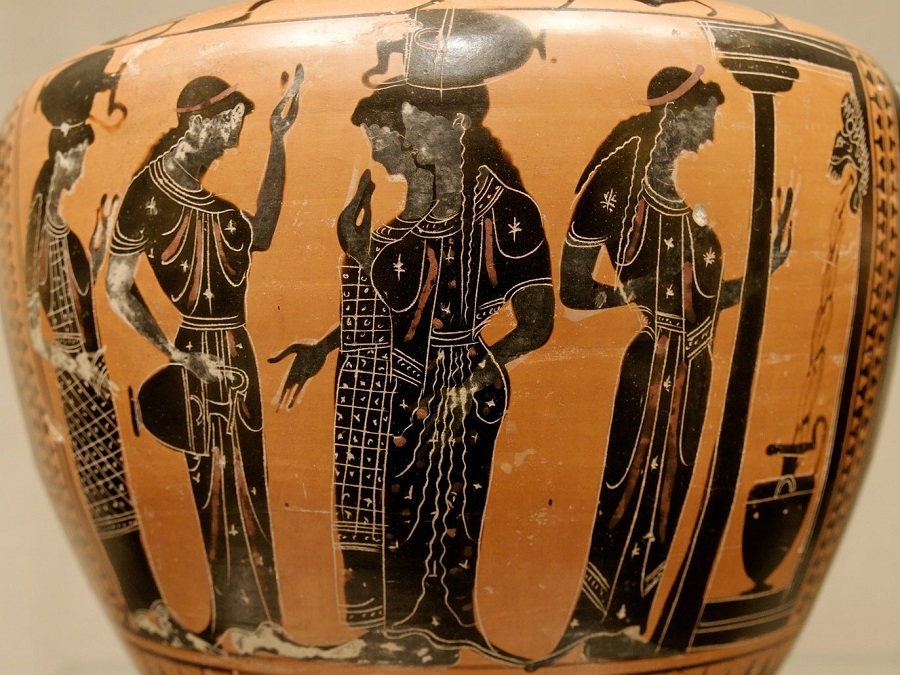
Laws for adultery did not exist in ancient Sparta
It is reported of one Geradas, an ancient Spartan, that on being asked by a stranger what the punishment for adulterers was among them, answered: “Stranger, there is no adulterer among us.” “Suppose, then,” replied the stranger, “there should be one.” “A bull,” said Geradas, “would be his forfeit, a bull so large that it could stretch over Mount Taÿgetus and drink from the river Eurotas.” The stranger was astonished and said: “But how could there be a bull so large?” To which Geradas replied, with a smile: “But how could there be an adulterer in Sparta?” Such, then, are the accounts we find of their marriages.
Several famous stories from ancient sources illustrate Spartan women’s sexual freedoms. One famous anecdote involves the poet Alcman, who composed poems about the beauty of Spartan women and their unorthodox romantic interactions. There is also the story of the Spartan Queen Gorgo, wife of King Leonidas, which illustrates the degree to which Spartan women could speak and act freely in public life. When a certain woman of Attica asked the queen: “Why do only you, the Lacedaemonians, have authority over men?” Gorgo replied: “Because we are the only ones who give birth to men.”
Marriage customs and the institution of polyandry
Contrary to what happened in Athens, the wedding ceremony in Sparta seems not to have been a public event. As Plutarch describes, a common type of marriage arrangement was by “rapture.” Without family or guests present, the future husband would ritually abduct the woman during the night. With the help of the groomsmen, he would shave her head and dress her in men’s clothes. Then they would leave her lying in the dark to wait. After their amorous meeting, the husband had to return to his dormitories and continue living there with his peers in the barracks until he reached the age of thirty. Until then, they would not allow the cohabitation of spouses. It is clear that this procedure aimed exclusively at procreation.
Moreover, due to Sparta’s acute demographic problem, any Lacedaemonian could have a sexual union with a Spartan woman. The aim was to procreate children, as long as her father or husband agreed in advance. Polyandry is a rare form of polygamy, where a wife legitimately has relationships with several husbands at the same time.
Spartan polyandry impressed Plato, Xenophon, and the Athenian philosophical circles of the early 4th century BC. Polybius records the earliest known evidence of so-called “fraternal polyandry” in Sparta. The numerous husbands of the Spartan woman are blood brothers or close friends. In this form of family organization, the property remains undivided. Also the paternity of the children (who are considered joint) is exercised collectively. In Sparta the collective exercise of paternal authority was legal and customary.
See all the latest news from Greece and the world at Greekreporter.com. Contact our newsroom to report an update or send your story, photos and videos. Follow GR on Google News and subscribe here to our daily email!

