



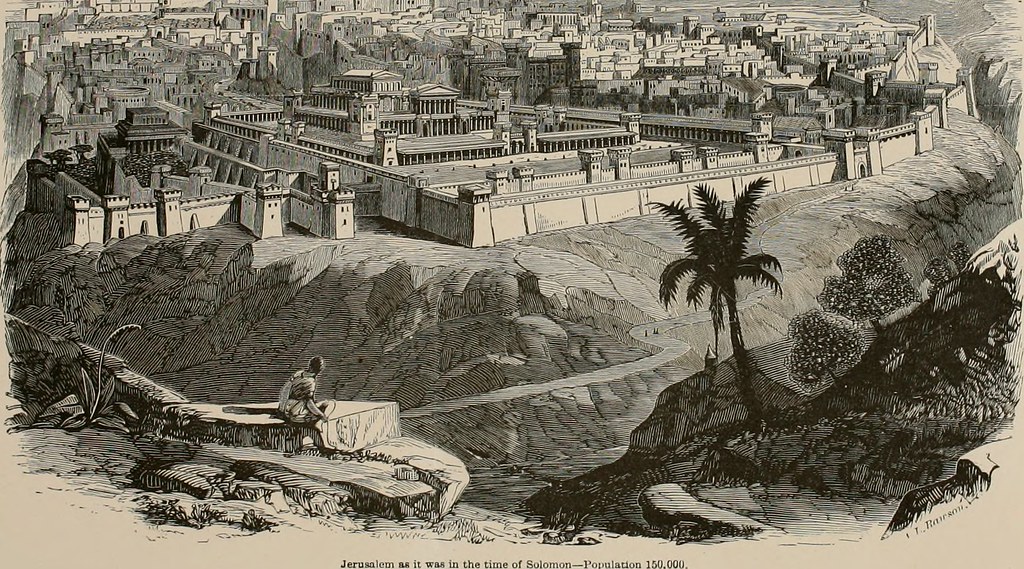
One of the most important events in the history of the ancient Jews was the destruction of Jerusalem at the hands of the Babylonians. As well as being described in the Bible, extra-Biblical sources confirm that this really happened.
However, there is controversy surrounding when it occurred. Some sources date the destruction to 587 BCE, while others date it to 607 BCE. Interestingly, there is some evidence from Herodotus, the ancient Greek historian, that helps to clear up the controversy of when Jerusalem was destroyed.
When the Babylonians destroyed Jerusalem
According to the Bible, God let the Babylonians destroy Jerusalem as a punishment for the wickedness of the Israelites. As well as destroying the city, the Babylonians also took the surviving Israelites back to Babylon as captives.
The basic outline of this Biblical narrative is confirmed by archaeology and Babylonian records. All sources agree that it was the Babylonian King Nebuchadnezzar who attacked the Israelites at this time. One part of the Bible says that Jerusalem fell in the 18th year of his reign, whilst elsewhere it claims that it fell in his 19th year.
The simple solution to this apparent contradiction is that it was the 18th year when counting from his first regnal year. In other words, it was his 19th year only when including his accession year (the year he came to the throne). According to the conventional chronology of the Babylonian kings, this would place the destruction of Jerusalem in 587 BCE.
The controversy
Since Babylon itself was overthrown in 539 BCE, and the Jews returned to their land just two years later, this would mean that they were in captivity in Babylon for fifty years. However, the Bible says that Jerusalem remained desolate for seventy years.
To resolve this issue, many scholars argue that the current chronology of the kings of Babylon is deficient. In reality, they argue, the Neo-Babylonian Empire lasted twenty more years than currently recognised.
In other words, King Nebuchadnezzar’s 18th year was actually in 607 BCE, not 587 BCE. That would allow seventy years for the desolation of Jerusalem, in contrast to the mere fifty years allowed by the conventional chronology.
To accommodate these extra years, some scholars argue that there may have been extra rulers between some of the recognised Babylonian kings. The debate about whether there really could have been twenty extra years in the chronology of this empire involves complex analyses of cuneiform tablets, along with a lot of personal interpretation.
Evidence from Herodotus about when Jerusalem was destroyed
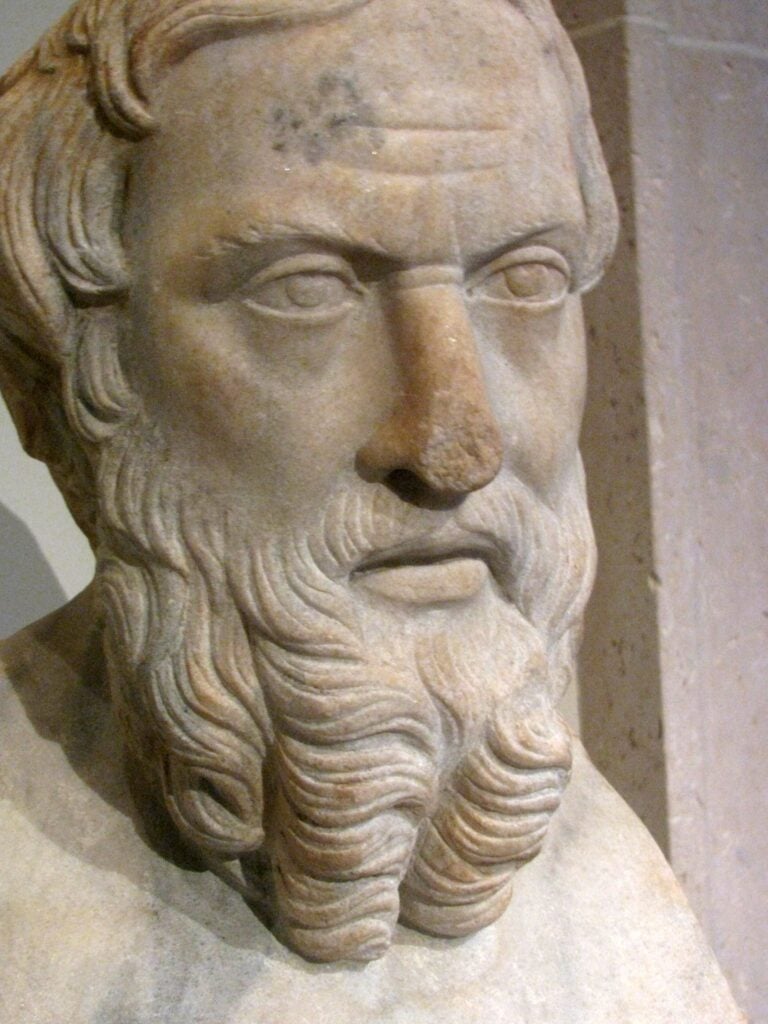
Something which has generally been overlooked in this issue is some evidence from Herodotus that contributes significantly to this debate. Although Herodotus never wrote directly about when the Babylonians destroyed Jerusalem, he did provide us with some useful information.
We know from various Greek sources that Solon, the famous Athenian lawmaker, was the archon of Athens from 594 to 593 BCE. After that, Herodotus explains that he bound the people of Athens by oath to follow his reforms for ten years.
To prevent them from pressuring him to relieve them of this obligation, Solon left Greece for those ten years. In other words, he was away from Greece from 593 to 583 BCE.
During that period, Herodotus explains that Solon visited several different places. One of these places was Egypt. Notably, Herodotus tells us who the king of Egypt was at that time.
What does Herodotus tell us?
This is significant, because the chronology of Egypt is firmly tied to the chronology of Babylon in this period. The two nations interacted on several occasions during this era. Hence, if we extend the chronology of Babylon by twenty years, then we must do the same with Egypt too.
According to the conventional chronology, who should the king of Egypt during Solon’s visit have been? It should have been either Psamtik II, who reigned from 595-589 BCE, or Apries, who reigned from 589-570 BCE.
However, according to Herodotus, the king of Egypt at the time of Solon’s visit was Amasis II. The conventional chronology places the start of his reign in 570 BCE, long after Solon had already returned to Greece.
Since Solon returned to Greece in 583 BCE, Herodotus’ account requires Amasis II to have already been the king of Egypt by that year at the very latest. While this is completely incompatible with the conventional chronology, it is perfectly consistent with the argument that Jerusalem was actually destroyed in 607 BCE rather than 587 BCE.
When using the date of 607 BCE, the start of Amasis’ rule would have been in 590 BCE. This falls comfortably within Solon’s sojourn of 593 to 583 BCE.
Of course, Herodotus was a writer who lived over a century after Solon’s archonship. It is entirely possible that he simply got some details wrong. This evidence from Herodotus does not singlehandedly resolve the controversy surrounding when Jerusalem was destroyed. Nevertheless, it is worth taking into consideration how ancient Greek sources can shed light on historical mysteries from other nations.
See all the latest news from Greece and the world at Greekreporter.com. Contact our newsroom to report an update or send your story, photos and videos. Follow GR on Google News and subscribe here to our daily email!

