



Numerous customs, cultural practices, and traditions of the Minoan civilization from Crete have been preserved through the Christian Orthodox religion. The Minoans, who flourished on the island from around 1450 BCE to 1100 BCE, established distinct religious and cultural practices that have significantly influenced later cultures, including Christianity.
Fertility and agricultural rituals
Minoan religion centered around nature and fertility deities, particularly goddesses associated with the earth, animals, and agriculture. To ensure a good harvest, fertility and prosperity, the Minoans conducted rituals that were often centered around sacred caves, trees, or natural springs. Natural springs likely symbolized sources of life and fertility, representing the earth’s continuous nourishment.
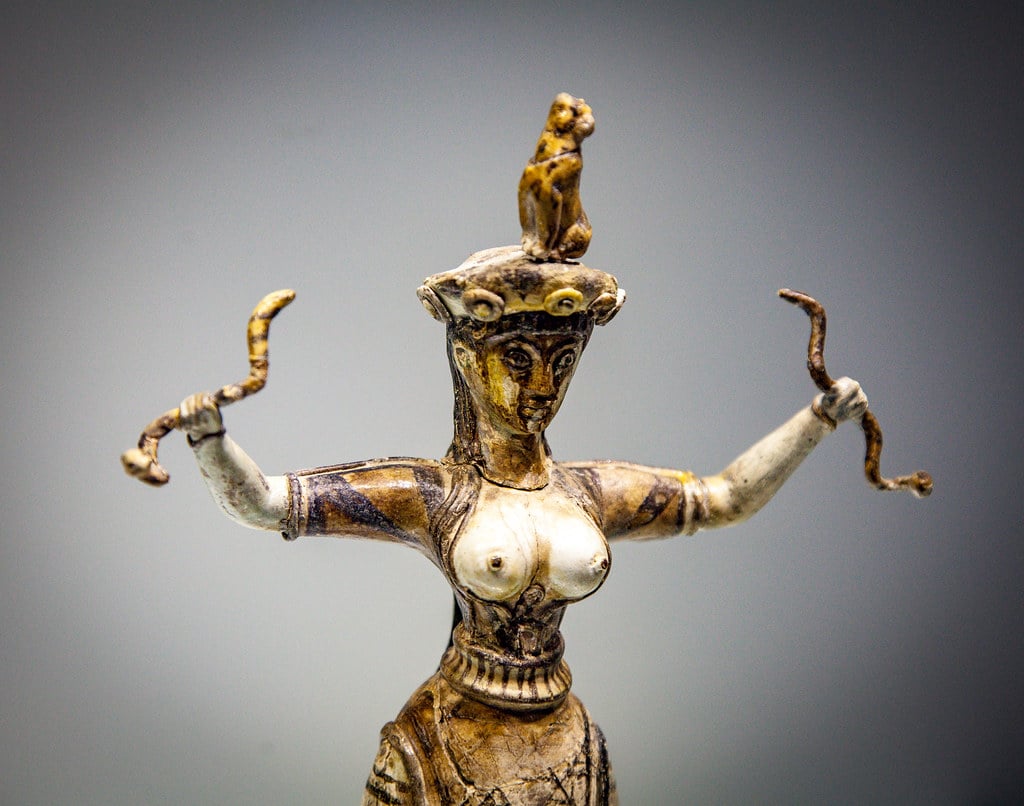
Archaeological sites, as noted by Greek archaeologist Nanno Marinatos, show evidence of offerings made at these natural features. The “Snake Goddess” symbolizes fertility and the connection between life, death, and rebirth. The snakes may have represented regeneration, with their shedding of skin being much like the seasonal regeneration of crops.
Elements of fertility symbolism persisted in later Greek and Roman religions, and some practices were adapted into Christian traditions. For example, the celebration of spring and harvest festivals, such as the Christian observance of Easter, might echo earlier agricultural rituals, including those of the Minoans.
Cavern worship
The Minoans often conducted rituals in natural locations such as caves, which they regarded as sacred spaces connected to the earth’s fertility. They likely used these sites for the worship of chthonic deities (deities of the underworld). They believed the Idaean Cave in Crete, for instance, to be the birthplace of Zeus, making it a center for cultic practices tied to the earth’s cycles. Similarly, they also considered Psychro Caved a sacred site, thought to be a birthplace or abode of the gods.
The Christian tradition of a birth in a cave, as depicted in the Nativity story of Jesus Christ in the Grotto of the Nativity in Bethlehem, may trace its roots to these earlier customs of cave worship going back to the Minoan age. Additionally, many saints and hermits lived their lives in caves, continuing this symbolic association between caves and spirituality.

Sacred trees
The concept of sacred trees and groves was integrated into Christian culture, albeit with a transformation in meaning. The Minoans revered trees, especially the olive and fig, which were vital to their agricultural lifestyle. In many ancient cultures, including the Minoan, trees symbolized life and were considered gateways to the divine. For example, the Christmas tree, now a prominent Christian symbol, may trace its origins to pre-Christian traditions, such as those practiced by the Minoans.
In the Christian Orthodox tradition, “sacred trees” continued to symbolize theophany (manifestation of the divine). A notable example is the church dedicated to Saint Theodora in Vastas, Arcadia.
There, the roots of a tree have overgrown and intertwined with the building itself. This unique feature connects the sacred and the natural, imbuing the site with cultural and spiritual significance. It reflects the continuity of nature’s importance in sacred spaces, a tradition deeply rooted in the ancient Greek world.

The symbol of the labyrinth
The labyrinth is another significant motif originating from Minoan culture, famously tied to the myth of the Minotaur. The spiral pattern frequently appeared in Minoan art and architecture and symbolized complex journeys or cycles.
Later Mediterranean cultures adopted this symbol in various forms, including its use in Christian traditions. In medieval cathedrals labyrinths were incorporated as metaphors for the spiritual journey of the soul toward salvation. They offered continuity with earlier uses of the symbol in the Minoan context.

Animal worship
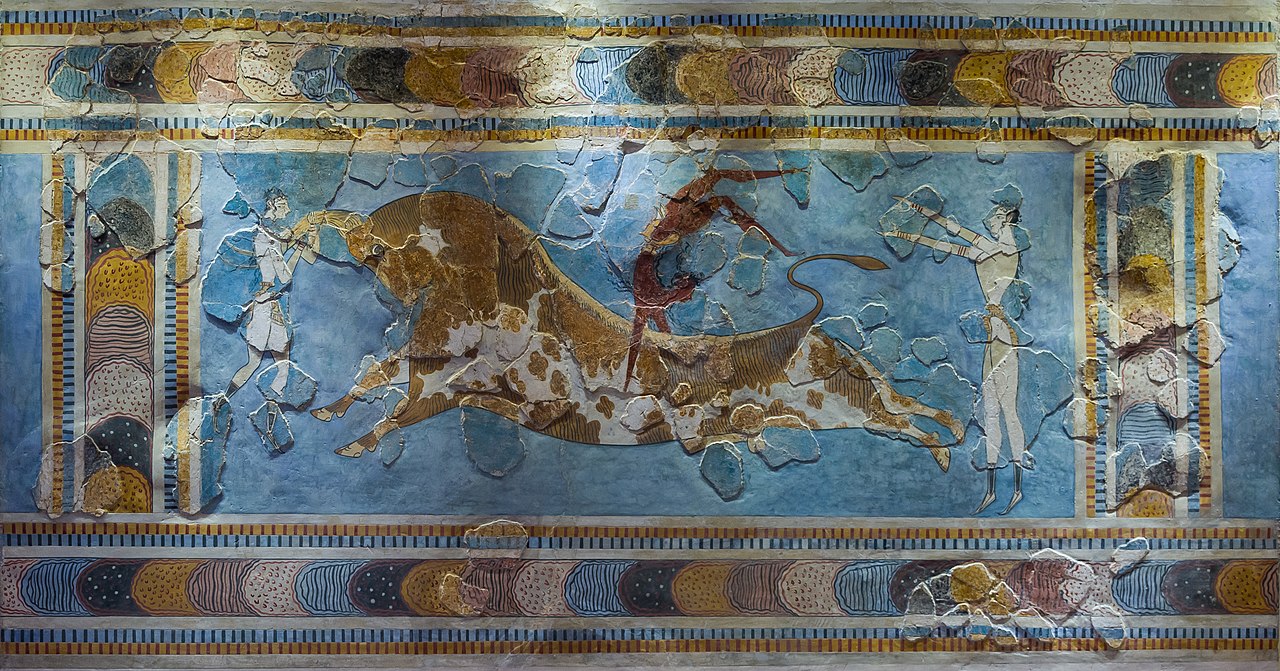
Bulls held a sacred status in Minoan religion, and many rituals, such as bull-leaping ceremonies, revolved around them. The bull symbolized strength, vitality, and fertility, as seen in numerous depictions in Minoan art. While direct bull worship did not transition into Christianity, the concept of sacrificial animals and the symbolic association of certain animals with divine themes persisted.
For instance, in Christian iconography, the ox and donkey appear in the Nativity scene. They symbolize humility and the earthly nature of Christ’s birth. We can observe a more subtle continuity of bull symbolism in Mantamados, Lesbos, where, in the temple of Saint Michael, believers perform a bull sacrifice in honor of Archangel Michael.
See all the latest news from Greece and the world at Greekreporter.com. Contact our newsroom to report an update or send your story, photos and videos. Follow GR on Google News and subscribe here to our daily email!

