



In ancient Greek history, there were tyrants who actually proved to be good. They played pivotal roles in advancing their city-states politically, economically, and culturally. In ancient Greece the term “tyrant” referred to a ruler who seized power illegally, often bypassing democratic, hereditary or oligarchic systems.
Unlike the modern negative term of “tyranny,” many Greek tyrants were effective and popular leaders who imposed significant reforms to improve the lives of their citizens. Additionally, figures like the aesimnetai (arbitrators or lawgivers) contributed to governance in a way that paralleled and complemented the influence of these rulers.
Peisistratus of Athens reduced the power of aristocracy
Peisistratus (r.c. 561–527 BCE) is one of the most famous examples of a good tyrant in ancient Greek history. Though he came to power through unconventional means, his rule imposed policies that significantly benefited the Athenian populace.
Peisistratus introduced land redistribution to support poor farmers, reducing the power of the aristocracy. He promoted cultural and religious events, including the establishment of the Panathenaic Festival, which united Athenians in celebration. He also developed infrastructure by building aqueducts to improve water supply and supported public work projects. Peisistratus’ reign laid the groundwork for the eventual development of democracy in Athens by empowering the lower classes and fostering civic unity.
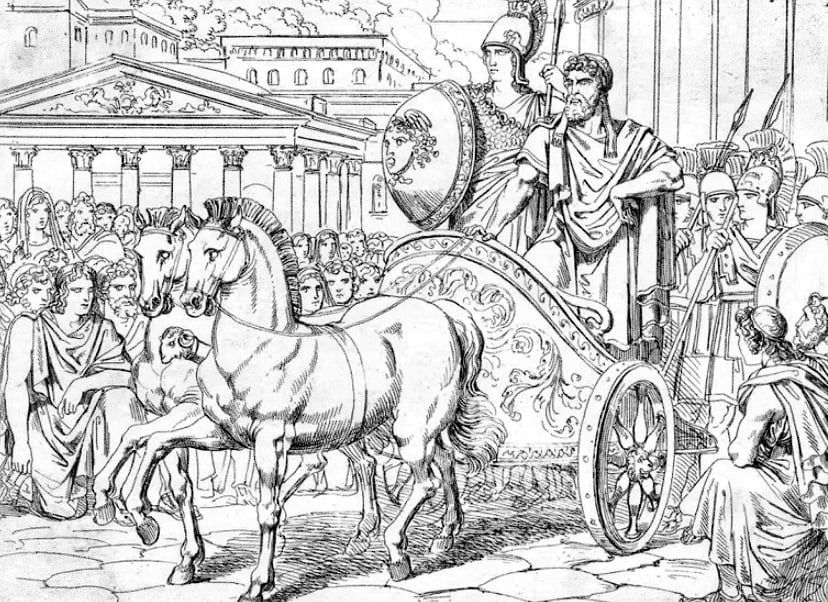
Polycrates transformed Samos to an Aegean Powerhouse
Polycrates ruled Samos during its golden age (c. 538–522 BCE), transforming it into a significant power in the Aegean. Polycrates built a powerful navy, which allowed Samos to dominate trade and military affairs in the region. At the same time, he promoted commerce and wealth by fostering trade relationships across the Mediterranean. He commissioned monumental architectural projects, such as the Heraion of Samos and the Eupalinos Tunnel, a remarkable engineering achievement of the ancient world.
Despite meeting a tragic end, Polycrates’ reign brought wealth, cultural development and influence to Samos.

Cleisthenes of Sicyon promoted equality
Cleisthenes’ rule (c. 600–570 BCE) in Sicyon was marked by efforts to weaken aristocratic dominance and unify the city.
Cleisthenes reduced the influence of the Dorian aristocracy by reorganizing tribal systems and promoting equality among non-Dorians. Moreover, he focused on cultural identity by promoting civic festivals and traditions unique to Sicyon. At the same time he encouraged economic growth through trade and agricultural improvements. Cleisthenes created a more inclusive and cohesive society in Sicyon, fostering prosperity during his rule.

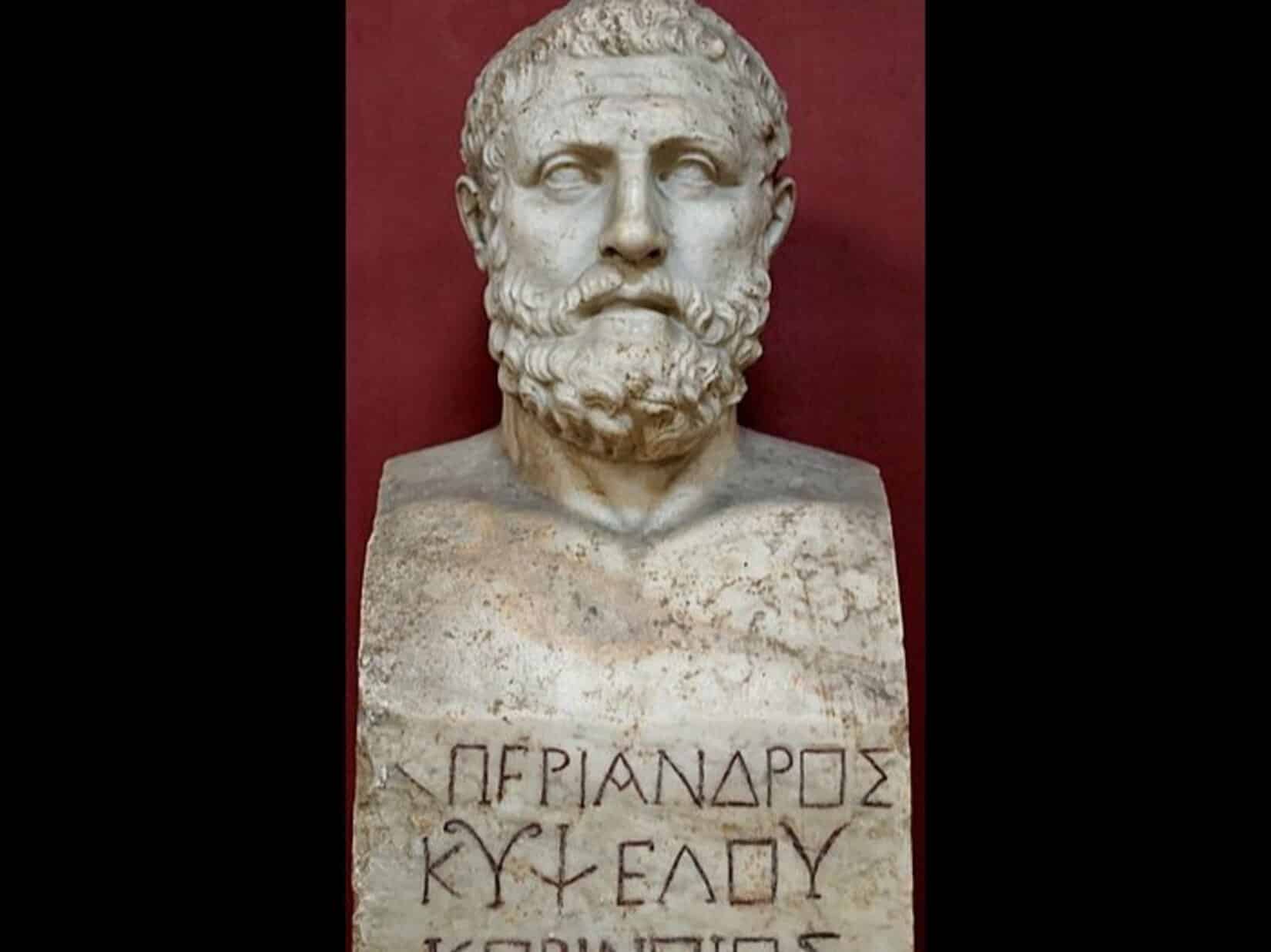
Periander of Corinth Connected Aegean and Ionian Seas
Periander (r.c. 627–585 BCE), the second ruler of the Cypselid dynasty, is often regarded as one of the Seven Sages of Greece for his wisdom and administrative skill.
Periander constructed the Diolkos, a paved trackway that allowed ships to be transported across the Isthmus of Corinth, boosting trade efficiency. He strengthened Corinth’s economy, transforming it into a hub of commerce and culture. Additionally, he supported arts and intellectual pursuits, attracting poets and thinkers to his court. Periander’s contributions established Corinth as one of the wealthiest and most influential Greek cities.
Gelon ensured the independence of Syracuse
Gelon (r.c. 491–478 BCE) rose to power as a general and became the tyrant of Syracuse, leading the city to military and economic success with his good leadership.
Gelon consolidated power in Syracuse by relocating populations and integrating them into the city-state. Additionally, he secured a decisive victory against the Carthaginians at the Battle of Himera in 480 BCE, ensuring Syracuse’s independence. He promoted public works and cultural development, enhancing the city’s prestige. Gelon’s leadership brought stability and prosperity to Syracuse, making it a dominant power in Sicily.

The Aesimnetai: Lawgivers and arbitrators
The aesimnetai were a distinctive institution in ancient Greece, tasked with resolving political and social disputes and enacting legal reforms. Their role was similar to that of the Roman dictators, whom the Romans appointed during times of crisis to restore order. Greek cities would often choose aesimnetai for their wisdom and impartiality, to serve as mediators and lawmakers in societies plagued by internal discord.
Prominent figures such as Solon of Athens, Pittacus of Mytilene and Draco of Athens can be considered among the aesimnetai. Solon’s reforms in Athens, for instance, addressed economic inequality and set the stage for Athenian democracy. Pittacus was a fair and moderate leader in Mytilene, while Draco established Athens’ first written code of laws, laying the foundation for future legal developments. These individuals exemplify the aesimnetai’s role in stabilizing and advancing their communities.
See all the latest news from Greece and the world at Greekreporter.com. Contact our newsroom to report an update or send your story, photos and videos. Follow GR on Google News and subscribe here to our daily email!

