



Sicily is not just an island; it’s a living testament to the grandeur of ancient Greece, a unique outdoor museum known as Magna Graecia (“Great Greece”).
The island was a crucial hub of Hellenic civilization, and its ancient cities rivaled Athens and Corinth in power, wealth, and architectural splendor. Today, their ruins stand as some of the most impressive Greek sites outside of mainland Greece.
Ancient Greece in Sicily
Syracuse (Siracusa)

Located on the southeastern coast, Syracuse was the most powerful Greek city in Sicily. Founded by Corinthian colonists in 733 BC, it was once described by Cicero as “the greatest Greek city and the most beautiful of all.” Its archaeological park, Neapolis, is a must-visit.
Greek Theatre: This is one of the largest ancient theaters ever built and is still used for performances today. Carved directly into the rock of the hill, it could seat up to 15,000 spectators.
Ear of Dionysius: A massive, S-shaped cave carved from a limestone quarry with incredible acoustic properties. Legend says the tyrant Dionysius used it to eavesdrop on his prisoners.
Temple of Apollo: On the island of Ortygia, the city’s historic core, stand the dramatic remains of one of the oldest Doric temples in Sicily, dating to the 6th century BC.
Agrigento (Akragas)

The Valley of the Temples in Agrigento is arguably the most spectacular of all Greek sites in Sicily. Named a UNESCO World Heritage site, it’s not actually a valley but a ridge where a series of remarkably well-preserved temples stand.
Temple of Concordia: This is one of the best-preserved Doric temples in the entire world, thanks to its conversion into a church in the 6th century AD.
Temple of Hera: Located at the eastern end of the ridge, this temple offers a stunning view of the surrounding landscape.
Temple of Olympian Zeus: The ruins of this temple show its colossal scale. Though largely in ruins, it was one of the largest Greek temples ever built, famous for its massive human-like statues called telamons used to support the structure.
Selinunte

Located on Sicily’s southwest coast, the archaeological park of Selinunte is one of the largest in Europe. Founded in the 7th century BC, it was a prosperous city until its destruction by the Carthaginians in 409 BC. The site’s immense size and scattered ruins give it a powerful, haunting atmosphere.
Acropolis: The acropolis sits on a promontory overlooking the sea, with the ruins of several temples and fortifications.
Eastern Hill: Here you can find the remains of three major temples, including the impressive Temple E, which has been re-erected. The sheer scale of the fallen temple blocks illustrates the grandeur of the original structures.
Taormina
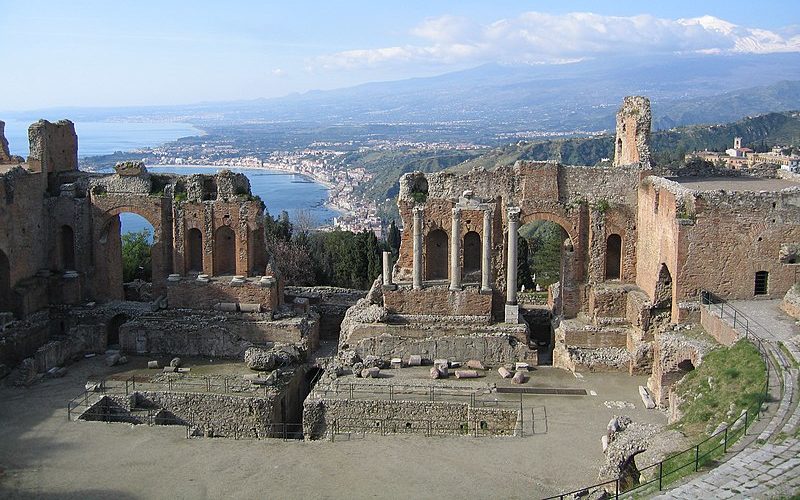
Perched on a cliff with a breathtaking view of Mount Etna and the Ionian Sea, Taormina is home to one of Sicily’s most famous landmarks: the Ancient Theatre of Taormina.
Greek-Roman Theatre: Initially built by the Greeks in the 3rd century BC, the theatre was later rebuilt and expanded by the Romans. Its spectacular location and preserved structure make it a stunning venue and one of Sicily’s most popular attractions, still used for concerts and festivals today.
Segesta
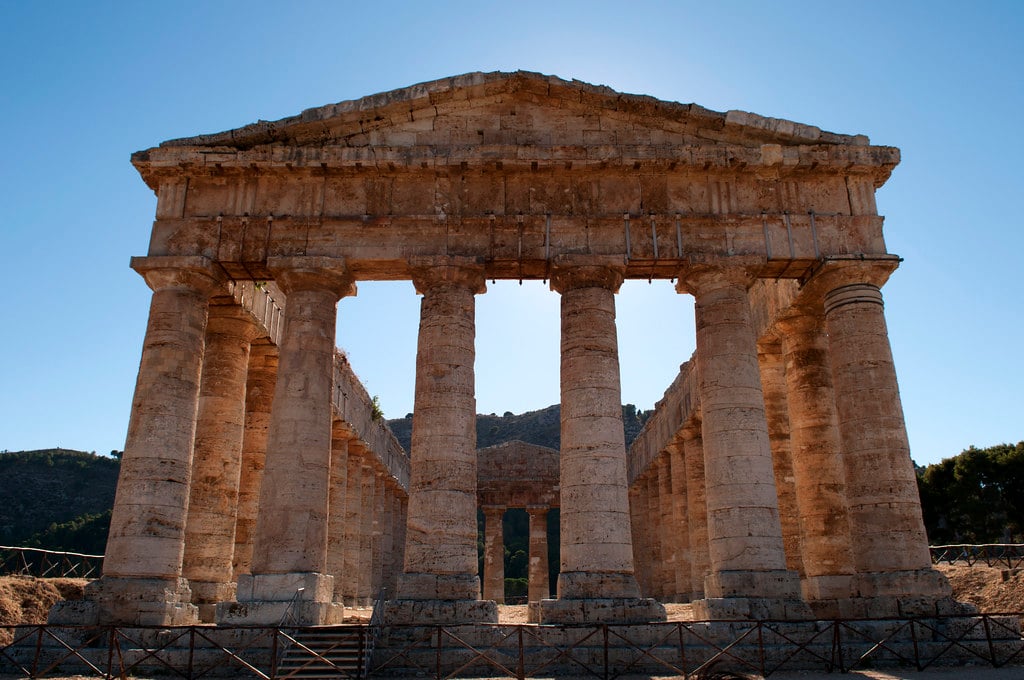
Located in the northwestern part of the island, Segesta’s archaeological park is home to two remarkable structures. Unlike other cities, Segesta was an Elymian city that adopted Greek culture, resulting in a unique blend of influences.
Temple of Segesta: This temple is famous for its nearly perfect state of preservation. Though it was never completed, its 36 Doric columns and impressive entablature remain intact, standing majestically on a hill overlooking the valley.
Greek Theatre: A short walk from the temple, the well-preserved Greek theatre is built into the hillside, offering panoramic views of the Gulf of Castellammare.
Related: The Breathtaking Ancient Greek Ruins Found in Italy
See all the latest news from Greece and the world at Greekreporter.com. Contact our newsroom to report an update or send your story, photos and videos. Follow GR on Google News and subscribe here to our daily email!

