



Holy Monday is the first of the six weekdays leading up to Easter, called Great and Holy Week in the Christian world.
On Holy Monday, Christians reflect on events that took place in the final week of Jesus’ life, particularly those recorded in the Gospels. The specific focus can vary slightly by tradition (Eastern Orthodox, Roman Catholic, and Protestant), but key themes are common to all denominations.
The fig tree and the temple: Lessons of Holy Monday
According to the Gospels (especially Matthew 21:12–17 and Mark 11:15–19), Jesus enters the temple in Jerusalem and drives out the money changers, condemning the commercial use of a sacred space. “My house shall be called a house of prayer, but you make it a den of robbers.” – Matthew 21:13 This act shows Jesus’ authority and his challenge to religious hypocrisy.
In Mark 11:12–14 and Matthew 21:18–22, Jesus curses a fig tree for bearing no fruit. The tree withers, symbolizing judgment on spiritual barrenness—often interpreted as a warning to those who appear faithful but lack true righteousness.
Jesus returns to the temple to teach and debate religious leaders. His wisdom and authority challenge their power, leading to increasing tension that will ultimately culminate in his arrest later in the week.
St. Joseph is honored on Holy Monday in Greece
In the Eastern Orthodox Church, Holy Monday also honors the Patriarch Joseph, sold into slavery by his brothers (a symbol of Christ’s betrayal), and the barren fig tree, as a call to spiritual vigilance.
Joseph was a virtuous man who chose to live his life as such—something which bothered his older brothers, who decided to sell him as a slave. He was sold to Potiphar, the captain of Pharaoh’s guard in Egypt.
Potiphar’s wife tried to seduce Joseph, but he refused her advances. This enraged the rejected woman, who then made false claims that Joseph tried to rape her. Joseph was then thrown into prison. He was able to leave prison after interpreting one of Pharaoh’s dreams in which he predicted seven years of abundance followed by seven years of famine.
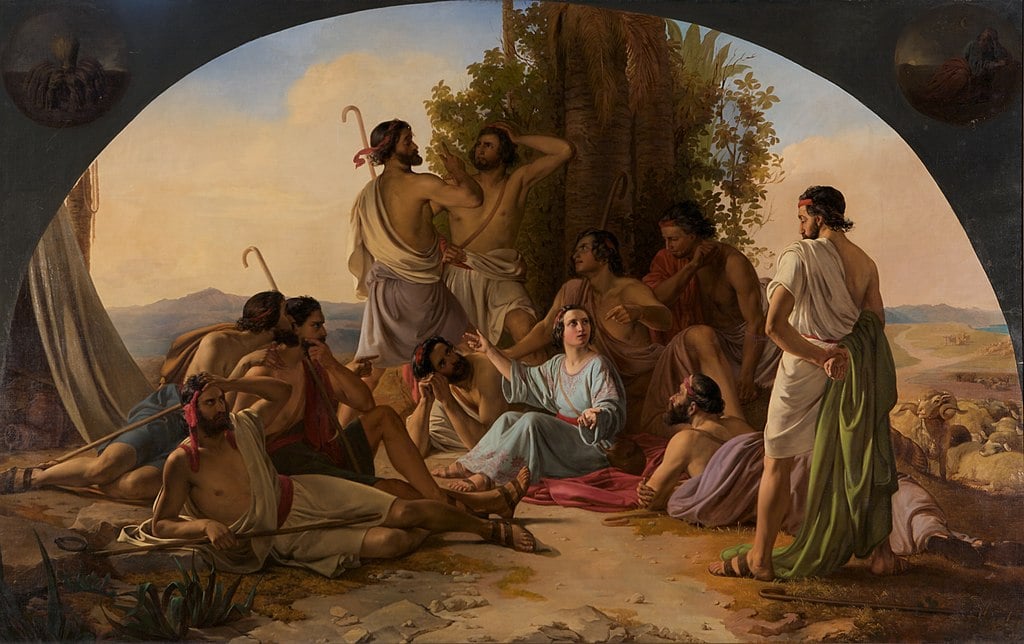
Joseph advised the Pharaoh to store surplus grain against the coming famine, and by doing so, he saved the people of Egypt. Following the fulfillment of the prediction, Joseph became Vizier and took the name of Zaphnath-Paaneah.
The man who was once sold into slavery by his brothers was now one of the most powerful men in Egypt, responsible for food distribution in the kingdom. As Joseph’s brothers were on the verge of starving to death, they traveled to Egypt and presented themselves to him, begging for his help. Although the brothers did not recognize Joseph, he realized who they were and helped them, showing the greatness of his soul.
Holy Monday sets the stage for Easter
For Christians, Joseph is seen as a prototype of Jesus, one who endures great hardships yet perseveres and goes on to save his people.
For Greeks, Holy Monday marks the beginning of the preparations for the celebration of Easter in villages across the country. People paint flower pots red and use paint to outline their yards in white. Greek Orthodox Easter, or Pascha, is the most important religious feast of the year with customs and traditions that have been part of Christianity for over two thousand years.
The forty or so days of Lent before Easter (Πάσχα-Pascha), the solemnity of Holy Week, the rich symbolism, and the unique traditions of Orthodox Easter make it a very different experience from the Easter celebrated by Western Christians. The way Greek Orthodox Easter is observed by the faithful is very unlike the way it is commemorated by Western Christians; various symbols are used to symbolize the Resurrection, and Easter is often observed on different dates.
Every Easter, many Greeks observe the holiday by honoring the crucifixion of Jesus Christ and celebrating the Resurrection—a central event in Christian faith that symbolizes renewal, hope, and the promise of eternal life.
See all the latest news from Greece and the world at Greekreporter.com. Contact our newsroom to report an update or send your story, photos and videos. Follow GR on Google News and subscribe here to our daily email!

