



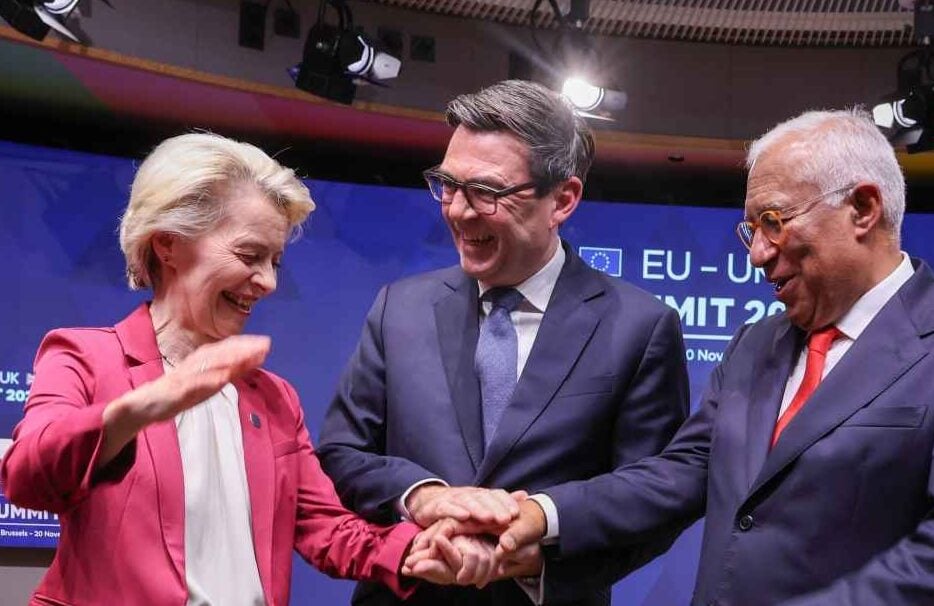
The United Kingdom announced on Friday, November 20, 2026, that it reached a post-Brexit reset deal with the EU. British Prime Minister Andy Burnham signed the agreements in Brussels after meeting European Council President António Costa and European Commission President Ursula von der Leyen.
Specifically, both sides finalized a timeline for a new youth mobility program allowing young adults to live and work across borders. They also agreed to reduce sanitary checks on food, drink, plant, and animal trade. Finally, London and Brussels committed to linking their respective carbon emissions trading systems. Both parties will publish full operational details in a formal joint statement.
Continuing negotiations over University tuition fees
Despite the main breakthrough, negotiators left the contentious issue of European university tuition fees unresolved. Downing Street stated that talks will continue in specific areas, which the upcoming joint declaration will outline.
Like all international treaties, the agreements now enter separate domestic legal ratification processes in both Britain and the bloc. Earlier, several EU member states threatened to delay approving the broader package unless London compromised on university fees.
Facing domestic criticism over regulatory alignment
Political opponents and British commentators immediately questioned the terms of the Brussels accord. Under the draft provisions, Britain becomes a “rule-taker” by adopting EU regulations across many food and drink standards.
Additionally, Conservative leader Kemi Badenoch warned that the energy provisions could raise household bills.
See all the latest news from Greece and the world at Greekreporter.com. Contact our newsroom to report an update or send your story, photos and videos. Follow GR on Google News and subscribe here to our daily email!

