



A religious icon tied to one of America’s best-known Greek communities has resurfaced on the Greek island of Aegina more than a century after disappearing from Tarpon Springs, Florida.
The icon of St. Nicholas had been absent from the Greek Orthodox community of Tarpon Springs since 1923. Its whereabouts were finally established during a visit to Greece by the city’s mayor, John Koulianos, who found it inside the Church of Panagitsa on Aegina.
The discovery reconnects two communities whose relationship stretches back to the early years of the Greek presence in Tarpon Springs. Efforts are now underway to return the icon to Florida, potentially in time for the city’s Epiphany celebrations in January 2027.
Icon Traveled From Aegina to Florida in 1910
The story of the icon began in 1910, when it was created and presented to the Greek Orthodox community of Tarpon Springs by people with connections to Aegina. Greek immigrants, including sponge divers from the island, played an important role in the development of Tarpon Springs and its distinctive Greek identity.
The icon was placed in the Greek Orthodox Church of St. Nicholas, the predecessor of today’s St. Nicholas Greek Orthodox Cathedral.
Its stay in Florida, however, was interrupted by disaster. A fire in 1923 badly damaged the wooden church. The icon survived but sustained damage and was subsequently taken across the Atlantic to Aegina for restoration.
It never made the journey back.
For the following 103 years, the icon remained in Greece while generations passed in Tarpon Springs without its return.
Tarpon Springs Mayor Tracks Down the Missing Icon
The century-old mystery took a new turn when Koulianos traveled to Aegina in the summer of 2026. His trip was also connected to plans to strengthen the relationship between Aegina and Tarpon Springs through a sister-city partnership.
During his visit, Koulianos met Aegina Mayor Ioannis Zorbas and raised the question of the missing icon. Local clergy became involved in the search, and a priest was able to identify its location.
Rather than being hidden away or lost in a private collection, the icon was still inside a church. It was found at the Church of Panagitsa on Aegina, where it had remained for decades.
The artwork is relatively large and remains fragile, with evidence of the damage it suffered more than a century ago. That means its possible journey to the United States will have to be formally arranged rather than treated as an ordinary transfer of an object.
Return to Tarpon Springs Could Come in 2027
Finding the icon does not automatically mean it can be taken back to Florida. Church authorities must be involved in approving and arranging its return.
Earlier reporting said authorization from the relevant Greek Orthodox authorities was still required. Koulianos and officials from the two communities have nevertheless been working toward bringing the icon to St. Nicholas Greek Orthodox Cathedral.
The hoped-for return could coincide with Tarpon Springs’ Epiphany celebrations on January 6, 2027, when Zorbas is expected to visit Florida. The occasion is also expected to mark another step in formalizing the sister-city relationship between Tarpon Springs and Aegina.
Tarpon Springs’ Greek Roots Run Deep
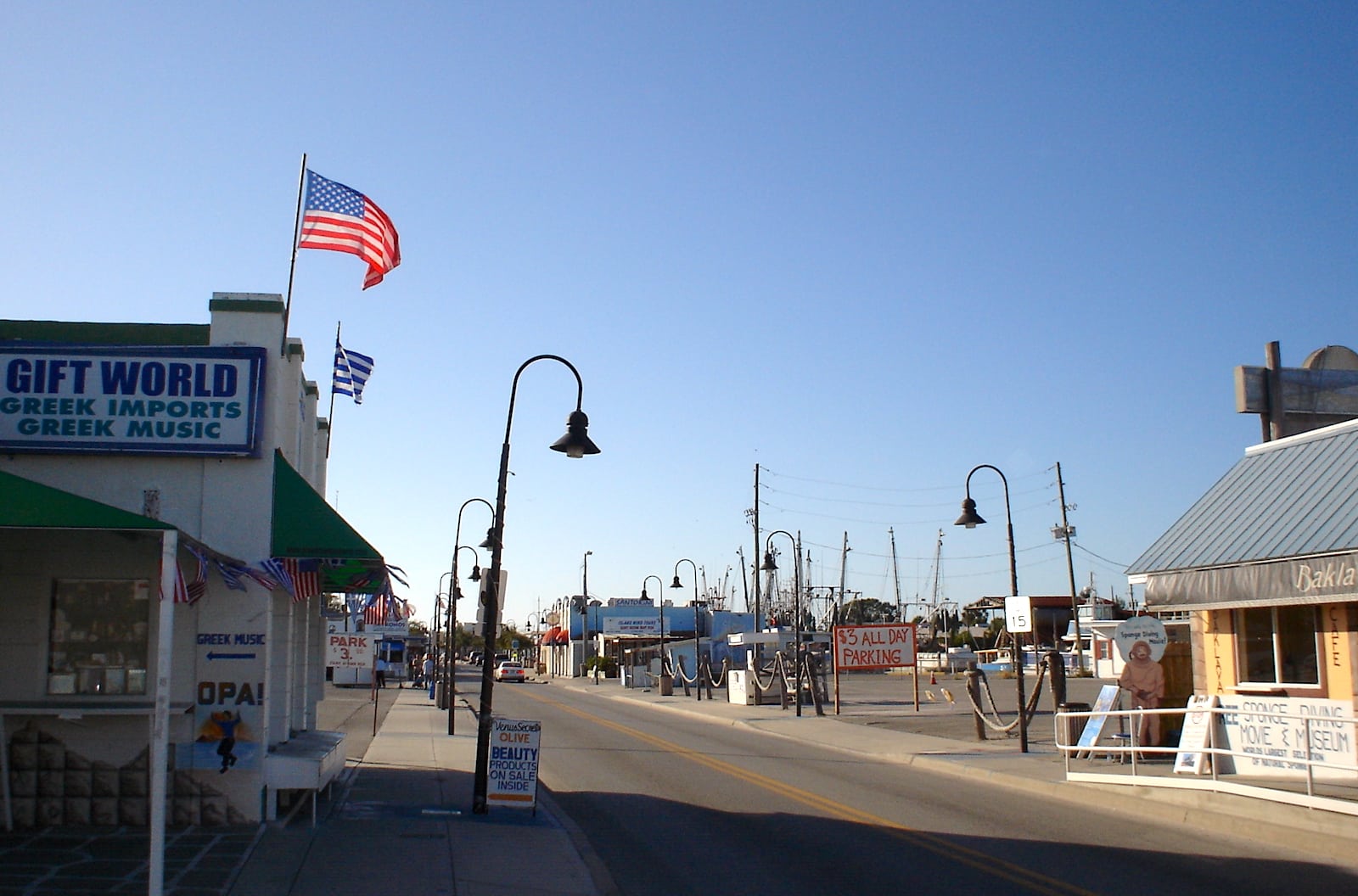
The significance of the discovery extends beyond the icon itself. Tarpon Springs became a major center of Greek immigration in the United States during the early 20th century, particularly through the sponge-diving industry.
St. Nicholas remains at the center of the community’s religious life, while the city’s annual Epiphany celebration has become one of the most recognizable Greek Orthodox traditions in the United States.
The recovered icon is a physical link to that early immigrant generation. Created and presented when the Greek community in Tarpon Springs was still taking shape, it crossed the Atlantic after the 1923 fire and remained on Aegina for more than a century.
If the planned return goes ahead, the icon will cross the Atlantic once again, this time returning to the Greek-American community for which it was originally intended.
See all the latest news from Greece and the world at Greekreporter.com. Contact our newsroom to report an update or send your story, photos and videos. Follow GR on Google News and subscribe here to our daily email!

