



Nearly 2,000 years ago, Roman author and statesman Pliny the Younger described the catastrophic eruption of Mount Vesuvius that buried Pompeii and Herculaneum. Now, scientists have used the historically documented disaster to test a volcanic dating method with unprecedented precision.
Using volcanic minerals and the eruption’s historical date as a benchmark, researchers calculated an age of A.D. 87, plus or minus 13 years, closely matching the event recorded nearly 2,000 years ago.
The study, published in Science Advances, used a technique known as argon-40/argon-39 dating to determine the age of volcanic minerals. The results were far more precise than previous attempts, which could be off by around a century.
Pliny’s letters played an important role because they provide an eyewitness description of the disaster and identify Aug. 24 as the day it began. However, his account does not state the year. Researchers therefore reviewed other ancient records and concluded that the strongest historical evidence still places the eruption on Aug. 24, A.D. 79.
Pliny the Younger helps confirm the Vesuvius eruption date
That date has long been debated. Some archaeological evidence has been used to argue that the disaster happened later in the year. The researchers examined those claims, including evidence involving food, clothing, graffiti, and coins, but found no solid reason to reject the August date.
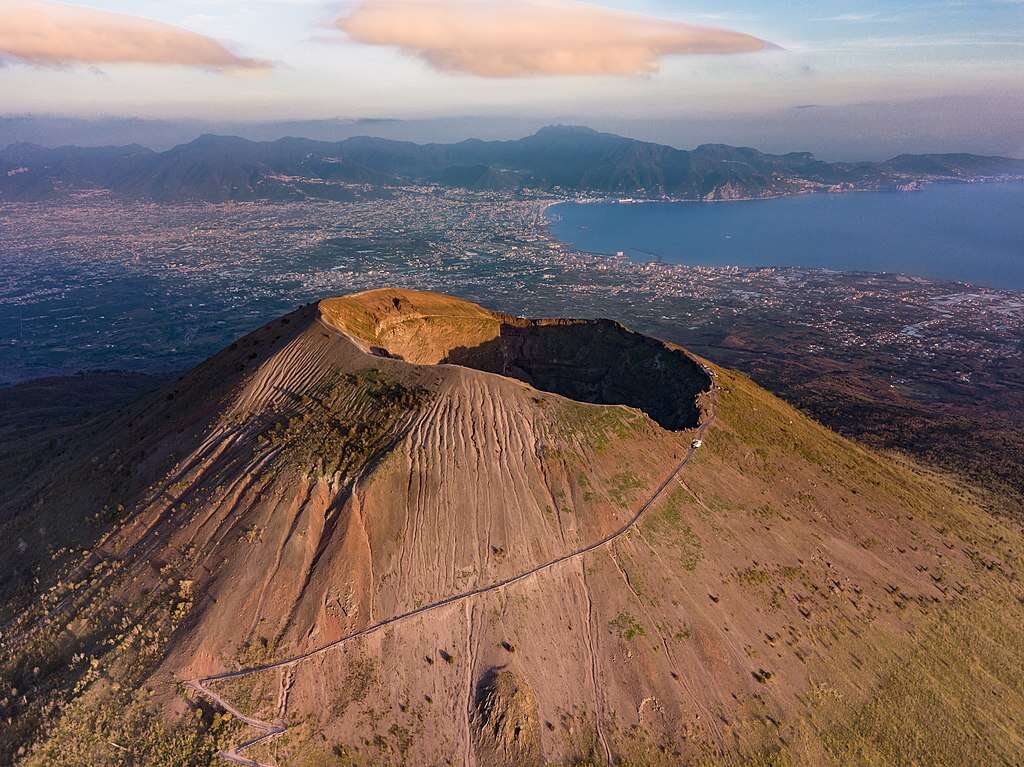
For the laboratory analysis, scientists studied sanidine crystals taken from pumice collected near Pompeii. After excluding contaminated material, they examined 153 heating measurements from the mineral samples. The results produced an age of 1,938 years before the 2025 analysis, corresponding to A.D. 87 with a 13-year uncertainty.
The precise result was possible because of improvements in mass spectrometry, neutron irradiation, and corrections for isotopes created during testing. The potassium-rich sanidine crystals also provided material well suited to the dating method.
Ancient disaster sets a new standard for volcanic dating
Young volcanic deposits are particularly difficult to date because relatively little radioactive change has taken place. More precise measurements could help scientists reconstruct eruption histories and better understand how often dangerous volcanic systems have produced major events.
Because Pliny the Younger left a historical reference point for the Vesuvius eruption, researchers could also use the event to improve measurements that reach far beyond Pompeii. The study produced a new estimate for the rate at which potassium-40 changes into argon-40 that is nearly twice as precise as the best previous direct experimental measurement.
That improvement could strengthen argon-based dating across geologic time and help scientists compare its results more accurately with other techniques, including radiocarbon dating.
See all the latest news from Greece and the world at Greekreporter.com. Contact our newsroom to report an update or send your story, photos and videos. Follow GR on Google News and subscribe here to our daily email!

