



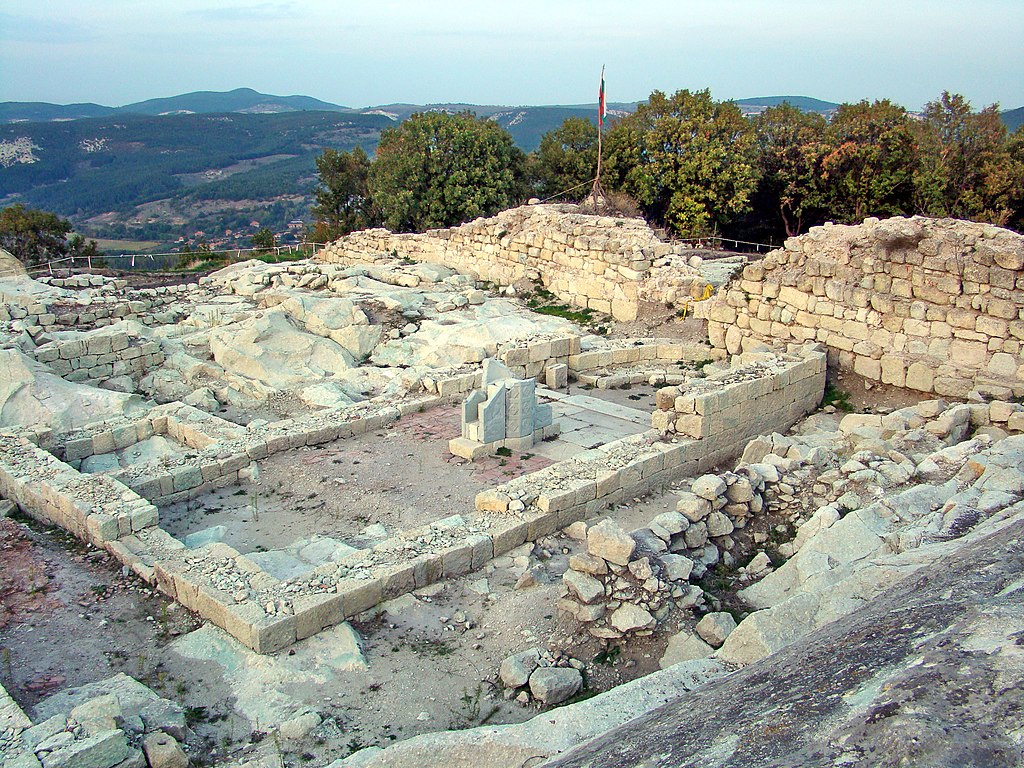
Archaeologists have uncovered the first direct evidence that monumental Roman-era statues once stood at Perperikon, the ancient rock city in southern Bulgaria. The discovery comes after more than 25 years of excavations at the site.
The finds include a stone pedestal, part of a life-size male statue and another sculptural fragment that may have belonged to an animal, possibly a lion. Excavation director Prof. Nikolay Ovcharov said the pieces date from between the third and early sixth centuries AD.
Researchers found the remains in Perperikon’s Southern Quarter, within an area known as the Area Sacra, or Sacred Zone. Previous excavations there have revealed temples and mausoleums associated with wealthy residents.
Statues may have decorated sacred buildings
Archaeologists have uncovered extensive monumental architecture at Perperikon over decades of research. Finds include columns, capitals, cornices and other carved stone elements. Until now, however, they had not identified remains of large figurative sculptures. The location of the newly discovered pieces offers clues about their possible role. Ovcharov suggested the statues may have decorated religious or funerary buildings in the Sacred Zone.
The male figure may even have represented an important person buried in one of the nearby mausoleums. Researchers have not identified the figure, however, and the purpose of the statue remains uncertain. Similar discoveries elsewhere have shown how sculpture could form part of important Roman urban and religious settings. Archaeologists previously uncovered a nearly seven-foot statue of the Greek god Hermes in the Roman city of Heraclea Sintica in Bulgaria.
Local craftsmen created a distinctive style
The archaeological team said local craftsmen carved the sculptures from local stone. Their workmanship resembles architectural decoration already documented at Late Roman Perperikon. Craftsmen in the city were skilled at shaping stone for monumental buildings. Figurative sculpture appears to have followed a simpler local tradition.
After 26 years of excavations, archaeologists have found something never seen before at ancient Perperikon: evidence of monumental statues.
A life-size male figure, a stone pedestal and a possible lion fragment are rewriting the story of the Bulgarian rock city. pic.twitter.com/gImmx1SWjN
— Tom Marvolo Riddle (@tom_riddle2025) September 28, 2026
The fragments therefore offer another look at Perperikon’s artistic identity. They suggest local craftsmen adapted wider Roman artistic traditions to their own materials and techniques rather than simply copying styles used elsewhere. Other finds in Bulgaria have revealed the region’s rich sculptural traditions. Archaeologists in Plovdiv (ancient Philippopolis) previously discovered the marble head of a large statue of the Greek goddess Tyche, dating from the Roman period.
Monumental sculpture survived into Late Antiquity
The discovery also provides evidence of the continued use of monumental statues during Late Antiquity. Although production declined from earlier periods of the Roman Empire, large statues did not disappear. They continued to represent emperors, officials, military commanders, religious leaders, and other prominent figures. Ovcharov noted that researchers have classified 435 statues in Rome dating from AD 284 to 604.
Roman statues could also take on new identities over time. Research has shown that sculptors sometimes reworked statues of Roman emperors rather than creating entirely new portraits. The Perperikon fragments cannot yet be connected to a specific person. Still, their presence shows that statues formed part of the ancient city’s visual landscape during this period.
The discovery came near the end of an archaeological campaign lasting almost four months. Researchers are also studying Perperikon’s urban development, with results expected to be presented in October. The latest finds add a new dimension to the ancient city. Perperikon was known for its monumental stone buildings, temples, and mausoleums. Archaeologists now have evidence that statues also helped shape its sacred spaces.
See all the latest news from Greece and the world at Greekreporter.com. Contact our newsroom to report an update or send your story, photos and videos. Follow GR on Google News and subscribe here to our daily email!

