



Corinth and Thessalonica, two of ancient Greece’s busiest cities, served as major Roman road hubs, funneling more overland traffic than most other cities in the empire, including Rome. The findings appear in the journal Nature Communications.
The research, led by Adam Pažout and Tom Brughmans along with an international team of scholars, mapped nearly 300,000 kilometers (186,000 miles) of Roman roads stretching across Europe, North Africa and the Middle East.
Researchers describe the dataset as the most detailed digital reconstruction of the Roman road network built so far, covering territory the empire controlled at its height in 117 A.D.
Using network science, the team calculated how much travel would have flowed through each road segment based on estimated travel times across the ancient landscape.
That method, applied to a network of 10,516 intersections and 14,901 road segments, let researchers rank cities by their importance to overland movement. The rankings covered both individual provinces and the empire as a whole.
How Corinth and Thessalonica became Roman road hubs
Corinth and Thessalonica stood out as two of the most prominent Roman road hubs identified in that ranking. Researchers identified both cities as focal points in provinces where road networks were built around a single dominant hub rather than spread evenly across multiple routes.
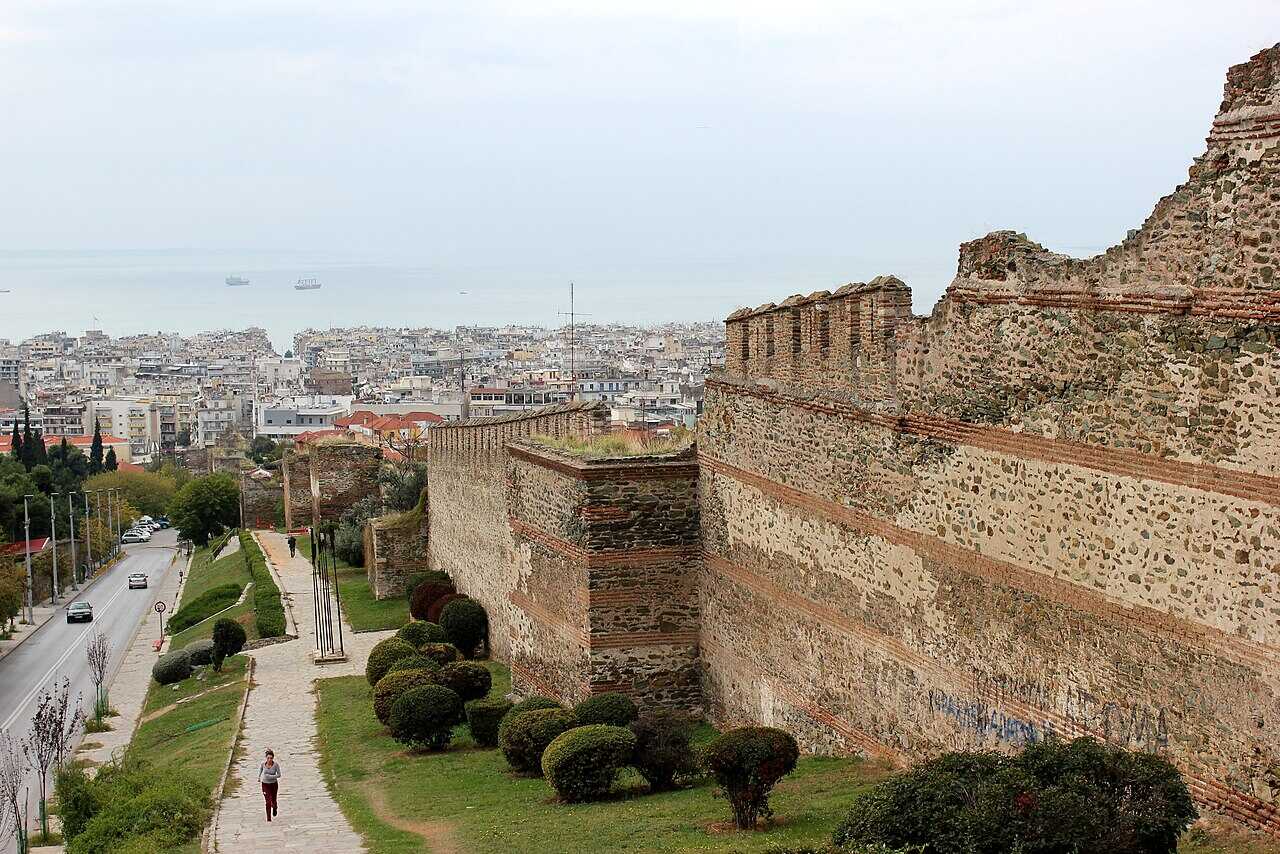
Corinth anchored the province of Achaia, while Thessalonica played the same role in Macedonia, with most other roads in each province designed to connect effectively back to those two cities.
Both cities also benefited from strong access to sea travel in addition to their overland connections, the study found. Researchers placed Corinth and Thessalonica among a small group of cities, also including Rome, Antioch and Corduba, that combined strong positions on both land and water routes.
Findings challenge the long-held idea that “all roads lead to Rome”
The findings challenge the old saying that “all roads lead to Rome.” Researchers found that several other cities, including Antioch, Ancyra, Byzantium and Corinth, were actually better positioned than Rome for moving people and goods across the empire’s full road system.
Rome remained centrally located within Italy, the study noted. But the road segment carrying the most traffic in the region did not pass directly through the city. Researchers suggested Rome’s influence relied more on sea and river routes than on roads alone.
The study found that provincial capitals tended to sit at more central points in the road network than non-capital cities. Main roads also carried more strategic importance than secondary roads in 40 of the 43 provinces examined. Researchers say the pattern confirms long-held assumptions about how Roman planners prioritized major routes over smaller ones.
See all the latest news from Greece and the world at Greekreporter.com. Contact our newsroom to report an update or send your story, photos and videos. Follow GR on Google News and subscribe here to our daily email!

